
The Eighth Sunday after Trinity – Pr. Faugstad sermon
Text: St. Matthew 7:15-23
In Christ Jesus, who is and who teaches us the Way, the Truth, and the Life (Joh. 14:6), dear fellow redeemed:
If you asked any number of Christians what a healthy, thriving church looks like, I think you would hear things like: “A healthy church is welcoming to everyone; it has active youth programs and groups for all ages to join; it has a good reputation in the area and is active in addressing the needs of the community; its worship services are laid back and accessible.” And what about the pastor? They might say: “A good pastor is someone who is good with people, connects well with all ages, gives inspiring and motivational sermons, isn’t judgmental and keeps the message positive, and brings new people in so that the church will grow.”
Many of the things on that list are good things. Who wouldn’t want a healthy, active church with a well-liked pastor? But if all those wishes and wants become the main things, then that church is in great danger. Jesus speaks about that danger in today’s reading. Just like the Holy Gospel two weeks ago, this week’s Gospel comes from Jesus’ Sermon on the Mount recorded by the apostle and evangelist Matthew.
In the verses before today’s reading, Jesus speaks sobering words about the kingdoms of heaven and hell. He says: “Enter by the narrow gate. For the gate is wide and the way is easy that leads to destruction, and those who enter by it are many. For the gate is narrow and the way is hard that leads to life, and those who find it are few” (Mat. 7:13-14). Immediately after this, He says, “Beware of false prophets, who come to you in sheep’s clothing but inwardly are ravenous wolves.” Clearly, false prophets help people to enter the wide gate and take the easy way toward destruction. We are supposed to be aware of them, be on our guard against them.
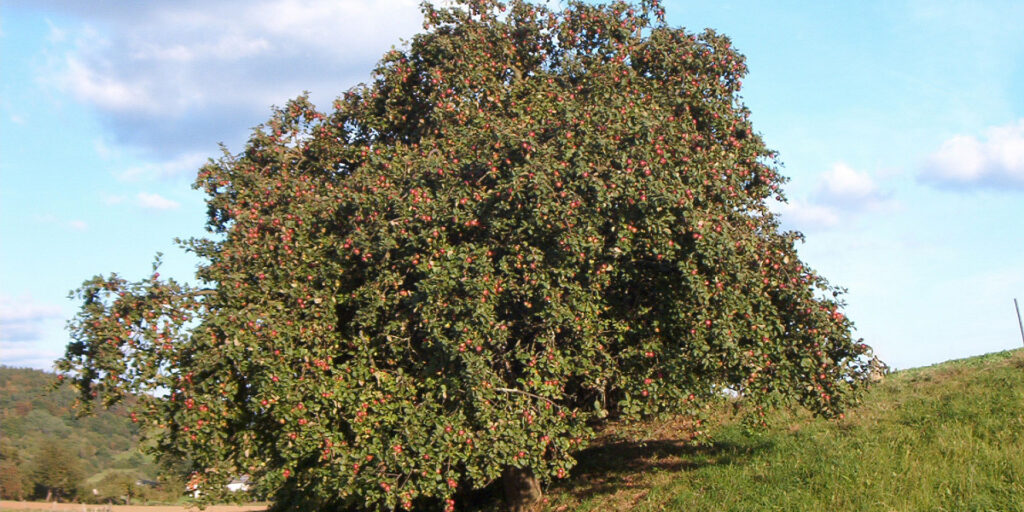
Jesus tells us, “You will recognize them by their fruits.” But it is not possible to identify bad fruit unless you know what good fruit is. It is not possible to identify false teaching unless you know what good teaching is. So many today are in the dark. They have never heard the truth of God. They might think that all religions are pretty much the same, and one is just as good (or just as bad) as another. Or if they belong to a Christian church, they might have been led by their pastor or priest away from the Bible instead of into it.
A faithful pastor teaches those in his care not only what is good, right, and true, but also what is evil and false. If we only focused on the positive and avoided any negative critiques or comparisons, we would leave Christ’s sheep vulnerable. For example, if I were to say that all flowers are beautiful and good and pleasant to touch and smell, that might seem true. But how would a child understand that certain plants with flowers are not safe, like thistles with their purple flowers or wild parsnips with their yellow ones? When these plants have taken over somewhere, we warn our children not to go there no matter how pretty the flowers look, or there will be very painful consequences.
In the same way, faithful pastors warn their hearers that there are certain preachers and churches who have not remained faithful to the Word of God. Those preachers and churches might teach that what Jesus did was important, but there is still more that you have to do to be saved. Or they might teach that God loves you just the way you are and approves of whatever you do, so that instead of confessing your sins and fleeing from them, you should embrace them. Or they might teach that the Bible contains some errors, and that what is most important is that you are guided by the Holy Spirit. As long as you can feel the Spirit moving you, they say, you can’t go wrong.
Jesus says, “You will recognize them by their fruits,” that is, by what they teach. Those preachers might be very friendly and kind. Those churches might be very active and thriving. We might wish that our churches looked like those churches. But how much would you be willing to give up to have what they have? Would you want us to change our message, so that no one is really offended, but no one is especially comforted either? Or should we focus less on Word and doctrine and instead emphasize service and love?
You did not call me to make the church grow by whatever means necessary. You called me to faithfully preach the Word and administer the Sacraments of Christ according to His institution. Even if what the Bible says completely contradicts what the world says—and perhaps even what seems reasonable and right to us—you have called me and commanded me to preach the Word of God.
This is what St. Paul charged the pastor Timothy to do: “preach the word; be ready in season and out of season; reprove, rebuke, and exhort, with complete patience and teaching” (2Ti. 4:2). Then he tells Timothy why this pure teaching is so important: “For the time is coming when people will not endure sound teaching, but having itching ears they will accumulate for themselves teachers to suit their own passions, and will turn away from listening to the truth and wander off into myths” (vv. 3-4).
We should also realize that false prophets don’t always start out that way. They might start out as faithful preachers of the Word. But they succumb to the pressures of the people they serve or the preferences of the world around them, and their message changes. Some preachers are not even aware that they have shifted into error, that they have gone from being faithful servants of God to enemies of God.
Jesus expresses this reality in the second part of the reading, where He says, “Not everyone who says to Me, ‘Lord, Lord,’ will enter the kingdom of heaven, but the one who does the will of My Father who is in heaven.” Then He describes those who will say on the last day, “did we not prophesy in Your name, and cast out demons in Your name, and do many mighty works in Your name?” The appearance of success by those who claim the name of Jesus does not mean they are operating with His blessing. Outward success in the visible church is not a sign of His righteousness, just as seeming failure and decline in the church is not a sign that a particular congregation is on the wrong track.
We Are Called to Be Faithful. That is what God has called us to do. That means not just me in my preaching, but also you in your hearing and your confession of the truth. Because you know that Satan is working against the preaching of the Word, you need to make sure that I am not led astray in what I preach and slip into false teaching. The only way to know is if you know and study the Holy Scriptures yourself. Your Confirmation Day was not a graduation from reading, learning, and memorizing the Word of God. It is just as important for your spiritual nourishment and growth today as it was how many years ago.
Jesus does not say that the knowledge you gained in the past will automatically carry you to the finish line. He says, “If you abide in my word, you are truly my disciples, and you will know the truth, and the truth will set you free” (Joh. 8:31-32). He wants us to remain in His Word, live in it, soak it up like a sponge, meditate on it, talk about it with others, hear it, learn it, pray it. This is the best inoculation and protection against the devil’s attacks that we can have.
The more we are fed and enriched by the Word, the less we will care what the world has to say about it. The Word of Jesus is the stream of living water that pours His rich blessings into our heart and soul. What treatment does the world have for a guilty conscience? What medicine is there for sorrow, distress, and pain? What antidote does the world have for death? When Jesus asked if the disciples wanted to leave Him like so many others had, Peter said, “Lord, to whom shall we go? You have the words of eternal life” (Joh. 6:68).
Jesus’ words of eternal life are good fruit from a good tree. The cross looked like a tree of death, but it was the tree of life for you. Jesus won your salvation by His perfect life of love and His suffering and death, and He gives you the fruit of His righteousness and forgiveness. That good fruit is placed right in your unworthy hands through the words of His absolution, and it is given to you to taste and eat in His holy Supper.
The fruit of Jesus’ perfect life, His death, and His resurrection are sweet to the taste and filling to your faith. The world’s empty glory may look appealing, but it cannot deliver what you need. Jesus provides what you need by sending faithful preachers to declare His holy Word to you, to care for your soul through the means He has supplied.
Where those means of His grace are faithfully distributed and faithfully received, Jesus is certainly present. The congregation may be small, it may seem that nothing impressive is happening there, or that such a gathering of people has little hope for the future. Jesus says, “For where two or three are gathered in my name, there am I among them” (Mat. 18:20). And where Jesus is through the faithful preaching of His Word, then you have His blessing, and you are kept on the narrow path that leads to the glorious gate of life everlasting.
Glory be to the Father and to the Son and to the Holy Ghost; as it was in the beginning, is now, and ever shall be, forevermore. Amen.
+ + +


Copyright 2020 © Saude, Jerico, & Redeemer Lutherans. All rights reserved.