
Mission Festival & Trinity 16 – Pr. Abraham Faugstad, guest preacher
Text: St. Luke 7:11-17
In Christ Jesus, who is the light and life of all men, dear fellow redeemed!
It was a strange and dreadful strife
When life and death contended.
The victory remained with life,
The reign of death was ended;
Holy Scripture plainly saith
That death is swallowed up by death,
In vain it rages o’er us. Alleluia!
In a striking way, Martin Luther describes in this verse (ELH 343:4) Christ’s battle with death. When the two collided, the victory remained with life. Death could not hold him. On the third day, Jesus rose from the dead, assuring us that he had accomplished our salvation, and just as he, our head, has risen, so too will his body, the church, rise with him. This fact is the Christian’s hope and greatest comfort. This is your hope and your greatest comfort.
In our lesson, Jesus does his work a little out of order. He had not yet suffered and died, paying for our sins and defeating death, but he shows his power over death. Here he gives a preview to his great command at the end of time, when he will call us from the grave. But maybe we should ask, what prompted Jesus to perform this great miracle at this time and at this place?
St. Luke tells us that Jesus was traveling to the town of Nain. This was a small village in Galilee, located about twenty-five miles southwest of Capernaum, where Jesus lived during his earthly ministry. This is the only time Nain is mentioned in the entire Bible. The word Nain means “beauty” or “pleasantness.” It could be that Nain received this name because its location high on a hill would have given it a breathtaking view across the plain to Carmel, over the hills of Nazareth, with the white peak of Mount Hermon glistening in the distance. Yet, in this beautiful town with its picturesque views, Luke records a sobering event.
“As [Jesus] drew near to the gate of the town, behold, a man who had died was being carried out.” Whenever you come across the word, “behold,” in Scripture, it is meant to grab your attention. Look! See! Pay attention! But what was so important about this death? People die every day; it is not unusual. Yet, this death was particularly sad. The man who died was a young man. We mourn all who die, but when someone is young, in the prime of life, too young in our estimation to die, it is particularly hard for us to grasp. “He died too young. I still can’t believe he isn’t here.” We’ve all probably had conversations like the ones those in the crowd had that day. But to add to this, we learn he was the only son to his mother, who was a widow. Life was especially difficult for widows in those days. With her husband dead she depended on her son, not only for emotional support, but for her livelihood. She would have looked to her only son as her future here on earth. Her plan for old age. He would have cared for her. Now her son was also dead. It’s no wonder that there was a great crowd who accompanied this woman. They sought to comfort this woman in her horrible grief.
When Jesus saw the woman, he had compassion. He knew the circumstances surrounding this funeral procession. I sometimes hear from people that they don’t like funerals because they don’t know what to say. We sometimes struggle with knowing what to say, because we can’t help those who mourn. But not Jesus. He said to the mother of this dead man, “Do not weep.” No one would ever think of telling a mother not to mourn for her son—except Jesus. For only Jesus has an answer to our weeping.
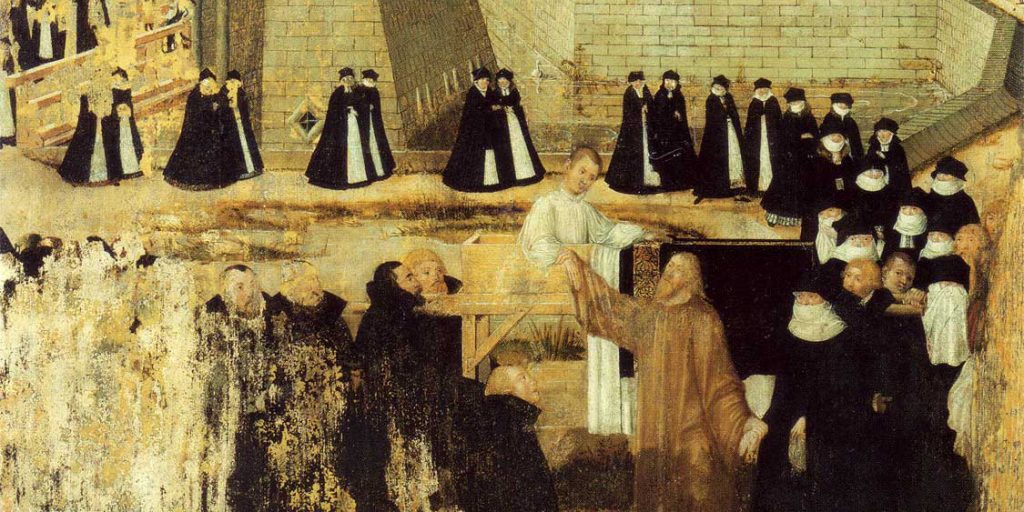
“Then He came up and touched the bier, and the bearers stood still. And He said, ‘Young man, I say to you, arise.’ And the dead man sat up and began to speak, and Jesus gave him to his mother.”
We can’t even imagine the joy the mother had that day! Imagine being in the crowd and suddenly your tears of sadness are turned to tears of gladness! They were overjoyed! We are told how news this event spread like wildfire across the whole region of Judea and the surrounding country.
The people feared, not in the sense that they wanted to run away, but because they had seen something they had never seen before. A dead man came to life. It was a miracle. People would have been able to go and talk to this young man and verify these reports. Imagine how thrilled the young man, and his mother would have been as they told others of Jesus and the great miracle! To this day, there remains a church in Nain called, “Church of the Resurrection of the Widow’s Son,” which goes back to the 300s.
Now, you might think, “It would have been amazing to have seen this. It would have been wonderful to be part of the family in which Jesus performed so great of a miracle.” But you see, you are part of that family. By grace, you also will be raised by Jesus.
But it wasn’t going to be this way. Ever since the fall into sin, we were following this sad procession of death out of the city. For your sins in thought, word, and deed, and the original corruption inherited from our first parents, we were destined to die. Not just physical death, but eternal death in hell. That was your future! As Scripture says, “The soul that sins shall die.” “The wages of sin is death.”
But Jesus confronted death for your sakes and mine. Jesus saw us in our lost and sad condition and had compassion on our misery. He sees us. He knows the pains and griefs we bear in this life. Because our Lord became man, living in this life just as us, he can sympathize with our weaknesses. He knows and cares for our every need. He is the one who wept at the death of Lazarus. He is the one who invites you to cast your care and burdens on him. He has comfort for us because, as the Lord of life, he has power over death. To keep death away forever, to save us from the consequences of our sins, Jesus had to deal with sin once and for all. The miracle at the town of Nain is a preview of the work of Jesus that culminated with his death on Good Friday, and the announcement of his victory on that first glorious Easter morning when he rose from the dead. Jesus became man to conquer death by becoming death for us. As the author of Hebrews writes, “Inasmuch then as the children have partaken of flesh and blood, He Himself likewise shared in the same, that through death He might destroy him who had the power of death, that is, the devil, and release those who through fear of death were all their lifetime subject to bondage” (2:14–15).
What a wonderful statement! Christ has released us from the fear of death. Jesus has taken away our sins. The sting of death is removed because our sins are removed from us as far as the east is from the west through faith in Christ. Jesus was victorious over sin, death, and hell. And he shares that victory with you and me.
You come to church burdened by the sins of the past week. You have been impatient, unkind, and selfish. You’ve coveted what belonged to another. You’ve repeated gossip that hurt your neighbor, but didn’t mind, because you loved yourself more than your neighbor. God sees it all. What does he do? What does he say? He says, “I forgive you all your sins.” The pastor says these words, but Jesus is the one talking. It is Jesus who suffered for those sins, and he has the right to forgive you. He says, “Take and eat, this is my body. Take and drink, this is my blood, shed for you for the forgiveness of sins.” When you receive the Lord’s Supper you are receiving the medicine of immortality. You can face death with confidence. Jesus gave his life for you and now he gives that life to you. Your sins are forgiven—death has lost its sting! We still weep at Christian funerals because we mourn our loved ones. But we weep with hope because, by God’s grace, we will see them again. From the dust we shall arise.
The setting of our lesson serves as a picture for our lives as well. The town of Nain was beautiful and scenic, but it faced terrible sadness that day. In our lives God gives us many blessings, but we too face our troubles. We sin and we are sinned against. We face tragedy and death. But you and I have been met in the road by Jesus. He says, “Do not weep.” You have the hope of eternal life. You know God loves you and promises to be with you in every trouble. It is certain and sure. This helps us face our hard days, because we know our future. We know of God’s love and mercy, even when sadness is before our eyes.
You have this joy, but many don’t. There are people we encounter every day—our children, family, neighbors, and coworkers. If you were to ask most people and even people who say they are Christians, they don’t have this hope. They are people walking in the sad procession of death.
Now could it be, that Jesus has brought you to the Christian faith, giving you a living hope, and put here at this time in history, in a particular family, community, workplace or school, to bring that hope to others that you meet? We know that God has put you here in this place and time. And you serve as the hands and feet of Jesus.
We are Midwesterners who often prefer to keep to ourselves. We don’t like talking about religion to others. The number one reason we do not talk about the Christian faith is because we are worried about how people would respond. But this is a terrible reason! The devil would love for that to stop us. If your neighbor’s house was on fire, what would you do? Would you wait to see if he comes out and talks to you about? I suppose you wouldn’t want to intrude after all. No! Of course, not! You would run to his home and tell him to get out. You would do everything you could to save him!
Anyone who doesn’t believe in Jesus as their Savior is headed to the fires of hell. But Jesus, has the power over death. He meets death, and wins. This is our hope. And it is this hope that we seek to share with others. Now, I am not saying that you should buy a box to stand on and go to every public place and start shouting that everyone is going hell. No, that would be counterproductive! But what I am saying, is that you should remember the hope you have and not be quiet about it. The congregation here today is a considerable crowd, not much different than the crowd at Nain. Through the crowd at Nain, the news spread throughout Judea and the surrounding area. My prayer for the crowd of people here today, who have been saved by Jesus and given the hope of eternal life, is that we would seek to share this message with those around us. May God’s love for this world kindle in our hearts a love for our neighbor, remembering that they are souls for whom Jesus died and they are bodies that Jesus has the power to raise on the last day. God grant that this Good News of Jesus spreads among us and through us. Amen.
(picture from the resurrection of the man from Nain by Lucas Cranach the Younger, c. 1569)


Copyright 2020 © Saude, Jerico, & Redeemer Lutherans. All rights reserved.