

The First Sunday after Trinity – Pr. Faugstad sermon
Text: St. Luke 16:19-33
In Christ Jesus, our priceless Treasure, who shares with us His eternal inheritance of holiness and life, dear fellow redeemed:
In our younger years, I don’t think any of us imagined having less than when we grew up. We imagined having a house at least as nice as the one we were living in, and we dreamed of having a lot more—plenty of money to buy what we wanted, go where we wanted, and do what we wanted. We would look out the car window at the huge houses and nice properties and wonder what it would be like to live there. We still do that even as we get older. We think of the lucky people who have all those nice things, “living the good life.”
That’s the kind of life the rich man in today’s reading had. He wore the finest clothes. He ate the best food. He was rich and famous. Everyone knew his name. Everyone wanted to be acquainted with him and hopefully be invited to join him at his feasts. The pursuit of this kind of life is what causes so many Americans to buy lottery tickets every day. I just saw that Americans spend about $900 billion each year on lottery tickets which is nearly $300 million spent every day, 365 days a year.
We dream of being rich. No one dreams of being a beggar like the poor man Lazarus in today’s reading. Lazarus was laid by someone at the gate of the rich man because if anyone had money or goods to spare, it was the owner of the mansion. Lazarus was in bad shape. He was covered with sores, too weak to shoo away the dogs. Nobody wanted to go near him—they might catch what he had. They didn’t even want to look at him. He was a public nuisance. Couldn’t someone come and take him away?
We can understand that response. We might feel the same way if a sick stranger was laid outside our house. But then we remember what Jesus will say to the believers on the last day: “For I was hungry and you gave me food, I was thirsty and you gave me drink, I was a stranger and you welcomed me, I was naked and you clothed me, I was sick and you visited me, I was in prison and you came to me…. Truly, I say to you, as you did it to one of the least of these my brothers, you did it to me.” (Mat. 25:35-36,40). The beggar needed someone to have compassion, but no one did. Where were the faithful followers of God?
They weren’t in the rich man’s house. It isn’t that rich people cannot believe; it’s that many of them think that whatever they need, they can buy. Jesus said, “Truly, I say to you, only with difficulty will a rich person enter the kingdom of heaven. Again I tell you, it is easier for a camel to go through the eye of a needle than for a rich person to enter the kingdom of God” (Mat. 19:23-24). Can you imagine a camel with his huge humps fitting through something as tiny as the eye of a needle?
Jesus said this right after a rich man asked Him what he needed to do to have eternal life. Jesus told him he had to keep the Commandments. The rich man said he had done this. Jesus replied, “If you would be perfect, go, sell what you possess and give to the poor, and you will have treasure in heaven; and come, follow me.” Jesus’ words caused the man to leave in sadness, for “he had great possessions” (vv. 16-22). Giving away all he had for Jesus was asking too much.
But Jesus did not say he would lose all his treasure. He told him to give up his earthly treasure, so that he would have “treasure in heaven.” That’s a difficult bargain: give up something you can see for something you can’t see. We face decisions like this all through our life. Do I pursue whatever I feel like doing now, or do I stay mindful about my future? Do I opt for the quick fling today or wait for the commitment and stability of a life-long relationship? Indulging in the present always seems more appealing—just ask the kid with a handful of money if he would rather use it to buy toys today or put it in savings and wait for it to grow.
Focusing on the present, on earthly possessions and self-satisfaction will always be more tempting. But the best things in life are the things we wait for, like birthdays, Christmas, marriage, children. Even better than all these are the good things God has stored up for us in heaven. Jesus says, “Do not lay up for yourselves treasures on earth, where moth and rust destroy and where thieves break in and steal, but lay up for yourselves treasures in heaven, where neither moth nor rust destroys and where thieves do not break in and steal” (Mat. 6:19-20).
But what are those treasures in heaven? We find out from Lazarus. Before, he was left alone to die surrounded by dogs; now, he was carried by the angels to Abraham’s side. Before, he was poor and hungry; now, he was perfectly content and satisfied. Before, he was covered with sores; now, he was covered in righteousness. Before, no one showed him mercy; now, he was comforted in heaven. Revelation 21:4 says that for all eternity, God “will wipe away every tear from [our] eyes, and death shall be no more, neither shall there be mourning, nor crying, nor pain anymore, for the former things have passed away.” Those are the treasures in heaven.
The rich man did not experience these things. He died just like Lazarus did, but he did not have faith like Lazarus had. His soul was sent to hell. Before, he had whatever his heart desired; now, he was desperate for a few drops of water. Before, he was covered in fine clothes; now, he was covered in flames. Before, he was satisfied and happy; now, he was in torment and anguish. Before, he would not admit the needy through his gates; now, God would not admit him through the gates of heaven. Before, everyone knew his name; now, nobody cared about him.
The eternal judgment of the dead cannot be changed. Those who die in faith cannot lose heaven. Those who die in unbelief can never escape hell. Abraham said to the rich man, “between us and you a great chasm has been fixed, in order that those who would pass from here to you may not be able, and none may cross from there to us.” This is why now is the time to repent of our sins and to hold on tightly to the gracious gifts He gives us.
The rich man wanted Abraham to send Lazarus to warn his five brothers about the torments of hell. Abraham replied, “They have Moses and the Prophets; let them hear them.” When the rich man protested, saying that this was not enough, Abraham said, “If they do not hear Moses and the Prophets, neither will they be convinced if someone should rise from the dead.” “Moses and the Prophets” was the shorthand way of describing all the books in the Old Testament Scriptures. Abraham said that the Holy Scriptures were powerful to bring the rich man’s brothers to repentance and faith.
The rich man disagreed like so many do today. They view the Bible as a man-made book, full of superstitions, a book which probably does more harm than good. If they think there is some better place like heaven, they expect they will get there because of how good they have been. They fought for social justice. They helped the needy. They lived a decent life. But Abraham, the father of the faithful, who “believed the LORD, and he counted it to him as righteousness” (Gen. 15:6)—this Abraham says, “let them hear [Moses and the Prophets].”
He says the same thing to you and me. “Listen to the Word of God; read it; study it; memorize it; meditate on it. It is the living Word of the living God.” God’s Word does not return to Him empty (Isa. 55:11). You are proof of that. You are here today because “the Holy Ghost has called [you] by the Gospel, enlightened [you] with His gifts, sanctified and kept [you] in the true faith” (Luther’s Small Catechism, Third Article).
Through His powerful Word, God made you His own child in Holy Baptism. Through His Word, He imparts the forgiveness of your sins. Through His Word, He strengthens your faith. Through His Word, He comforts you when you experience the loss of good things in this life. Through His Word, He prepares you to meet the angels with confidence and joy when they arrive to take your soul to heaven.
Through His Word, you have received many good things, eternal things, things that make you richer than Bill Gates, Jeff Bezos, or Elon Musk. One day, all the riches they worked so hard for will slip through their fingers just like sand. Money can buy neither happiness nor salvation. You were ransomed from your greed and selfishness, from sin and death, “not with perishable things such as silver or gold, but with the precious blood of Christ, like that of a lamb without blemish or spot” (1Pe. 1:18-19).
He offered Himself up for you and every poor beggar, so that your hands are washed clean of all your sins. He also lived a completely holy life on your behalf, perfectly loving and helping His neighbors in need. He places the treasures of His forgiveness and righteousness in your hands, so that you are made an heir of all the treasures of heaven.
When you were younger, you dreamed of many good things, and God has blessed you with the earthly gifts of home, family, and friends beyond what you could have imagined. But He has much greater things in store for you than these. Jesus secured the treasures of heaven for you. You will receive them like Lazarus did, when the angels come to carry your soul to the kingdom of light. Then you won’t remember the troubles of this life, and all the good and holy things of God will be yours forever.
Glory be to the Father and to the Son and to the Holy Ghost; as it was in the beginning, is now, and ever shall be, forevermore. Amen.
+ + +
(picture from painting of the beggar Lazarus by Fyodor Bronnikov, 1886)
The Third Sunday of Easter – Pr. Faugstad sermon
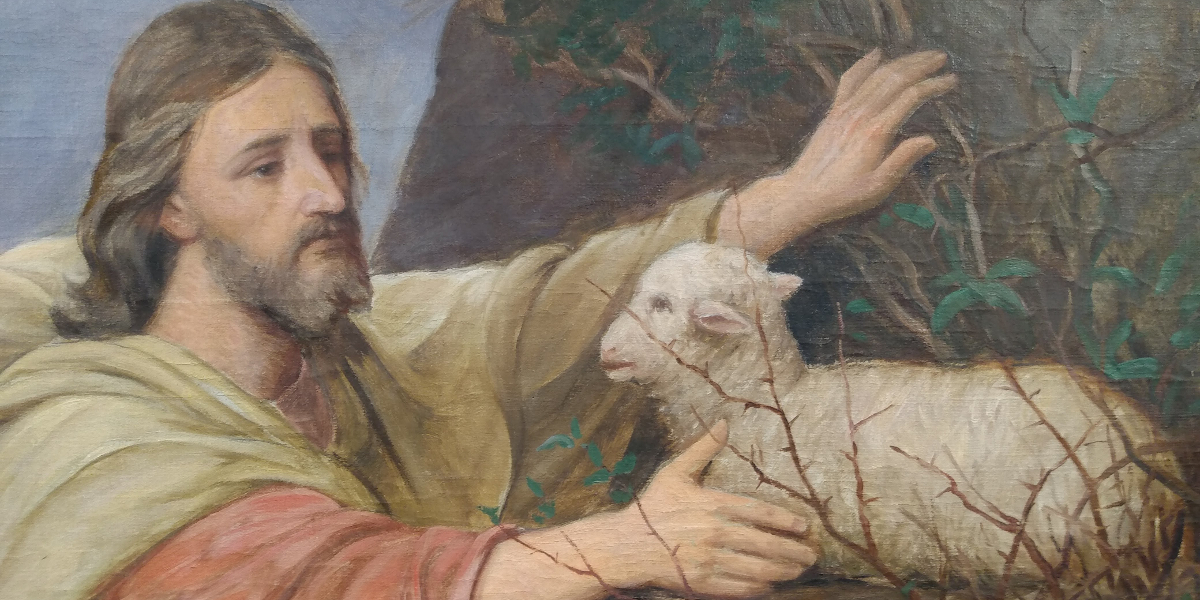
Text: St. John 10:11-16
In Christ Jesus, who came that we “may have life and have it abundantly” (Joh. 10:10), dear fellow redeemed:
The most well-known and best-loved Psalm in the Bible is Psalm 23. We love the picture of a shepherd guiding his sheep to green pastures and still waters, leading them safely through the valley of the shadow of death, providing everything they need, and bringing them everlasting peace. This Psalm is comforting because it emphasizes the work of the shepherd, how he cares for the sheep.
If it were a Psalm about what the sheep do, the picture would be much darker. The sheep wander this way and that and become separated from each other. They don’t know where to find food and water. They walk through the valley of the shadow of death with no one to defend them. Evil surrounds them, and they are very afraid. Enemies get ready to attack, and the sheep cannot defend themselves. They are helpless; they have no hope.
This is the spiritual reality for us apart from Jesus. We don’t know the right way to go. We are constantly exposed to the devil’s attacks, and he sends us deeper and deeper into sin and guilt. Death is coming, and there is nothing we can do to avoid it. We are hopelessly lost, and we cannot find our way to safety.
But as helpless and hopeless as we are, the LORD our Shepherd still cares for us. He does not want to leave us to our own sinful devices. He does not want the wolves to slink in and pick us off. He does not want to hand us over to death. We see this in the way He snatched Adam and Eve back from the jaws of the devil and death when they fell into sin. He promised that He would “put enmity between” the devil and the woman’s offspring, and that He would send One to crush Satan’s head (Gen. 3:15).
This One is Jesus, true God and true Man. He is “the Good Shepherd,” who “lays down His life for the sheep.” That sounds like good news for the sheep, except that if their Shepherd lays down His life for them, who will be left to defend them? If the Shepherd dies for His sheep, there is no hired man who will stand with the sheep. He will see the wolf coming and leave the sheep and flee. So what good could the Shepherd’s death actually do?
We need to understand that the Shepherd laying down His life for His sheep is not some desperate fight to the end, and that as soon as it’s over for the Shepherd, it’s over for the sheep. What is taking place by His sacrifice is a great Divine Bargain. The Shepherd agrees to lay down His life on behalf of, or in the place of, His sheep. God the Father sent His Son for this very purpose. The way Satan’s head would be crushed, the way his power would be taken away from him, is by the Shepherd offering Himself as the atoning sacrifice for all sin.
Only a perfect sacrifice would do. The Shepherd, who never failed at His duties, who never lost track of the sheep, who never took the wrong path, stepped in to suffer and die for the sins of every person. He suffered as though He had wandered away from God like we have, acted foolishly and selfishly like we do, followed His own sinful desires like we have, and ignored God’s law. Whatever you and I have done to break God’s Commandments, endanger our faith, and put ourselves in the devil’s grip, Jesus took the punishment for it. The prophet Isaiah described it like this: “All we like sheep have gone astray; we have turned—every one—to his own way; and the LORD has laid on him the iniquity of us all” (53:6).
Jesus offered His perfect, righteous life in place of ours. He shed His holy blood to wash away every sin. This was the price for our redemption. This was the Divine Bargain: He would suffer and die for our sins, so we would receive His righteousness and eternal life. Jesus did what He told His disciples He came to do: “I lay down My life for the sheep.” But immediately after that statement, He indicated that He had gracious work to do beyond His sacrifice: “I have other sheep that are not of this fold. I must bring them also, and they will listen to My voice.”
How this would be possible was made clear in the very next verses after today’s reading, where Jesus says, “I lay down my life that I may take it up again. No one takes it from me, but I lay it down of my own accord. I have authority to lay it down, and I have authority to take it up again. This charge I have received from my Father” (Joh. 10:17-18). The Good Shepherd laid down His life for the sheep fully trusting His Father’s plan that He would be raised again. The sheep would not be left to fend for themselves, not the disciples in Jesus’ day and not us. Jesus died to redeem us, and He lives to save us.
We mentioned how much people appreciate Psalm 23. What might be lost on them is how well this Psalm connects with the one before it. Psalm 22 starts like this, “My God, My God, why have You forsaken Me? Why are You so far from helping Me, And from the words of My groaning?” Later in the Psalm we hear, “They pierced My hands and My feet; I can count all My bones. They look and stare at Me. They divide My garments among them, And for My clothing they cast lots” (vv. 1,16-18, NKJV). Psalm 22 is one of the clearest depictions in the Bible of Jesus’ suffering and death on the cross. But what could this Psalm of agony have to do with the peaceful Psalm that follows it?
Psalm 23 describes the fruit of His victory over death and the ongoing work He continues to do among us. Our risen Lord supplies us with everything we need for our salvation. He leads us to the green pastures and still waters of His Word and Sacraments. That’s where He feeds us, restores our soul, strengthens our faith. He leads us in the paths of righteousness. Those are the paths of God, His paths. We walk along them by His grace, “for His name’s sake,” because of what He has done for us.
We walk through the valley of the shadow of death in this life; we face temptations, hardships, sorrows, persecution; every day is a day closer to our death. But we fear no evil. Why? Because the Lord Jesus, the Good Shepherd, our crucified and risen Savior is with us. Because He is with us, we rejoice with Him and feast with Him even in the presence of our enemies. St. Paul writes, “If God is for us, who can be against us? He who did not spare his own Son but gave him up for us all, how will he not also with him graciously give us all things?” (Rom. 8:31-32).
On our own, we—the weak and vulnerable sheep—don’t have a chance. But in Him, we have every confidence. If He was willing to die in our place, for our sins, He is not going to abandon us now. If He was willing to seek after us and bring us back when we wandered and became lost in our sin, He will keep watch over us and protect us today. We Gentiles used to be outside the fold. There was a time when our forefathers did not listen to His voice. They followed gods and superstitions of their own making. That would still be true of us today if not for God’s grace toward us.
The fact that the saving faith has come to us is a fulfillment of Jesus’ promise in today’s reading: “I have other sheep that are not of this fold. I must bring them also, and they will listen to My voice. So there will be one Flock, one Shepherd.” We are believing Gentiles whom God has called along with believing Jews into the “one holy Christian and Apostolic Church” (Nicene Creed). We are sheep by faith, not by nationality. The members of His holy Church have passed through the same cleansing waters of Baptism. We have received the same body and blood of our Lord. We are gathered into His body with Him as our Head. He nourishes and cherishes us, just as a Shepherd nourishes and cherishes His sheep.
The Shepherd grows His holy Flock of believers in no other way than through His Word. He speaks, and the sheep hear His voice. We cannot see the future. We do not know what the way forward will look like. We don’t know what trials and temptations we will face. Will there be days of gladness or seasons of sadness (ELH #377, v. 3)? How dark will the shadow of death hang over us? Will the days to come be many or few?
We fear no evil because the Shepherd speaks. We know His voice. There is no other voice like His. Other voices make grand promises: “You can have more!” “You can be happier!” “You can leave all your troubles behind!” These voices would pull us in every direction away from Christ. But only He has the words of eternal life (Joh. 6:68). Jesus says, “My sheep hear my voice, and I know them, and they follow me. I give them eternal life, and they will never perish, and no one will snatch them out of my hand” (Joh. 10:27-28).
The world can make no such promises. The world cannot give you eternal life. Only He who laid down His life and took it up again can do that. He did that for you. You are not “just another sheep” to Him. He knows you, knows everything about you—your sins, your struggles, your weaknesses. He chose to suffer for you, die for you, and rise again for you, so that you would live with Him. “Surely goodness and mercy shall follow [you] All the days of [your] life; And [you] will dwell in the house of the LORD Forever” (Psa. 23:6).
Glory be to the Father and to the Son and to the Holy Ghost; as it was in the beginning, is now, and ever shall be, forevermore. Amen.
+ + +
(picture from Saude Lutheran Church altar painting)

The Twenty-Fourth Sunday after Trinity – Pr. Faugstad sermon
Text: 2 Kings 20
In Christ Jesus, who alone is “the way, and the truth, and the life” (Joh. 14:6), dear fellow redeemed:
King Hezekiah, as we heard, was very sick. Our reading tells us that he had a boil, the same word used for the boils the LORD sent on the Egyptians and the boils that afflicted Job (Exo. 9:9, Job 2:7). Hezekiah’s boil had presumably caused a serious infection that had brought him to “the point of death.” The LORD sent the prophet Isaiah to visit him with this message: “Set your house in order, for you shall die; you shall not recover.” That was a shocking word for a king who was only thirty-nine years old at this time and had ruled well for fourteen years.
But as you know, death does not often—or even ever—come at the “right time.” From our perspective, the death of a loved one always comes too soon. Even when a medical treatment or a miracle extends a life by the grace of God, we are still not ready when death comes. No amount of time is enough time. The number of days a person will have is not known to us, but it is known to God.
When He created us in our mother’s womb, He had already determined the length of our days. Psalm 139:16 says: “Your eyes saw my unformed substance; in your book were written, every one of them, the days that were formed for me, when as yet there was none of them.” The psalmist in another place asks God to keep him from getting too caught up in his life in the world: “O LORD, make me know my end and what is the measure of my days; let me know how fleeting I am!” (Psa. 39:4).
In the oldest Psalm in the Book, Moses makes this request of the LORD: “So teach us to number our days that we may get a heart of wisdom.” There is wisdom in recognizing the shortness of our life here on earth. There is wisdom in making preparations for our death. As Christians, we know that death is not the end of our life; it is the beginning of our eternal life in the Lord’s presence.
So if a prophet visited you and said, “Set your house in order, for you shall die,” what would you do? I suppose that depends on how much time you had. What if you had two years to live? Two months? Two weeks? Two days? You would get your legal papers in order. You would contact your family members and friends to express your love for them. You might take a trip you always wanted to take.
It is good to give some thought to these things, since we don’t know when our death will come. You can save your family members a lot of trouble by making your wishes known in a will and by doing some advance planning for your funeral and burial. But it is much more important to make sure you are prepared spiritually, to get rid of any sin you have been holding onto, or has been holding on to you.
Are you keeping any old grudges that you could try to resolve? Have you been hiding something that has compromised you spiritually, endangering your faith, something that could cause embarrassment to your family if it were discovered after you are gone? Are you waiting to talk with an estranged family member or friend until “sometime down the road”—a time that may never come?
Our Lord Jesus teaches us to forgive others as God has forgiven us. We deal with anger, bitterness, and pain not by hoping they will go away, but by dealing with them through confession and absolution. This is also what we do with secret sins. We get rid of any snares in our home or life that are tempting us or leading us to sin, and we lay all our sins out in the open before God through repentance.
We do these things each week in the Divine Service, so your attendance here is a big part of preparing for your death. Here you are taught to examine your heart and life for sin. Here you are absolved of those sins by the Word of Jesus. Here you are pointed to the work He has done to save you through His death and resurrection. Here you receive the gifts of His life and salvation through His Word and Sacraments. Here you are encouraged to pray and bring your needs and requests before Him.
After hearing the word from Isaiah about his imminent death, Hezekiah prayed to the LORD. Our reading contains a short version of this prayer. The book of Isaiah records a longer version. In the longer version, Hezekiah acknowledged that he had been prideful and not given all glory to God. He said, “Behold, it was for my welfare that I had great bitterness; but in love you have delivered my life from the pit of destruction, for you have cast all my sins behind your back” (38:17). This prayer of confession was accompanied by great weeping. The LORD’s message through Isaiah had hit home; Hezekiah recognized his own mortality.
The LORD listened to his prayer. He sent Isaiah to tell Hezekiah, “I have heard your prayer; I have seen your tears. Behold, I will heal you. On the third day you shall go up to the house of the LORD, and I will add fifteen years to your life.” “On the third day”—that didn’t make Hezekiah’s ears perk up like it does ours. But it is one in a line of hints about a future “third day,” the greatest “third day.”
Jonah was swallowed up by a huge fish for three days before it spit him back on shore (Jon. 1:17), and Jesus later applied this account to His own burial “in the heart of the earth” (Mat. 12:40). When the Jews asked Jesus for a sign for His authoritative teaching and work, Jesus answered, “Destroy this temple [talking about His body], and in three days I will raise it up” (Joh. 2:19). At least three times before He entered Jerusalem on Palm Sunday, Jesus told His disciples that He would be condemned and killed and “after three days rise again” (Mar. 8:31, 9:31, 10:34).
Jesus’ prophecies about His resurrection “on the third day” were not empty words. He was crucified, died, and was buried on Good Friday, and on the following Sunday morning—the third day—He rose from the dead. Death could not hold Him because He had conquered death. And He didn’t just conquer it for Himself; He conquered it for you and me. His disciples didn’t believe it until they saw Him alive in the flesh with their own eyes. Then they wrote down what they saw. Their eyewitness account stands as a testimony to the whole world that Jesus the Christ is risen! He is risen indeed!
His resurrection is why we don’t view our physical death here on earth as “the last thing.” We do not want to die, but it does not terrify us like it does unbelievers. They run from death and even distance themselves from loved ones who are dying because they cannot bear the thought of their own death. On the other hand, we Christians sing, “For me to live is Jesus, / To die is gain for me; / Then, whensoe’er He pleases, / I meet death willingly” (ELH #473, v. 1).
We meet death willingly because Jesus has turned our earthly death into the entrance to eternal life. When a believer in Jesus dies, his soul goes immediately to be with the Lord. His body is laid to rest, put to bed in the casket, for an unknown amount of time. The body rests in peace until Jesus comes back visibly in all His power and glory on the last day. He will come with a shout, and all the dead will wake up from their slumber (1Th. 4:16). Then He will gather all believers to Himself, whole, glorified, soul and body joined once again, to go with Him to His heavenly kingdom.
Until that day comes, those who have died in the Lord are only sleeping. That’s what death is to God, nothing more than a sleep. We have no power over death, but He does. He can wake us from it as easily as we can wake someone from an afternoon nap. We often use the term “pass away” for death, but that does not come from the Bible. The Bible often uses the term “sleep.”
Jesus described His friend Lazarus as having “fallen asleep” after he had died (Joh. 11:11). Several times, St. Paul referred to believers who had died as “those who have fallen asleep” (1Co. 15:6,18,20; 1Th. 4:14,15). In today’s Holy Gospel, Jesus told the mourners who had gathered at the house of a dead girl, “the girl is not dead but sleeping” (Mat. 9:24). And in our reading from 2 Kings, we hear that “Hezekiah slept with his fathers.” He died as they had died and was buried where they had been buried.
But for them—for you—death is not final. Hezekiah may have died, but he lives. His soul is with the LORD, and his body will be resurrected on the last day. This is God’s promise for all who trust in Him. He died to blot out every one of your sins. He rose in victory over your death. It does no good to try to hide your sins away or to imagine that death will not come for you. Jesus took your sins on Himself, and He paid the price for them. He took on your death, and on the third day, He overcame it to win for you eternal life. Your hope is not in what you can do about your sin and death; your hope is in what He has done to save you.
As Isaiah said would happen, Hezekiah recovered on the third day and went up to the house of the LORD. Because of Jesus’ resurrection on the third day, you also go to His holy house with rejoicing. You thank and praise Him that He has rescued you from temporal and eternal death. Though you are dying, yet He gives you His life. You receive this life through His Word of life and through “the medicine of immortality”—His holy body and blood—which He gives for you to eat and drink at His holy table.
Because Jesus is “the resurrection and the life,” because He imparts His life to you, you and all who believe in Him will live, even though your body dies, and everyone who lives and believes in Him shall never die (Joh. 11:25-26).
Glory be to the Father and to the Son and to the Holy Ghost; as it was in the beginning, is now, and ever shall be, forevermore. Amen.
+ + +
(picture from woodcut by Julius Schnorr von Carolsfeld, 1794-1872)

Palm Sunday – Pr. Faugstad sermon
Text: Numbers 21:4-9
In Christ Jesus, whose saving work was foretold by the prophets and depicted among the peoples at many times and in many ways, dear fellow redeemed:
If you had to guess what verse in the Bible is the most popular one, you would probably say John 3:16, “For God so loved the world that He gave His only begotten Son, that whoever believes in Him should not perish but have everlasting life.” It is an awesome verse. It clearly states that we are saved from our sin and death by faith in the Son of God. But did you know that the context leading up to this verse includes a reference to the bronze serpent that Moses made?
John 3:14-15 says, “And as Moses lifted up the serpent in the wilderness, so must the Son of Man be lifted up, that whoever believes in him may have eternal life.” Then the famous passage follows. By this reference to today’s account from Numbers 21, our Lord is teaching us how to read the Old Testament. We read the Old Testament not just for historical purposes and not just for lessons about what we should and should not do. We read the Old Testament as a book about God keeping His promises, including His chief promise to send a Savior for sinners.
We certainly find sinners in today’s reading. Once again, the Israelites became impatient. Once again, they grumbled and complained. They took God’s gifts for granted and wished they could go back to Egypt where they recalled being so happy and healthy. It is obvious the devil had “pulled the wool over their eyes.” The people needed to be brought out of their spiritual sleep. They needed to be reminded who the LORD was and what He was doing for them.
But being made aware of our wickedness and weakness is not a pleasant experience. It certainly wasn’t for the Israelites. The LORD sent fiery serpents among the people. We don’t know exactly what made the serpents “fiery.” Perhaps it was their appearance. Perhaps it was the type of pain people felt when they were bitten. It was a terrifying experience that claimed the lives of many people.
It also woke the people up. They came to Moses in humility and repentance, “We have sinned, for we have spoken against the LORD and against you. Pray to the LORD, that He take away the serpents from us.” They realized their sin the hard way. Instead of trusting God and obeying His will, they broke His holy Law and faced the consequences.
We can also think of many times that we learned about sin “the hard way.” We decided to do what we knew was wrong. We thought we could get away with it, or we thought it was worth the risk, but that sin came back to bite us hard. Some sins have temporary consequences, but other sins have deeper consequences that can last our entire life and negatively impact others even after we are gone.
The sin we have inherited from Adam is like the bite of a poisonous serpent. The poison works its way further and further in, and if no treatment is applied, it leads to death. The Book of James outlines the progression of sin: “But each person is tempted when he is lured and enticed by his own desire. Then desire when it has conceived gives birth to sin, and sin when it is fully grown brings forth death” (Jam. 1:14-15). This is not just about physical death which touches all people. This is about eternal death in hell which is received by all who remain in their sin and refuse to repent.
It was a gift from God that the people afflicted by the fiery serpents repented. Not everyone feels sorry for sin. Many boast how there is nothing about their life they would change. “I did it my way,” they say, as though that is something admirable. So we see that God was mercifully leading the Israelites out of their sin and unbelief and back to Him in faith. They went to God’s servant Moses, admitted their wrong, and begged him to intercede for them. Moses prayed to the LORD, and the LORD listened to his prayer. He said to Moses, “Make a fiery serpent and set it on a pole, and everyone who is bitten, when he sees it, shall live.”
Now this seems a little odd. Why would God tell Moses to put on a pole an image of the very animal that was killing them? And how could the lifeless image of a serpent save the people from the bite of actual serpents? This was a test of faith. The power to save the people was not in a piece of metal on a pole. The power to save the people was in the promise God attached to the image. He said, “and everyone who is bitten, when he sees it, shall live.” Would the people trust God’s Word now?
We are faced with a similar test when we look at God’s Sacraments. Many people—even many Christians—reject the Sacraments as external things, as empty rituals, that have no real effect on our faith. They say it is little more than getting water splashed on you, than eating bread and drinking wine. We receive no benefit if we look at the Sacraments in this way and just go through the motions because we feel like we should. But if we listen to what our Lord says about them, if we recognize that the power of the Sacraments is in His Word, and we trust the promise He attaches to these visible means, then we receive great benefit.
The Israelites may have tried to apply medicinal remedies of their own making to their family members and friends who had been bitten. Maybe they tried to chase the snakes away. But their efforts all failed. People kept dying. They could not save themselves. Only God could rescue them. He directed Moses to lift up the bronze serpent on a pole, and the people who trusted His promise were spared. “[I]f a serpent bit anyone, he would look at the bronze serpent and live.”
So when the devil with his temptations slithers toward you, when sin sinks its fangs into you, when its poison works its way through you, what can you do? You can’t save yourself. You don’t have the power to neutralize your sins or keep their poison from spreading. You can’t heal the wounds inflicted by your sin or outrun the consequences of what you have done. There is only one remedy, only one antidote for sin—“as Moses lifted up the serpent in the wilderness, so must the Son of Man be lifted up” (Joh. 3:14).
The Son of Man, Jesus Christ, had to be lifted up. It was absolutely necessary. The antidote for sin’s poison had to come from God to us. He sent healing and salvation to us by giving His Son to suffer and die in our place. That is our focus in this holiest of weeks beginning with our Lord’s humble entry into Jerusalem.
He was welcomed as a king on Palm Sunday, but the true nature of His kingdom would not be clear until He was wearing a crown of thorns on Friday. His throne was not covered in gold. It was splattered in the holy blood that oozed from His wounds. His throne was that rough, wooden cross that lifted Him up for all eyes to see. Many looked at Him in unbelief; they ridiculed and blasphemed Him.
Even for them, Jesus willingly suffered. Even for you. He carried your sins to the cross. He felt their painful bite and their burning poison. He did not grumble or complain. He did not ask His Father why He sent Him from heaven to die in the wilderness of the world. He accepted the punishing wrath of God and endured the eternal torments of hell, so you would not die but live.
Sin filled you with death, but Jesus fills you with life. He counteracts the effects of all your sins, including the ones that caused deep wounds and piercing pain in you and others. By giving up His holy life in payment for sin, He won forgiveness and salvation for you. He brings the fruits of His victory to you right now through His Word and Sacraments. Through these means, He imparts the medicine of life. You hear His promises spoken to you, you eat His body and drink His blood with faith in what He says, and His power works through you to heal, comfort, and strengthen you.
Whether you feel healthy and strong in your spiritual life or under attack and weak, you keep your eyes always on the Son of Man who was lifted up to save you. If you tried to measure your faith by how well you are doing or how much you have accomplished, you would be applying the Law as a remedy to your sinfulness. But the Law cannot save you. One of our great Lutheran hymns puts it well:
The law reveals the guilt of sin,
And makes men conscience-stricken;
The gospel then doth enter in,
The sin-sick soul to quicken.
Come to the cross, loop up and live!
The law no peace to thee doth give,
Nor can its deeds bring comfort. (Evangelical Lutheran Hymnary #227, v. 9)
You look to Jesus for comfort. His Father sent Him to fulfill the promise of the ages by suffering and dying in your place. Like the whole creation that eagerly waits for the blossoming and new life of spring, the entire Old Testament anticipates the coming of the Savior. Jesus said to the Jews, “You search the Scriptures because you think that in them you have eternal life; and it is they that bear witness about me” (Joh. 5:39).
The bronze serpent on a pole was a picture of what Jesus would do on the cross. Like the Israelites who looked up with faith in the LORD’s promise, you also by faith Come to the Cross, Look Up and Live! In Jesus, you have life for today, life for this Holy Week, and life forevermore. Thanks be to God. Amen.
+ + +
(picture from “Crucifixion, Seen from the Cross,” by James Tissot, c. 1890)

The Fourth Sunday in Lent – Pr. Faugstad sermon
Text: Exodus 16:1-3, 11-21
In Christ Jesus, the better Bread than manna or good health or great wealth, whom we feast on by faith for eternal salvation, dear fellow redeemed:
We have all had the experience of living day to day with regard to our health. We were dealing with an illness or a pain that forced us to take it one day at a time. Perhaps we have been day to day with a job, not knowing if we would be coming back the next day. But I’m guessing that most of us here have never had to live day to day with regard to food. We either had food in the fridge or pantry, or we had the means to be able to get more. In this way, we possibly haven’t felt the desperation that people throughout history have felt when they are hungry and have no ready source of food.
The Israelite people were hungry, and as far as they could see, there was no food available for the estimated hundreds of thousands in the assembly. Hunger makes it difficult to think clearly. This may be why the people sounded so positive about their time as slaves in Egypt, remembering when they “sat by the meat pots and ate bread to the full.” Hunger also causes irritation. The hungrier the people got, the more they grumbled against Moses and Aaron.
But when we are experiencing some trial or test, it is a clear indication that God wants to teach us something. What He wanted to teach the Israelites in the wilderness is that even if they could not see a way out of the problem they faced, He would provide for them. That is exactly what He had promised to do. Hadn’t He brought them safely out of Egypt? Hadn’t He brought them through the Red Sea? Why would He forsake them now and leave them to die in the wilderness?
He told Moses to tell them, “At twilight you shall eat meat, and in the morning you shall be filled with bread. Then you shall know that I am the LORD your God.” The meat came in the form of quail which essentially fell right into their hands that evening. The bread came with the morning dew. When the dew went away, “a fine, flake-like thing” was left. When the people saw it, they asked, “What is it?”—in Hebrew, “Man hu?” which became the name manna.
It was bread from the LORD, bread from heaven. And there was an abundance of it. The people were directed to gather an omer of it for each person, which was about two quarts in volume. Once the people had gotten what they needed, the manna still on the ground melted away with the sun. The people were to collect it every day—God sent it without fail. When they tried to save some from one day to the next, “it bred worms and stank.”
The message was clear: the LORD would provide their daily bread. They literally lived day to day with regard to their food. They had no other source to draw from. They had to rely on the LORD if they wanted to live. This is a lesson that Jesus emphasized to His disciples when they asked Him how to pray. Out of the seven petitions He taught them, only one of them had to do with their earthly needs: “Give us this day our daily bread” (Mat. 6:11, Luk. 11:3).
Notice the right-now focus of the petition: “Give us this day our daily bread.” Jesus does not teach us to wring our hands over how our bank accounts look or how our investments are doing, worrying about whether we will have enough for the future. He teaches us to pray for and to trust that our heavenly Father will provide each day what we need for our life.
I don’t know about you, but I like to plan a little more than that. I’m already thinking about and saving for the future—a future, I might add, that I’m not even sure I will live to see. That’s part of the reason God warns us about getting too caught up in our plans. We don’t determine our future; He does. We don’t get to choose the number of our days; He does.
That is not to say we should spend or give away everything we have today since God will take care of us tomorrow. We want to manage well what He gives us. We don’t want to be reckless or wasteful. But the Lord’s message is clear. We do not need to be anxious about what we will eat or drink or wear, because “[our] heavenly Father knows that [we] need them all,” and “all these things will be added to [us]” (Mat. 6:32,33).
God will give us daily bread; He will give us everything we need for this life. That is His promise. But what we want and what we need are not the same. You might be convinced that you need a certain amount of money stashed away, or that you need a certain job promotion, or that you need a certain level of health to enjoy life. But those are actually wants. God knows what you need. That is why you pray, “if it is Your will,” whenever you ask the Lord for something He has not specifically promised to give you. It is not that God is stingy; it’s that He loves you too much to give you everything you want.
The reality is that we would never think we had enough. We would look at our Father in heaven as little more than a perpetual ATM, and we would act like spoiled children. That’s what we see in the Holy Gospel for today from the five thousand men whom Jesus fed in a remote area (Joh. 6:1-15). They no doubt heard that Jesus started with five barley loaves and two fish. They saw how that small amount of food multiplied, and every man had as much as he wanted. They saw the fragments gathered up which filled twelve baskets.
“This is indeed the Prophet who is to come into the world!” they said (v. 14). They were thinking of the prophecy of Moses that a Prophet like him would come from among the Israelites (Deu. 18:15). They connected the manna that came when Moses was ruler to the bread Jesus now provided in a miraculous way. It all lined up. What better ruler could they hope for than Jesus? He could give them whatever and as much as they wanted!
But Jesus was not about to become their “bread king.” When the people located Him the next day, they asked if He might do for them what Moses did for the Israelites in the wilderness. Jesus replied, “my Father gives you the true bread from heaven. For the bread of God is he who comes down from heaven and gives life to the world” (vv. 32-33). The people were still thinking about earthly bread, earthly riches, earthly glory.
“I am the bread of life,” said Jesus. “Your fathers ate the manna in the wilderness, and they died. This is the bread that comes down from heaven, so that one may eat of it and not die” (vv. 48-50). Jesus was teaching the people about spiritual things, holy things, eternal things. He was teaching them about faith, salvation, and everlasting life. He said, “I am the living bread that came down from heaven. If anyone eats of this bread, he will live forever. And the bread that I will give for the life of the world is my flesh” (v. 51).
The people wanted their physical needs met by Jesus. He had something better to give them—His own life. Jesus knew that we have a much more serious problem than where to get our next meal. We face a spiritual starvation that cannot be satisfied by any of our own efforts or works. On our own, we are doomed to death and eternal punishment. So God the Father sent His Son to save us.
His mission was much bigger than feeding the hungry. His mission was perfectly fulfilling the Law of God in our place, including the command to trust God for all our needs. Then He gave up His perfect life to atone for all our sins. Jesus died on the cross to pay for our grumbling, our greed, our self-gratification. All our sins—whatever they may be—are washed away by His holy blood.
After calling Himself “the living bread,” Jesus told the people they must feed on His flesh and drink His blood to have eternal life (v. 54). He was talking about faith, that they must put their trust for salvation only in Him. You feast on this “bread from heaven,” this “bread of life,” by hearing the holy and life-giving Word of Jesus, by returning to your Baptism through His Word of forgiveness, by eating and drinking His body and blood in the Holy Supper He instituted.
These are the ways that your spiritual hunger is addressed. These are the ways that the Holy Spirit increases your faith, so that you worry less about the unknown tomorrows and focus more on the blessed todays. Not only will you continue to receive the daily bread that you need for this life, but you can be certain that the Bread of Heaven, our Lord Jesus Christ, will never leave you hungry, never leave you lacking in your spiritual needs.
In your deep hunger for love, your deep hunger for peace, your deep hunger for life, He comes to you still. He gives you His forgiveness, He covers you in His righteousness, and He fills you with His grace. He is the Bread you need most, the Bread you feed on for eternal life.
Glory be to the Father and to the Son and to the Holy Ghost; as it was in the beginning, is now, and ever shall be, forevermore. Amen.
+ + +
(picture from “The Miracle of the Loaves and Fishes” by James Tissot, 1836-1902)
Thanksgiving – Pr. Faugstad homily
Text: Genesis 1:26-31
In Christ Jesus, who is “the radiance of the glory of God and the exact imprint of his nature, [who] upholds the universe by the word of his power” (Heb. 1:3), dear fellow redeemed:
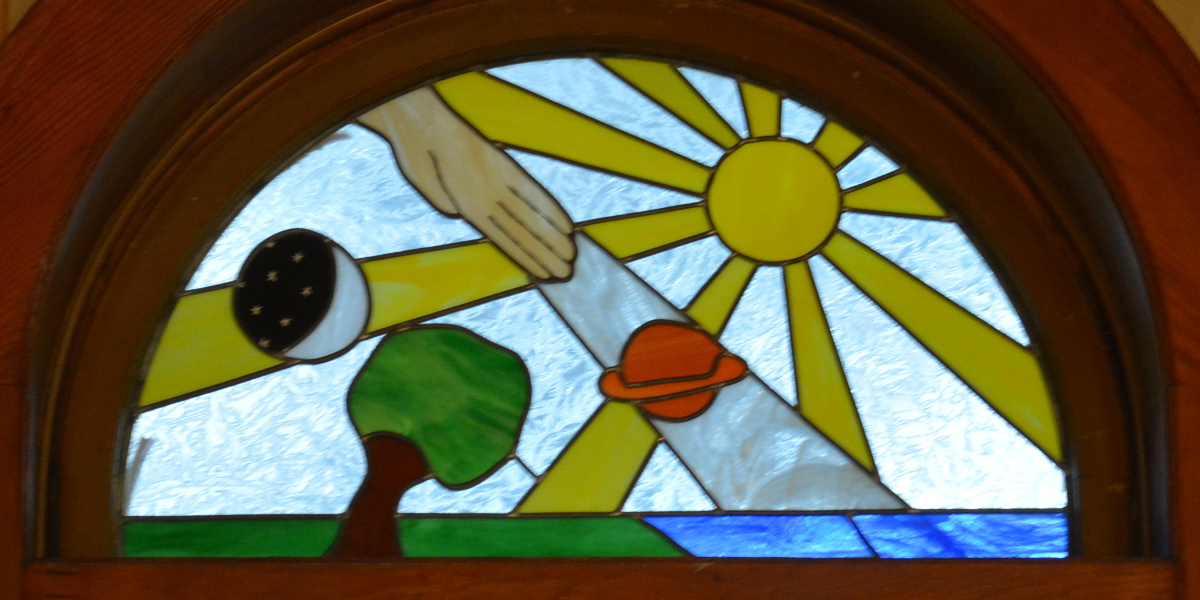
The book of Genesis does not start like we might expect. It does not begin with an explanation of who God is or why He decided to make things. It just tells us in a very concise way how God created time, space, and matter. “In the beginning [time], God created the heavens [space] and the earth [matter].” Then we see how God ordered the universe and everything in it. Every detail led up to the crowning moment, the greatest part, of His creation which we hear about in today’s reading—the creation of man.
Can you see how marvelous and exalted this creation is? In the council within the Godhead—Father, Son, and Holy Spirit in perfect communion—God said, “Let Us make man in Our image, after Our likeness.” The pronouns are plural because God is triune, three Persons in one. God did not say about the water, the trees, or the planets, “Let us make them in Our image.” And He did not say it about the fish, the birds, the land animals, or even the angels. He said it about mankind, and only mankind.
Man is made in the image of God. That does not refer to physical characteristics because God is spirit. We do not look like God, though God made Himself look like us when the Son took on our flesh to save us. The image of God is the special imprint of holiness from God, true knowledge, goodness, love, wisdom, peace. Adam and Eve had these things perfectly. They had everything that is good. They lacked nothing. They enjoyed every second of their existence.
Their existence in the beginning is like nothing we can comprehend. The light was brighter, the food more delicious. They were surrounded by beauty and harmony and sound like our eyes have never seen and our ears have never heard. They had “dominion over the fish of the sea and over the birds of the heavens and over every living thing that moves on the earth.” This was not an authority to harm; it was authority to care for and keep and enjoy all the wonderful parts of God’s creation.
It was a creation full of life, and that life would only increase. “Be fruitful and multiply,” God said, “and fill the earth and subdue it.” No creature knew what death was because nothing died. All animals ate plants. God gave the produce of every plant and tree to man, including the most special tree in all creation, the tree of life. We don’t know what life tastes like, but Adam and Eve did. They smelled and saw and tasted life to the full because life is all there was.
But then they decided that they wanted more. They knew good perfectly, but what if there was somehow a higher good? “Eat this fruit,” said the serpent, and “your eyes will be opened, and you will be like God, knowing good and evil” (Gen. 3:5). They did what he said. They chose the words of the deceiver over the holy words of their Creator. This horrible, disobedient act plunged all creation into the sadness and suffering of sin.
It does us no good to be mad at them. There is no going back in this life. What they did, we inherited, which makes us just as guilty as they are. We cannot go back and undo what has been done, either by Adam and Eve or by us in our sin. The power of salvation is not in us, but it is in God. And the LORD says to us, “Come now, let us reason together… though your sins are like scarlet, they shall be as white as snow; though they are red like crimson, they shall become like wool” (Isa. 1:18).
Our sins are blotted out because the Son of God became man and shed holy blood to take them all away. We can’t go back to atone for our sins, but Jesus could. God reached back to the beginning of time and gathered up the sin of Adam and Eve, their children, and their children’s children. He swept up all the sin from the past up to the present. And then He reached forward and gathered up all sins that hadn’t even been committed yet, including our sins.
All the sins of the world, past, present, and future, God imputed to His perfect Son. He did it for our sake. “For our sake he made him to be sin who knew no sin, so that in him we might become the righteousness of God” (2Co. 5:21). What the first Adam lost, the second Adam, Jesus, restored. The wrath of God that we deserved, Jesus satisfied. The image of God that we gave up was placed on us again when the Holy Spirit brought us to faith. “Therefore,” writes St. Paul, “if anyone is in Christ, he is a new creation. The old has passed away; behold, the new has come” (2Co. 5:17).
A new creation in Christ. And that means we focus not so much on what we lost in the fall, but on the blessings that are ours right now, and the joys we will have with God in heaven. Even though everything in the world is tainted by sin, there is so much beauty to enjoy in God’s creation. We can look at one tiny piece of what He made and never understand the full scope of its wonder and complexity. So much of His majesty still shines through.
Still, mankind is the crown of God’s creation, though the image of God is not perfectly restored to us in this life. Still, we have dominion over all creation and receive blessings from it every day. Still, God gives the gift of procreation, so that we enjoy family and home. Still, God causes plants to grow, so all creation is sustained and fed. God’s creation is still “very good” because God is very good.
And He has far more in store for us than the blessings we have in this life. A place for us has been prepared in His Paradise above. There we will enjoy the image of God just as Adam and Eve had it. There we will eat from “the tree of life with its twelve kinds of fruit” (Rev. 22:2). There we will see and hear and taste and experience what cannot even be imagined here.
Why does God give you all these good things? We just confessed it in the First Article: “purely out of fatherly, divine goodness and mercy, without any merit or worthiness in me.” And how do we respond to His gifts? “For all which I am in duty bound to thank and praise, to serve and obey Him.” What a blessing and a privilege to be able “to thank and praise, to serve and obey” our mighty God, the Maker of heaven and earth, and our merciful Savior.
Glory be to the Father and to the Son and to the Holy Ghost; as it was in the beginning, is now, and ever shall be, forevermore. Amen.
+ + +
(picture from Saude Lutheran Church stained glass)

The Last Sunday of the Church Year – Pr. Faugstad sermon
Text: 1 Thessalonians 5:1-11
In Christ Jesus, the Light and Day, who drives the night and gloom away; the Light of light, whose Word does show the light of heav’n to us below (ELH 571, v. 1), dear fellow redeemed:
In the Scripture readings for today, we get a very strong sense of time—time moving, the days advancing, the sun dropping down toward the horizon as dusk sets in. The Holy Gospel describes a bridegroom delayed, light giving way to darkness, drowsiness and sleep overcoming those who watch and wait (Mat. 25:1-13). These are fitting readings for this time of the year when the daylight is diminishing and we reluctantly head into the cold of winter. They are also fitting readings for this time in the church year as we make preparations for the sunset of our life and for our Lord’s return.
In his inspired First Letter to the Thessalonians, Paul acknowledges what those believers already knew, “that the day of the Lord will come like a thief in the night.” In other words, nobody will be able to guess when it is that Jesus will come in glory to judge the living and the dead. That hasn’t stopped some from trying. A simple internet search lists hundreds of predictions throughout history of the end of time. Many of you remember the increase in these predictions leading up to the year 2000 and then again with the Mayan calendar excitement in 2012.
The people who try to predict the end on the basis of the Bible have a way of reading prophecies and adding up dates, so that they think they can discover secrets from God. They are trying to sort out “times and seasons” in a way that God has not invited them to do. Jesus said very clearly, “But concerning that day and hour no one knows, not even the angels of heaven, nor the Son, but the Father only” (Mat. 24:36). He said this during His state of humiliation when He was not making full use of His divine powers. Now in His state of exaltation Jesus knows that day, but no one else does know it or can know it.
We can, however, see the signs that the end is near. Jesus prophesied that false christs would appear and lead many astray. There would be “wars and rumors of wars,” “earthquakes in various places,” and “famines” (Mar. 13:6-8). We see these things all around us. They should make us prepare for Judgment Day and look for it. Today’s reading indicates that many are not looking for Jesus’ return. His return will catch them by surprise: “While people are saying, ‘There is peace and security,’ then sudden destruction will come upon them as labor pains come upon a pregnant woman, and they will not escape.”
How is it that you can stay prepared, so “sudden destruction” does not fall upon you? Paul writes, “you are not in darkness, brothers, for that day to surprise you like a thief.” Being in darkness means living in unbelief. It means going along with the world, whether along with the world’s worries or the world’s sins. It means being spiritually asleep and spiritually inebriated or impaired when we need to be spiritually alert and sober.
Now you are not unbelievers, dear friends, but you are tempted. You are tempted to look out into the world’s darkness and think that is actually light. We like the idea, for example, of unchecked freedom, freedom to say whatever we want, do whatever we want, use our bodies however we want, satisfy our every desire with food or drink or fun. It looks like freedom, but it is actually slavery—slavery to sin, slavery to the devil, and ultimately slavery to death. If freedom to do whatever we want is the recipe for happiness, then why are so many people so hopeless?
We do not live for this day, for getting as much as we can in the present. We live for that day, for Jesus’ return, when all our present sadness and trouble and pain will come to an end. We look for that day with eyes wide open. “For you are all children of light, children of the day,” writes Paul. You can see everything clearly. You can see how empty the world’s promises are. You can see how much damage the devil has done to families and friendships. You can see your own weaknesses and failings.
But you also know what God has done to rescue you from the darkness. God sent His Son to shine the light of His forgiveness and life into the deepest, darkest corners of the earth and into the deepest, darkest corners of your heart. He willingly accepted every sin done in the dark and suffered the eternal agony of hell for them all. He died on the cross as the sacrifice for your sins, and then He rose from the dead on the third day in total and complete triumph over your death.
You have His light and life in you by faith in Him. Jesus said, “I am the light of the world. Whoever follows me—believes in me—will not walk in darkness, but will have the light of life” (Joh. 8:12). At another time Jesus said, “You are the light of the world” (Mat. 5:14). His light of love shines in you, and it shines through you. “[L]et your light shine before others,” He said, “so that they may see your good works and give glory to your Father who is in heaven” (v. 16).
The light of faith that shines in you, connecting you to the true Light, is why our reading refers to believers as “children of light, children of the day.” Children of the day stay awake and sober, alert and clear-minded. They put on “the breastplate of faith and love,” so they are ready for the devil’s accusations and the attacks from the world and our sinful flesh. They wear as a helmet “the hope of salvation,” which means minds that are filled with the promises of God, with His holy Word, which assures us that we will be kept safe until the day of our Lord’s return.
But what if you don’t feel completely confident about this? You don’t feel like you can see clearly to the last day. You have doubts. You have fears. Will you be accepted by Jesus when He comes? Will He look on you with grace or with anger? Will He judge you favorably or unfavorably? These are common questions and concerns that Christians have. We are always anxious about things in the future that we have never experienced, things that are out of our control. And we know how often we have sinned against God’s Commandments.
The best way to address these questions and concerns is to pray for God’s peace in your mind and heart, and then to listen to His Word where He delivers that peace. This is exactly what happens each week in the Divine Service. We confess our sins and pray for God’s mercy, and then we hear His Word of grace, His absolution, which frees us from our sin and strengthens us. Through the Word and Sacraments, God pours His light into us. It flows in and searches out the darkness of our doubt and despair. Like good medicine, His Word brings us healing. It improves our spiritual health, so we lift up our eyes and look forward with eagerness.
We have heard the cry go out, “Here is the bridegroom! Come out to meet him!” (Mat. 25:6). We know Jesus is coming. He tells us He is coming soon (Rev. 22:20). It is not for us to know more about it than that. We wait with our lamp of faith burning brightly, and we supply fuel to it through our continued hearing of God’s Word. We prepare for the last day especially on the Lord’s Day, when we gather together at church. This is what God teaches us to do. Hebrews 10 says, “And let us consider how to stir up one another to love and good works, not neglecting to meet together, as is the habit of some, but encouraging one another, and all the more as you see the Day drawing near” (vv. 24-25).
“The day is surely drawing near / When God’s Son, the Anointed, / Shall with great majesty appear / As Judge of all appointed” (ELH 538, v. 1). We don’t need to know exactly when He is coming; we just need to recognize that He is. We have hope even as darkness settles in around us. We believe what God says to us, that He “has not destined us for wrath, but to obtain salvation through our Lord Jesus Christ, who died for us so that whether we are awake or asleep we might live with Him.”
We don’t need to despair in the darkness of these days. We don’t need to be afraid at what the future holds. Our Lord Jesus is with us always, “even to the end of the age” (Mat. 28:20), through His Word and Sacraments. And He promises that He will come again in glory on the last day to take us to be with Him. The Bridegroom is coming. The marriage feast is prepared. This feast is for you and me and for all the children of day.
The day of our Lord’s return is a day worth waiting for. It is a day to watch for and stay awake for. “‘Wake, awake, for night is flying,’ / The watchmen on the heights are crying, ‘Awake, Jerusalem, arise!’… The Bridegroom comes, awake! / Arise! Your lamps now take! / Alleluia! / With bridal care / Yourselves prepare / To feast with Him, your Groom most fair” (ELH 544, v. 1).
Glory be to the Father and to the Son and to the Holy Ghost; as it was in the beginning, is now, and ever shall be, forevermore. Amen.
+ + +
(picture from 11th century painting from the Rossano Gospel)

The Twenty-Fourth Sunday after Trinity – Pr. Faugstad sermon
Text: 1 Thessalonians 4:13-18
In Christ Jesus, whose work and word is life for us, dear fellow redeemed:
Jairus was desperate. His daughter, just twelve years old, was sick, and she wasn’t getting better. The doctors said there was nothing more they could do. Her parents’ hearts were broken; their tears flowed. They would gladly have taken her place. They would die if only she could live. They felt hopeless. Then Jairus learned that Jesus had just come to the area. He hurried to meet Him, knelt before Him, and begged Him to lay His healing hand on the girl so she would live. Jesus agreed to go. Jairus felt a glimmer of hope.
But while they were on their way, a friend from Jairus’ home met them with terrible news, “Your daughter is dead; do not trouble the Teacher any more” (Luk. 8:49). They were too late. The girl’s time had run out. Her soul had left her body and gone to be with the Lord. Her body lay at rest. But then Jesus turned to Jairus in his anguish and said something strange, “Do not fear; only believe, and she will be well” (v. 50). They kept going. When they got to the house, a great crowd had gathered, “weeping and wailing loudly” (Mar. 5:38). Jesus now addressed them. “Do not weep,” He said, “Go away, for the girl is not dead but sleeping” (Luk. 8:52, Mat. 9:24).
The people in the crowd did not respond like Jairus did. They laughed at Jesus. It was not a laugh of joy or even of surprise. It was a laugh that showed their offense at Jesus’ words and their disdain for His message. They knew the difference between sleep and death! They knew the signs: her heart had stopped, she wasn’t breathing, her skin had gone cold. There was no doubt about it—the girl was dead.
And no doubt she was. But just like the people today who tell us to “trust science” since nothing can be verified apart from science, the people in the crowd failed to account for the power of God. Death was too powerful for the people to overcome, but it wasn’t too powerful for Jesus. They were helpless in the face of death, but Jesus was not.
Jesus sent the crowd out of the house and approached the girl’s bedside. She lay there so still, so peaceful, while all around her was so much pain and sadness. Jesus reached down, took her by the hand, and said two words in Aramaic, “Talitha cumi,” which means, “Little girl, I say to you, arise” (Mar. 5:41). Immediately the girl got up and started walking.
You and I have also stood at the side of deceased people before. We have seen them lying there peacefully, maybe even touched their hands. We looked at their faces and wished that their eyes might open, that they would start breathing again, that they would step out of the casket and be reunited with us. Why doesn’t God do this for us? Why doesn’t He work a miracle? It’s obvious that He can. Nothing is impossible for Him (Luk. 1:37).
But He does not call us to put our hope in what He can do or might do. He calls us to trust in what He has promised. And He does promise to raise our loved ones from the dead, even if it is not as soon as we want. The inspired words of 1 Thessalonians address this pain of loss and the difficulty of waiting for the day of our final redemption. St. Paul wrote to the Thessalonian Christians, “we do not want you to be uninformed, brothers, about those who are asleep, that you may not grieve as others do who have no hope.”
It is clear that these Christians were concerned that some among them were dying before the return of Jesus. Would these believers lose out on their chance to be in heaven with glorified body and soul? “No,” says Paul echoing the words of Jesus, “they are only sleeping. Through Jesus, God will bring with Him those who have fallen asleep.” But how could they be certain of this? Where was the proof? They needed to look no further than Jesus, who “died and rose again.”
When Jesus died on Good Friday, no one called that a sleep. The soldiers found Him dead on the cross and thrust a spear into His side to make sure of it. Joseph and Nicodemus took down His body, put it in a new tomb, and sealed the tomb with a big stone. No one expected Jesus to come out again. The women made plans to return for a better burial. But everything changed on Easter Sunday. Everything changed for Jesus’ disciples who saw Him alive that day, and everything changed that day for you and me as we approach our own death.
Paul writes that the One who died and rose again, who triumphed over death, is going to return to raise us from the dead. He is going to come and wake us up, just as though we had been sleeping, just as He woke up the little girl. “For the Lord Himself will descend from heaven with a cry of command, with the voice of an archangel, and with the sound of the trumpet of God.” We think of Jesus coming on the clouds with all the angels. But did you remember this passage which says He will come down with a shout, “with a cry of command”?
What is it that He will cry out? Perhaps we have an insight from Jesus raising the young man from Nain to life when He said, “Young man, I say to you, arise” (Luk. 7:14). Or when He called to his friend Lazarus in the tomb, “Lazarus, come out” (Joh. 11:43). Or when He said to Jairus’ daughter, “Little girl, I say to you, arise” (Mar. 5:41). Whatever Jesus’ calls out on the last day—whether “arise!” or “come out!” or something else—our reading tells us clearly what will happen, “the dead in Christ will rise.”
Jesus’ word of command will awaken the dead. It will wake them up just as though they had been sleeping, just as you might wake up someone from a nap. That’s what His Word has the power to do. It gives life. His Word is how you and I were brought to faith in Him. It wasn’t by a decision we made. It wasn’t because we put ourselves in a good position to be influenced by God. It is because God in His mercy and grace looked with love upon us and called us to believe through the Gospel, through the good news of what Jesus did to save us.
When we hear this message, God the Holy Spirit is at work. He is working to plant faith in the hearts of unbelievers and to strengthen faith in the hearts of believers. This Gospel message comforts us when we mourn the death of our loved ones, and it prepares us for our own death. The promises of Jesus are why, though we are certainly saddened by death, we do “not grieve as others do who have no hope.”
Grieving without hope is celebrating a life without celebrating the life of Jesus and the life He won for us. Grieving without hope is looking for some sign of a loved one’s presence in nature or in the coincidences of daily life instead of rejoicing in their bliss in the presence of God. Grieving without hope is removing all trace of a loved one’s life because it hurts too much to think of them, or setting up shrines to them in our homes as though we can keep their spirit with us.
Grieving without hope is separating ourselves from the means God has given for our comfort and strength—His holy Word and Sacraments. There is no hope apart from God in the face of death. The crowd showed their hopelessness when Jesus told them the girl was “not dead but sleeping.” They laughed at Him. They did not trust His Word, so they received no comfort and encouragement.
But how can we be sure that what the Bible says about the last day will happen? How can we know that the dead will be raised, that we will see the people we love again, that we ourselves will wake up from the sleep of death? Besides the fact that there is no hopeful alternative to what God says, the Bible has never been proven false. Everything the Old Testament said about the coming Savior was clearly fulfilled in Jesus. Everything Jesus said would happen, including His suffering, death, and resurrection, did happen.
So why should we doubt what He tells us about His return in glory on the last day? Paul did not make up the words of today’s reading. “For this we declare to you by a word from the Lord,” he wrote. And, “encourage one another with these words.” The words we are privileged to hear today are words of life. They are words that cut through our pain, dispel our sadness, break up the clouds of doubt we have. These words point us to what Jesus has done—died on the cross and rose again for our salvation—and to what He will do—descend from heaven in glory to bring all believers with Him to heaven.
So rest well, dear friends in Christ. At the end of your life, you can close your eyes without a care knowing that through Christ your sins are forgiven and eternal life is yours. By His grace, you will drift into the gentle slumber of death. Your soul will immediately fly to the Lord, and your body will lie in peaceful sleep until the day of our Lord’s appearing.
Lord, let at last Thine angels come,
To Abram’s bosom bear me home,
That I may die unfearing;
And in its narrow chamber keep
My body safe in peaceful sleep
Until Thy reappearing.
And then from death awaken me
That these mine eyes with joy may see,
O Son of God, Thy glorious face,
My Savior and my Fount of grace.
Lord Jesus Christ,
My prayer attend, my prayer attend,
And I will praise Thee without end. Amen. (ELH #406, v. 3)
Glory be to the Father and to the Son and to the Holy Ghost; as it was in the beginning, is now, and ever shall be, forevermore. Amen.
+ + +
(picture from painting by Gabriel von Max, 1878)

The Eighth Sunday after Trinity – Pr. Faugstad sermon
Text: Romans 8:12-17
In Christ Jesus, who shed His holy blood to cancel the immeasurable debt of our sin, dear fellow redeemed:
It must be the case that all of us here have some regrets. How can it be otherwise for sinners—at least sinners with a functioning conscience? We might regret how we hurt someone by our words or actions, how we lost our temper at people we care about, how we didn’t help when we knew someone needed it, how we said too much at certain times and not enough at others.
Along with these regrets can come a feeling of indebtedness, that we owe to others what they should have gotten from us but didn’t. That can really nag at us. We can find it difficult to be around certain people because of the guilt we feel toward them. We wish we could make up for our wrongs, but we can never take back what has been done or said. And the longer we carry these debts and dwell on them, the more they burden us.
There is also the other side of indebtedness—not what we owe others, but what we think others owe us. It is not a far step to go from feeling guilty for the wrongs we have done, to thinking about the wrongs that have been done to us. In fact, this might be the way we try to escape our guilt—trying to forget our sins by focusing on the sins of others.
The devil is ready for both situations. He is eager to magnify our own sins if that can move us to despair, or to magnify the sins of others if that can move us to bitterness or self-righteousness. In either case, the debt of sin remains. It is impossible for us to make up for our sins toward others, or for them to make up for their sins toward us. So if you want to talk about the “cancel culture” which is so popular today, not one of us can escape being cancelled because we have all sinned.
This is why St. Paul writes that there is no hope in living “according to the flesh.” There are different ways to live according to the flesh. The most obvious way is by doing the opposite of what God commands us and indulging in whatever comes to our mind and heart to do. Living according to the flesh also means thinking we can fix whatever we have done wrong. We can pay our debt of sin toward others by being good, generous, and charitable. Or we can prove by our good behavior that we are not as bad as the people around us.
This is all emptiness and vanity. This thinking shows that false prophets are not just outside us. One of the loudest and most deceitful false prophets is the old Adam inside us, our sinful nature. But contrary to the opinion of your old Adam, you can’t do yourself or others any good by staying focused on what you do. St. Paul states it plainly, “For if you live according to the flesh you will die.” You owe nothing to your sinful flesh. You can’t gain anything from your sinful flesh. The old Adam in you does not need to be fed; it needs to die. Paul continues, “if by the Spirit you put to death the deeds of the body, you will live.”
But how do you “put to death the deeds of the body”? If you were in a life or death struggle against someone or something, you would apply every ounce of your strength to survive and overcome. That’s how we need to struggle against our sin. We need to stay on the lookout for temptations, fight against them with all our might, and get rid of any sin that has wormed its way into our hearts and minds. We get rid of sin by getting it out in the open—identifying it, owning up to it, and repenting of it.
This is how to address the debt of sin. We can’t pay it down no matter how hard we try. But we can hand it over to One who can. We are taught to do exactly this in the Lord’s Prayer. In the Fifth Petition, Jesus taught us to pray to our Father in heaven, “Forgive us our trespasses as we forgive those who trespass against us.” You may have also heard another translation of this petition, “Forgive us our debts as we forgive our debtors.”
This petition is an acknowledgement that we are unable to pay our debt of sin to God and to our neighbors. That’s a big thing to admit. By saying this prayer, we are saying we do not want “to live according to the flesh” anymore. We don’t want to live for ourselves; we want to live for God. And He is the One who made this possible. He is the One who makes this happen.
We pray for His forgiveness with confidence, knowing that He will and He does forgive all our sins. He forgives our sins because each and every one of our sins has been paid for. They were paid for, not by us, but by the God-Man Jesus, whom His Father sent to save us. The debt for sin had to be paid; God is just. And that debt was paid in full by Jesus who suffered and died for all our sins.
His work settles the debts we owe to others because of our sin and the debts they owe to us because of their sins. What a relief that is! No more dwelling on our failures. No more dwelling on our hurts. We promise in the Lord’s Prayer to forgive the sins of others because we know God has forgiven us every one of our sins. “[F]or all have sinned and fall short of the glory of God, and are justified by his grace as a gift, through the redemption that is in Christ Jesus” (Rom. 3:23-24).
Think of the work that Jesus did to save us like a blank check. There are sufficient funds to cover your tremendous debt of sin. The check is written and signed in the blood of Jesus with more than enough to cover the bill. But who is the check made out to? By the work of the Holy Spirit your name is included on that line, so you are certain that Jesus’ work was done for you.
Today’s reading makes it very clear that you don’t find your own way into God’s kingdom—you can’t save yourself. Paul writes that “all who are led by the Spirit of God are sons of God.” In other words, you can’t become a son of God unless you are led by the Spirit of God. And again, “you have received the Spirit of adoption as sons.” Like any child who is adopted, you did nothing to get adopted by God. And again, “The Spirit Himself bears witness with our spirit that we are children of God.”
We are children of God because the Holy Spirit has joined us to Jesus. In Baptism, we were given the full payment for our sins through Jesus’ death on the cross, and we were given the free gift of eternal life through His resurrection from the dead. We became “heirs of God” because the Holy Spirit made us “fellow heirs with Christ.” All that Jesus earned, we inherit. He paid our debt of sin, so that we inherit His perfect life and eternal kingdom.
This is why Paul writes that we are not debtors to the flesh. We can take no credit for our good standing with God. All we have done is accrue more and more debt by living according to the flesh. And living according to the flesh can only end in death, both temporal and eternal death. But the Lord has redeemed us—bought us back—from our sin. So Paul writes that those who put to death the deeds of the body by the power and work of the Holy Spirit will live.
He specifically credits the Holy Spirit for our repentance and faith. He says, “if by the Spirit you put to death the deeds of the body, you will live.” Our life of repentance, our life of faith, our life of love, none of it happens by our own efforts. It is a gift, a gift of the Holy Spirit through His Word and Sacraments. We are not indebted to our flesh. We are indebted to the Holy Spirit who has imparted to us all the good gifts of Christ.
In the Nicene Creed, we confess that God the Holy Spirit is the “Giver of life.” The Son of God won eternal life for us, and the Holy Spirit brings it to us. This is why we are right with God the Father. Each Person of the Godhead, the Holy Trinity, worked for our salvation.
So we are no longer slaves of sin, lugging around the debt of our wrongs. We are free people, unburdened by God’s forgiveness, living every day in His grace. The same is true for our fellow sinners. This is why when we ask for God’s mercy and grace for ourselves, we also promise to extend the same grace and mercy to others. We pray to our heavenly Father, “Forgive us our trespasses—our debts—as we forgive those who trespass against us—our debtors.”
We look at one another as God looks at us—as people who are perfectly loved by Him and who are redeemed by Jesus’ precious blood. Our Lord Jesus paid the debt for all. The Holy Spirit works through this message to bring forgiveness and faith to the hearts of those who do not yet believe, and to increase the faith of sinners like us whom He has graciously led from death to life.
Glory be to the Father and to the Son and to the Holy Ghost; as it was in the beginning, is now, and ever shall be, forevermore. Amen.
+ + +
(picture from stained-glass window at Saude Lutheran Church)
The Seventh Sunday after Trinity – Pr. Faugstad sermon
Text: Romans 6:19-23
In Christ Jesus, who not only freed us from sin, but who also freed us for a life of righteousness, dear fellow redeemed:
In one of the books that the kids and I read recently, we read about a ship exploring unmapped parts of an imaginary sea (The Voyage of the Dawn Treader by C. S. Lewis). The crew came across an island covered in darkness where a half-wild man swam toward the boat yelling for them to turn back. When he got on board, he told them it was an enchanted island “where dreams come true.” At first, the sailors thought this sounded appealing—who wouldn’t want their dreams to come true? Then it hit them that not all dreams are good dreams, and they rowed away as fast as they could.
This illustrates how something that seems to offer ultimate freedom might actually deliver the opposite. The same goes for the choices we make in our life. We might like to think that we are perfectly free to do whatever we feel like doing. But what if the choices we make result in our having less freedom? So I might think that pursuing my desires is freedom, but if those desires are sinful, then I am being drawn away from holy and noble things, and I become bound up in sin.
And the more bound up in sin I am, the more difficult it is not to sin. Those who are addicted to alcohol and drugs, to pornography, to gambling, or to certain kinds of foods know this well. The more they need their “fix,” even though it is harming them spiritually, mentally, and physically, the harder it is to stop. In fact, all of us are drawn to our particular sins, whatever they may be. We might think we can stay in control and not let our sinful desires control us. But then we fall and keep falling. One theologian put it this way: “[W]e cannot take sin or leave it [as though we are always in control]. Once we take sin, sin has taken us” (Martin Franzmann, Romans: A Commentary, p. 116).
As much as we should resist sin, and as much harm as it does us, we still find ourselves “taking” it. This is because we have a sinful nature, a part of us that is inclined to do the opposite of what God wants. In today’s reading, Paul describes our natural state as a sort of slavery. Slaves of sin pursue “impurity” and “lawlessness leading to more lawlessness.”
This is a slavery we were born into because the perfectly free and righteous Adam and Eve chose to give up this freedom. They disobeyed the command of God and chose lawlessness. We inherited their sin, but we have chosen it too. The apostle John wrote that “Everyone who makes a practice of sinning also practices lawlessness; sin is lawlessness” (1Jo. 3:4). And Jesus taught, “Truly, truly, I say to you, everyone who commits sin is a slave to sin” (Joh. 8:34).
This is very different than what we hear from the world. The world says that freedom is found in “following our heart,” and doing whatever makes us feel happy. We are told to prioritize our own choices and desires without really considering how those choices affect others. And if our plans contradict what God says in the Bible, we are urged to “stay true to ourselves.”
But a life of sin is no free life. It may deliver temporary happiness. You may have pleasure for a time or power or possessions. But all of it will slip through your fingers like a handful of sand. Paul writes, “For when you were slaves of sin, you were free in regard to righteousness. But what fruit were you getting at that time from the things of which you are now ashamed?” What do the works of sin add up to? What have we actually accomplished by going our own way? Paul states the stark reality: “For the end of those things is death.”
That is what our life of sinful choices results in: death. “For the wages of sin—what we earn by our sin—is death.” A person may think he is free apart from Christ, but he is actually enslaved, and he cannot free himself. Being a slave of sin is like being stuck without water in a boat on the ocean. You can drink the salt water, you can keep sinning, but it will only make you more and more parched until it kills you.
This view of human beings as slaves of sin rather than naturally free is completely rejected by the unbelieving world. Its response is like the Jews who said to Jesus, “[We] have never been enslaved to anyone. How is it that you say, ‘You will become free’?” (Joh. 8:33). If you don’t know you are separated from God, you won’t know how desperate your situation is. If you don’t know you are a slave of sin and death, you won’t know you need to be freed.
We have compassion for the people around us who are in this state. They don’t know what they don’t know. They need to be awakened spiritually just as we have been through the power of God’s Word. They need to hear—just as we need to keep hearing—what Jesus has done for us, how He entered the prison house of our slavery and removed our chains of sin.
He did this by letting Himself be bound. Even though He never sinned, He accepted the wages of our sin. He took our place and paid that price. He was beaten and flogged for our disobedience. “He was wounded for our transgressions” (Isa. 53:5). We can’t see how deep our sin runs and how much damage it has done. But Jesus knows, because He paid for every last sin of every single person. The price He paid for our freedom was tremendous.
This is what God the Father sent Him to do. The Son of God speaking through the prophet Isaiah said, “the LORD has anointed me to bring good news to the poor; he has sent me to bind up the brokenhearted, to proclaim liberty to the captives, and the opening of the prison to those who are bound” (Isa. 61:1). Jesus came to proclaim and win our liberty and freedom—not liberty and freedom for sin, but liberty and freedom from sin.
Paul emphasizes this point in today’s reading. He says that as you once willingly participated in sin, now through faith dedicate yourself to pursuing righteousness. In fact, he says that it can only be one or the other. Either you are a slave of sin, or you are a slave of righteousness (Rom. 6:18). Slavery to righteousness is not an oppressive slavery; it is not unpleasant. If slavery to sin is like drinking salt water that makes you thirstier, slavery to righteousness is like drinking pure, cold water on a hot day.
God did not create us and redeem us to sin; He created and redeemed us to do good. When we pursue righteousness, we are not acting against God’s purpose for us. We are doing what He called us to do and living according to His will. This is the sanctified life that He works in us through His Word. He brings us more and more in line with His will as He brings us the forgiveness and righteousness of Jesus. This is why we can produce good fruit in our life; it is because we are joined to Jesus.
So we give Him the glory for the good we do. He is the one who works blessings for others through our small efforts. He multiplies our little words and works of righteousness, so they have a great impact. Taking credit for all the good we are able to be part of would be like the disciples taking credit for the food that fed four thousand, because they provided the seven loaves and a few fish (Mar. 8:1-9). That would be obnoxious and prideful.
All that we have and all that we are able to do are gifts from God. We do not deserve the freedom we have in Him—freedom from having to answer for our sins, freedom from the eternal punishment we deserve, freedom to bear good fruit in His name and to enter heaven by His grace. We do not deserve it, but this freedom is most certainly ours. “For the wages of sin is death, but the free gift of God is eternal life in Christ Jesus our Lord.”
This is what we receive as the “slaves of God.” We receive the inheritance of sons. We receive eternal life. Slavery to God is not oppressive, except to our sinful nature. God guards and keeps us, so that we do not become lost in the darkness where even our worst dreams come true. Through His Word and Sacraments, He leads us out of the darkness of sin, He feeds us so we eat and are satisfied (Mar. 8:8), and He prepares us to inherit His kingdom in the life to come.
The slaves of sin in this world may appear to have everything, but without Christ they have nothing. The slaves of God may appear to have nothing in this life, but in Christ they have everything.
Glory be to the Father and to the Son and to the Holy Ghost; as it was in the beginning, is now, and ever shall be, forevermore. Amen.
+ + +
(picture from “Crucifixion, Seen from the Cross,” by James Tissot, c. 1890)
(No audio recording is available for this sermon.)