

Thanksgiving – Pr. Faugstad homily
Colossians 3:12-17
In Christ Jesus, at whose feet we fall in thankfulness for His redemption of our souls, dear fellow redeemed:
When you have been visiting with someone, and it is time to part ways, it is common for the visit to end with words like: “See you later,” “Take care,” or even, “Be good.” But what if someone left you with the words, “Be thankful!”
I don’t recall anyone leaving me with these words. I think it would surprise any of us. Our response might be guilt: “I know I’m not as thankful as I should be. I should count my blessings more and thank God for them.” Or possibly this parting message would irritate us: “If he knew what I have to deal with, if he spent a day in my shoes, he wouldn’t be so quick to tell me to ‘be thankful.’ I’ve got a lot of problems going on!”
We know that it is good to be thankful. But we also struggle to maintain a perspective and an attitude of thankfulness. It is much easier for us to think of things we are not thankful for, than to list the things we are. We think about health problems, people problems, money problems, problems at home and in the community, problems at school and work. Yes, there are a lot of things that are not going well or could at least be going better.
But those difficulties in our life do not give us permission to be unthankful. Can you imagine someone saying that? “I have the right to be unthankful.” This is like saying: “I have the right to be angry.” “I have the right to hate that person.” “I have the right to be unhappy.” None of these are “inalienable rights” granted to you by your Creator God.
St. Paul describes a very different approach for those who are “God’s chosen ones, holy and beloved.” Just before today’s reading, he said that they should put to death all earthly, sinful passions within them, including anger, malice, obscene talk, and lies. These all come from the sinful nature, “the old self.” The way to “put off” this sin is through daily contrition (sorrow over sin) and repentance (Col. 3:5-9).
He also told them to “put on the new self, which is being renewed in knowledge after the image of its creator” (v. 10). This life of freedom and faith in Jesus is shown by actions and words of kindness, humility, patience, and forgiveness. This is how “God’s chosen ones” operate as they reflect His love to the people around them.
This is how we want to be. We want to be a blessing to others. We want them to be thankful that they know us and thankful for the ways we help and support them. But we often find ourselves falling back into sin—unwilling to lend a hand, sitting in self-righteous judgment over others, refusing to forgive those who have wronged us.
God knows the weakness of our flesh. He knows how we struggle to live the life He calls us to live. This is why even in the instructions that He inspired the apostle Paul to write in this letter, He weaved in words of Gospel. He called them “God’s chosen ones, holy and beloved,” which had nothing to do with their own righteousness, and everything to do with God’s mercy and grace. He said they should forgive one another, “as the Lord has forgiven you.”
Then He urged them to “let the peace of Christ rule in your hearts,” and “let the word of Christ dwell in you richly.” The “peace of Christ” and the “word of Christ” are both centered in the cross of Christ. In the first chapter of this letter, St. Paul wrote that Jesus Christ, the Son of God, reconciled us with the Father, “making peace by the blood of his cross” (1:20). God is no longer angry with us because Jesus went to the cross to take the punishment for our sin. We are justified, right with God, by faith in Him; “we have peace with God through our Lord Jesus Christ.” (Rom. 5:1).
In the middle of writing about “the peace of Christ” and “the word of Christ,” the Holy Spirit had Paul add this line—three words in Greek and in English—“And Be Thankful.” “Be thankful at all times for your salvation in Christ. Be thankful that He joined Himself to you in Holy Baptism and made you His own. Be thankful that He speaks His Word of forgiveness in your ears and imparts this forgiveness to you in His Holy Supper. Be thankful that He will return to take you to His heavenly kingdom.”
This word of Christ dwells in you richly as you hear this good news. It also dwells richly in you as you sing “psalms and hymns and spiritual songs.” Think of the joy you have when the organ plays the first lines of a comforting hymn, perhaps a hymn you know by heart. Or when you sing the familiar parts of the liturgy each week, like “Glory be to God in the highest / And on earth peace, good will toward men.” “God be praised for His glad tidings.” You sing “with thankfulness in your hearts to God.”
Thankfulness is not a once-a-year thing that goes into storage after our Thanksgiving Day celebrations. It is not something to think about every now and then or even just once a week on Sunday. It is a daily exercise in the Christian life, a daily bowing before the throne of God, confidently trusting that He will continue to pour out His gracious gifts.
Thankfulness is such an important theme in the Letter to the Colossians that it is included in all four chapters of this letter (1:3,12, 2:7, 4:1). In chapter 3 at the end of today’s section, Paul emphasizes that thankfulness is fitting at all times. He writes, “And whatever you do, in word or deed, do everything in the name of the Lord Jesus, giving thanks to God the Father through Him.”
So as you go home tonight, and get together with family and friends tomorrow: Safe travels. Take care. And Be Thankful.
Glory be to the Father and to the Son and to the Holy Ghost; as it was in the beginning, is now, and ever shall be, forevermore. Amen.
+ + +
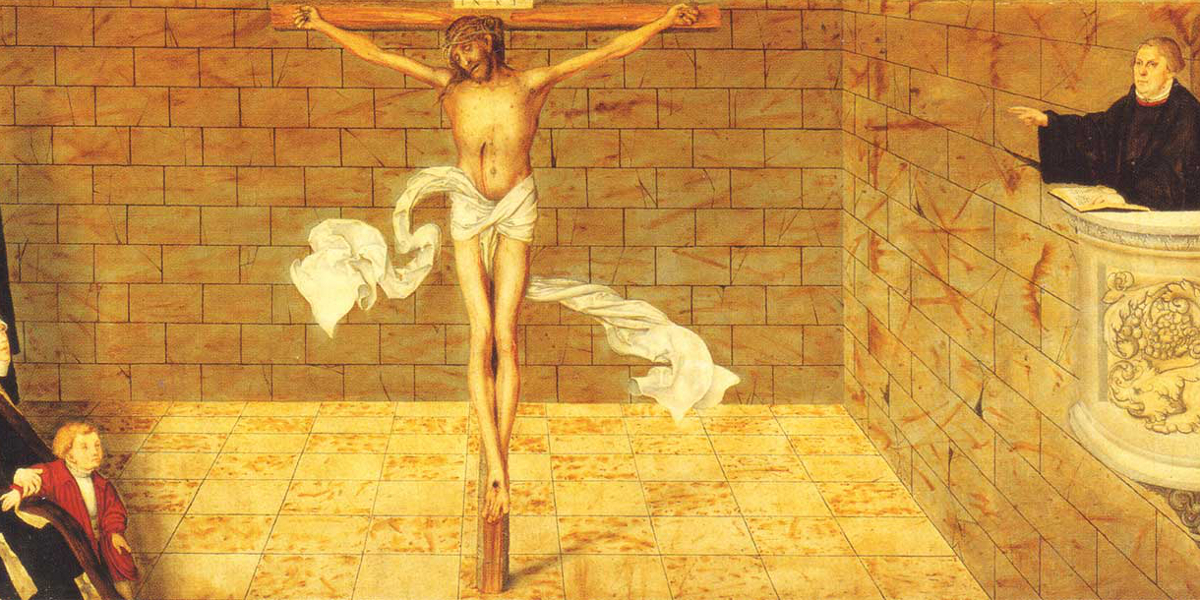
(picture from “Crucifixion, Seen from the Cross,” by James Tissot, c. 1890)


Copyright 2020 © Saude, Jerico, & Redeemer Lutherans. All rights reserved.