

Sexagesima Sunday – Pr. Faugstad sermon
Text: St. Luke 8:4-15
In Christ Jesus, who promises all who abide in His Word that they are His disciples, set free from sin, death, and every lie of the devil (Joh. 8:31-32), dear fellow redeemed:
If we studied Jesus’ parable by itself without the interpretation He gave, we would miss the point of the whole thing. We might first of all question the method of the farmer who sowed the seed. Couldn’t he be a little more precise about where the seed was broadcast? Three quarters of the seed fell where it was unable the survive and thrive—the hard path, the rocky ground, and the patch of thorns. Only one quarter fell into the good soul, grew up, and yielded fruit. We might conclude that it was the farmer’s fault that the seed did not do better.
Or perhaps we would blame the difficult conditions for growing seed. With all the birds flying around, with all the rocks, and with all the thorns, what chance could the seed have? It seems that the seed was destined to fail. Or possibly some would also criticize the seed. If the seed were better engineered to handle the challenging conditions, a crop could grow even there.
But Jesus does not interpret the parable in this way. His focus is not on the one who scattered the seed, the challenging conditions, or the seed itself. His focus is on the people who hear His words. As He spoke the words of the parable, He called out to everyone around Him, “He who has ears to hear, let him hear.” That should have told the people that Jesus wanted them to learn something from His words, something that applied to their faith and salvation. But what were they supposed to learn? Were they the farmers? Were they the seed? Were they the birds, the bad ground, or the good ground?
Jesus’ disciples were not sure themselves, but they knew this was important. They asked Him what the parable meant. We learn to ask the same question from our study of the Catechism. We recite something from the Bible like the Ten Commandments, and we ask after each one: “What does this mean?” We don’t just want to know the words, we want to understand them. We want to know how they apply to our lives. We want to meditate on what God is saying and receive the rich blessings He wants to give.
But many don’t take the time to dig into the Word like this. They have a basic understanding of who God is and what Jesus has done, but they don’t go any further. They think they know as much as they need. They don’t have any strong desire to learn more.
This is something like people who have never watched a football game before. They turn it on and figure out that the players with light stretchy pants are going against the players with dark stretchy pants. They both want to play with the same ball. Sometimes they throw it, sometimes they kick it, and sometimes they steal it. They seem to want to punish one another. That kind of watching might entertain to some extent. But the game means a lot more when you know the strengths and weaknesses of each player, and how the offense and defense are looking for leverage against each other.
The more understanding you have, the more appreciation you have. Isn’t that how love develops between a young man and a young woman? They want to spend time with each other, learn about one another’s likes and dislikes, talk about their difficulties and their dreams. You and I won’t have a love for God’s Word unless we spend time with God’s Word, learning what He has done for us and how He wants us to live, sharing our problems with Him through prayer and hearing about the plans He has for us.
So we don’t read the Bible like an ancient history book, as though it’s only about things long past. We don’t read it like an instruction book that we can set aside as soon as we know the rules. We don’t read it like a children’s book either, looking only for a cute story or a simple message. We take the Bible in our hands and soak it in line by line like the love letter that it is. We pour over it as we would the smallest details on a treasure map. We read a passage and then read it again and again, absorbing the words, chewing on them.
I heard about one Christian who writes a new Bible passage on a small piece of paper every day and pulls it out of his pocket throughout the day to keep it in his head. Others read a portion from their Bible each day. They have maybe read the Bible multiple times and are constantly surprised by what they didn’t notice before. There is no right or wrong way to meditate on the Word of God, as long as we are letting His Word speak for itself. We don’t come up with our own unique interpretations of His Word. We read a passage in its context; we compare one passage with another, this part with that part, and the interpretation becomes clear.
In today’s reading, Jesus provides the interpretation for His own parable. After His disciples asked, “What does this mean?” Jesus explained how to understand and apply each part. He did not identify the farmer who sowed the seed, so that is not a detail we need to explore. The seed is the Word of God. And all the types of ground—the hard path, the rocky ground, the patch of thorns—are those who hear the Word.
The seed was the same wherever it fell; all hear the same powerful Word of God’s grace. This shows how God “desires all people to be saved and to come to the knowledge of the truth” (1Ti. 2:4). He generously broadcasts His Word, so that it is heard by people who might not seem to be good soil for the Word. But sometimes they are! Since we do not know in whom the Lord will work faith, our mission as members of His Church is to “proclaim the gospel to the whole creation” (Mar. 16:15), to “Go… and make disciples of all nations” (Mat. 28:18).
Since we are all born with the same original sin, none of us is a naturally “good” candidate to hear His Word and believe. Even we who believe need encouragement to “hold fast” His Word because we are always tempted to loosen our grip, to let other things become more important. When Jesus describes the reasons people lose faith, He is not providing a list of excuses. He is not telling us why some are justified in rejecting what they have heard.
The devil snatches the Word from some hearts because the people who hear pursue temptation instead of faithfulness. The seed in the rocky soil does not take root because some turn away from God in times of testing and difficulty instead of turning toward Him. The seed choked by thorns is when priority is given to “the cares and riches and pleasures of life,” when faith is taken for granted instead of being fortified and strengthened.
These things can happen to any of us, and at various points in our life, they probably have. But our Lord is merciful. When He sows His Word, He does not snatch it away from us. He does not withhold the moisture of His “living water” so that our faith cannot sink down roots. He does not send thorny trials to choke our faith. It’s just the opposite: “a bruised reed he will not break, and a faintly burning wick he will not quench” (Isa. 42:3).
He wants you to hear His holy, soul-saving Word. He wants you to hear the message again and again that He loves you—even weak, unworthy you. He wants His sweet words of absolution to sink into your ears and heart, that He forgives every single one of your sins. He wants you to be confident that “though your sins are like scarlet, they shall be as white as snow; though they are red like crimson, they shall become like wool” (Isa. 1:18). He wants to assure you that a place is prepared for you in His kingdom, and that He will come back in glory to take you there.
When you receive these words in faith, trusting His gracious promises, gaining the comfort He wants you to have, this is the “good soil” in which His Word does powerful work. The more we hear the Word, the better and more fruitful becomes the soil of our hearts. You have seen this in your own life, that difficulties you could not have managed on your own, God gave you the strength for. People you could not have forgiven on your own, God moved you to forgive.
The Word of God is “living and active” (Heb. 4:12). It does not return to Him empty but accomplishes what He wills (Isa. 55:11). His Word creates the faith and strengthens the faith that bears fruit toward the people around us—the good fruit of love, kindness, faithfulness, patience (Gal. 5:22-23)—in our homes, our church, and our community.
Today’s parable is Jesus’ word to us. His message rings out even to the other side of the world and thousands of years after He originally spoke it: “He who has ears to hear, let him hear.” And when we listen, when we treasure up all these things and ponder them in our hearts (Luk. 2:19), Jesus leans toward us and says, “To you it has been given to know the secrets of the kingdom of God.” To you! To know the secrets of the kingdom of God!
The secrets are that you are not meant for this world; you are meant for something much greater. You are not destined to die and remain dead; you are destined to live. “For God did not send his Son into the world to condemn the world, but in order that the world might be saved through him” (Joh. 3:17). Jesus came to save you, and He wants you to know it.
Blessed Jesus, at Thy Word
We are gathered all to hear Thee;
Let our hearts and souls be stirred
Now to seek and love and fear Thee,
By Thy teachings, sweet and holy,
Drawn from earth to love Thee solely. (Evangelical Lutheran Hymnary #1, v. 1)
Glory be to the Father and to the Son and to the Holy Ghost; as it was in the beginning, is now, and ever shall be, forevermore. Amen.
+ + +
(picture from Hortus Diliciarum, a book compiled by Herrad of Landsberg in the 12th century)

The Tenth Sunday after Trinity – Pr. Faugstad sermon
Text: 1 Kings 18:16b-39
In Christ Jesus, who cannot be overwhelmed, outnumbered, or overcome, dear fellow redeemed:
Elijah said to the people of Israel, “How long will you go limping between two different opinions? If the Lord is God, follow Him; but if Baal, then follow him.” Which one would it be? The people did not answer. What made them go silent? Wasn’t it a simple question?
The people knew there was something special about Elijah. They had almost certainly heard that he had told King Ahab there would be no rain in the land until Elijah gave the word. Now three and a half years had passed with no rain; the land was in a severe drought. Shouldn’t that have been enough to show them that Elijah was a prophet of the true God?
But Elijah was not the king. Ahab was the king, and Queen Jezebel stood right by his side. Jezebel was not an Israelite; she was from Sidon. And in Sidon, the people worshiped the god Baal and the goddess Asherah. Baal was the Canaanite god of rain, and Asherah was associated with fertility. Ahab and Jezebel were so committed to this religion, that they supported 450 prophets of Baal and 400 prophets of Asherah.
So when Elijah told the people to choose one God or the other, the Lord or Baal, they did not want to go against Elijah, but they also didn’t want to face the wrath of Ahab (or rather Jezebel) by declaring that the Lord is God. It was safer, they thought, to keep their mouths shut. The prospect of following Elijah seemed much more dangerous than going along with the popular religion of the time. They weren’t interested in risking their lives or their place in society.
We can understand their hesitancy. It takes a special kind of courage to go against the status quo or to stand against the majority. When our beliefs or values are questioned by others, and they appeal to the fact that the vast majority believe differently than we do, this can cause us to have doubts. How can we be so sure we are right? How can so many others be wrong? Whether we are talking about the origin of the world, what is true or false, or what is good and bad, we hear many voices telling us that we don’t want to end up on the wrong side of history. Better to stick with the popular opinion, they say.
But evolution, for example, hardly entered people’s minds until Charles Darwin published The Origin of the Species in 1859. That’s not that long ago. This theory wasn’t taught in public schools until about a hundred years ago. It didn’t become the majority opinion until relatively recently, and now we are told that we should accept the theory of evolution because that’s what the majority thinks. So many people can’t be wrong, can they?
But what about the much greater number of people throughout history who believed that “In the beginning, God created the heavens and the earth” (Gen. 1:1). Don’t they count? Or what about the attempt to redefine marriage in our day? Should we go along with the current majority view and ignore the thousands of years of consensus about what marriage is and what it isn’t?
We will find ourselves on shaky ground if we chase after what is most popular, if we give in to the pressure of those in power, if we operate simply by saying or doing what seems best for us in the moment. Elijah’s question for the Israelites is still pertinent for us today: will we follow the Lord and His Word, or will we follow the path that is most advantageous for us in this world?
The answer should be simple: We will follow the God who created us, who sent His only Son to redeem us, who sent out the Holy Spirit to bring us to faith. But this is not always the answer we have given when our faith has been tested or when we have faced temptation to sin. Often we have taken the easy route, the path of least resistance, the way that would keep us from standing out too much or inviting the ridicule or wrath of our peers. When we were called to speak the truth, we went silent just like the people of Israel did.
I recently read a book about the Norwegian Lutherans in America, and at the time of the Norwegian church merger in 1917, the author said that nearly 95% of Norwegian Lutherans joined in the merger. The remaining 5% spread across the United States included the Saude and Jerico congregations. Members of our churches would not have done this unless they were certain they were standing on something more solid than popular opinion. They would not compromise the teaching of the Bible for the sake of unity. They stood firmly on the unchanging Word of God even when it affected their standing in the community.
Would we do the same today? Are we willing to say “no,” even when everyone else is saying “yes”? The courage to do this is built on the confidence that what God says in the Bible is the truth. Our beliefs are not based on our own private opinions; they are based entirely on the Word of God. The Bible is not my truth or your truth to take or leave as we please; it is God’s truth. Even when we find things in the Bible that challenge how we think and how we want to live, we stick with the Holy Bible.
Elijah’s confrontation with the prophets of Baal and Asherah was the Lord’s way of calling the people of Israel back to the Scriptures, back to the true faith. He is the One who established His chosen people from old father Abraham. He is the One who led His people Israel out of slavery in Egypt and brought them to the promised land of Canaan.
Elijah referred to the true God by the name He revealed to Moses at the burning bush, “I am who I am” (Exo. 3:14). In Hebrew, this name is Yahweh; and in English, the name is given as “Lord” in all capital letters. Elijah was saying that the Lord who made promises to Abraham, Isaac, and Jacob, and who led the people out of Egypt through Moses, is the Lord who even now would show His power through Elijah.
It was a bold statement. Elijah stood alone against the leaders of the land, 850 false prophets, and most of the people. One man against a mob. How could he alone be right? The prophets of Baal tried everything they could, but Baal didn’t answer. From morning to evening, they danced around their altar, cried out to their god, and cut themselves till the blood gushed out. But Baal sent no fire to burn up their sacrifice.
Now it was Elijah’s turn. He rebuilt the altar of the Lord, dug a trench around it, and placed the wood and the bull on it. Then he ordered the altar to be doused with water three times, so that everything was soaking wet. Then he prayed to the Lord, and the Lord sent fire from heaven that “consumed the burnt offering and the wood and the stones and the dust, and licked up the water that was in the trench.” What else could the people say, but “The Lord, He is God; the Lord, He is God.”
We might wish that the Lord would do something like this today, prove to our skeptical society that He is who the Bible says He is. But remember that many of those who watched Jesus perform miracle after miracle still rejected Him. Faith does not come through powerful signs; “faith comes from hearing, and hearing through the word of Christ” (Rom. 10:17). The Word of Christ is the message of what He has done to conquer our greatest enemies. What He did was more amazing than what God did through Elijah. Elijah seemed to be alone, but we will hear next week that God preserved 7,000 people who had not bowed their knees to Baal (1Ki. 19:18).
Jesus truly stood alone as He faced the sinfulness of the world, the dark powers of the devil, and the deep pit of death. Was Jesus really the one to follow? Many thought so for a while; they thought He could be their king. But by Good Friday, Jesus stood alone, with even His disciples forsaking Him. As the people saw Him condemned and crucified, they wondered about what could have been. What if Jesus had done things differently? What if He would have compromised somewhat? What if He had made political alliances with the right people? Then maybe He could have become the king they wanted. What a disappointment, they thought.
Jesus knew what the people wanted, but much more importantly, He knew what they needed. On Good Friday, He went forward in silence, not because He was afraid to speak the truth, and not because He had nothing to say. He went willingly to the cross—like a lamb that is led to the slaughter—to save you and me. He went to the cross to pay for our sins, for not speaking the truth when we should have, and for going against His Word by our words and actions. He did not take the easy path; He took the hardest one, the path of eternal punishment for all of our wrongs.
But how can we know that this was done for us? How can we know that Jesus made eternal satisfaction for all our sins? We know because on the third day, He rose from the dead. Only God could do that. Only God could win the victory over death itself. The prophets of Baal could neither make their false god burn up their offering nor save them from death. Only the true God can save. The true God is the God revealed on the pages of Holy Scripture.
He is not the God we expect. We expect a god who requires great things from us, who exacts payment from us before he will act—perhaps like the blood the prophets of Baal poured out. But the true God does not require the shedding of our blood; He saved us by the shedding of His blood. Jesus is the Lord of all heaven and earth, seated at the right hand of God the Father Almighty and bringing His blessings to us still now, even today, through His powerful Word and Sacraments. And so we worship Him by faithfully confessing, “The Lord, He is God; the Lord, He is God!”
Glory be to the Father and to the Son and to the Holy Ghost; as it was in the beginning, is now, and ever shall be, forevermore. Amen.
+ + +
(picture from the outdoor service at the parsonage)
(sermon audio not available this week)
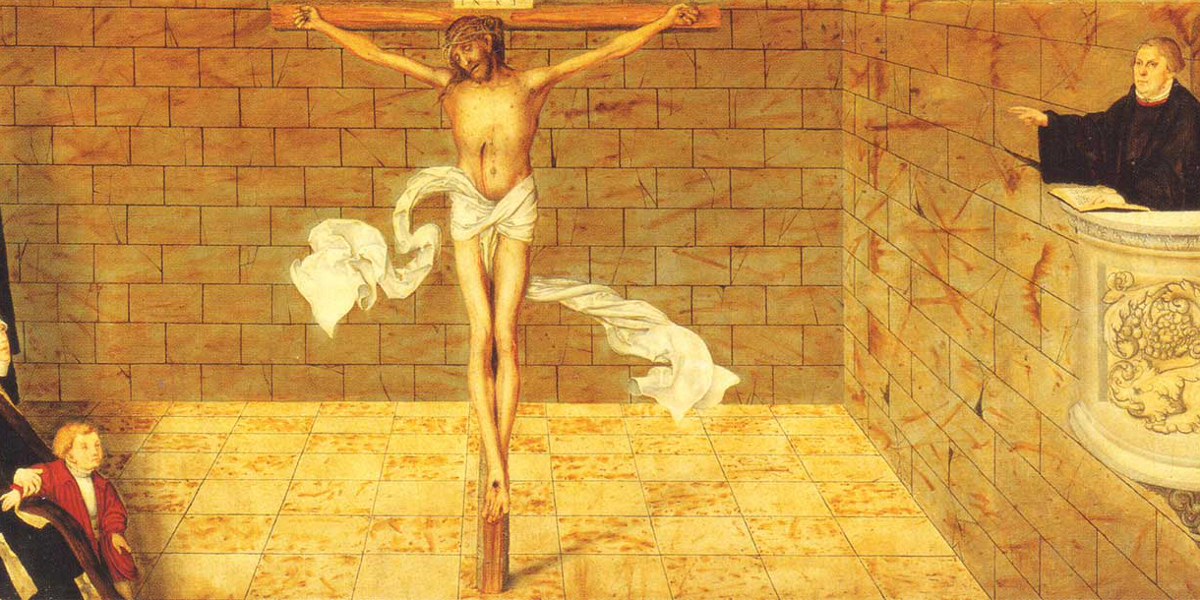
The Festival of the Reformation – Pr. Faugstad sermon
Text: Romans 3:19-28
In Christ Jesus, who promises that everyone who acknowledges Him before men, He also will acknowledge before His Father in heaven (Mat. 10:32), dear fellow redeemed:
We have all had the experience of trying to get ourselves out of trouble, but the more we say, the worse it gets. Maybe you broke something in the house, but instead of apologizing to your parents, you tried to pin the blame on a sibling. Or maybe you got pulled over, and your excuses for why you were speeding just made the situation worse. We are not always good at knowing when to speak and when to keep our mouths shut.
The same can be true in our spiritual life. We sometimes speak when we should be silent, and we are sometimes silent when we should speak. Today’s reading addresses both of these things. Just before our reading, St. Paul quoted from the Book of Psalms where it says, “None is righteous, no, not one; no one understands; no one seeks for God…. Their throat is an open grave; they use their tongues to deceive…. Their mouth is full of curses and bitterness” (3:10-11,13,14). Paul is citing God’s Law which applies to all sinners, to every single one of us.
When we hear God’s Law, we have nothing to say in response because we have failed to do what God commands us. But that doesn’t stop us from trying to sidestep responsibility for our sins. One of the hardest things for us to do is acknowledge that we have done wrong. We always want to make an excuse for why we did what we did or said what we said, excuses like:
- “He started it!”
- “If she had done what she said she would, this wouldn’t have happened!”
- “I didn’t mean to cause any harm—they’re just too sensitive!”
- “This is just how I am; I can’t help it!”
These are all statements of self-righteousness. Instead of admitting our sin and asking for forgiveness, we argue and try to pass the blame. But God’s Law does not budge. No matter how much we try to justify our actions or words, sin is sin. James 4 says, “So whoever knows the right thing to do and fails to do it, for him it is sin” (v. 17). God’s Law does not change with the times. Misusing God’s name was a sin from the beginning, and it is still a sin. Sexual immorality is still a sin. Lying is still a sin.
We can’t talk ourselves out of the judgment of the Law. One of our hymns says it like this: “What God doth in His law demand / No man to Him could render. / Before this Judge all guilty stand; / His law speaks curse in thunder. / The law demands a perfect heart; / We were defiled in ev’ry part, / And lost was our condition” (Evangelical Lutheran Hymnary #227, v. 2). This is what today’s reading teaches us. Paul writes, “Now we know that whatever the law says it speaks to those who are under the law, so that every mouth may be stopped, and the whole world may be held accountable to God.”
He says that before the Law, every mouth is stopped. We must go silent—“zip the lip!” We have no argument to make for our righteousness. God commanded us to be perfect, and we have sinned again and again, falling far short of the glory of God. There is nothing we can do to earn our way or work our way back into God’s favor. “For by works of the law no human being will be justified in His sight.” The verdict is clear. No matter how hard we try, we have failed. We cannot save ourselves.
Then why is it that so many Christians today think that salvation depends somehow on what they do? Though most Christians admit they are sinful, Lutherans stand mostly alone in our teaching that there is nothing we can do to make ourselves right with God or get ourselves connected to Him. This has been the consistent teaching of the Lutheran Church since the time of the Reformation, and we believe it to be the historic teaching of Christ’s Church from the time of the apostles as today’s reading shows.
Martin Luther took criticism from all sides for his teaching that we are saved not by our works but only by God’s grace in Christ who perfectly kept the law for us and died to pay for our sins. The Roman Catholic theologians said that if our works are not part of salvation, then what’s to stop Christians from embracing sin if they are saved by grace alone? It must be that our works contribute in some way toward our salvation. Luther replied that good works are fruits of faith that every Christian does and should do, but it is faith in Jesus alone that saves.
The Reformed theologians told Luther that he wasn’t going far enough. He had to get rid of the empty, outward trappings of the Roman Church, such as the Sacraments. What matters, they said, is that we dedicate ourselves to God from the heart and strive to live for Him. Luther replied that if we remove the means that God has given for the formation and strengthening of our faith, we will become self-righteous Pharisees, or we will despair because we are unable to do what we have promised.
Luther’s opponents wanted him to say that we are responsible—at least in some way—for our salvation. It sounded very reasonable. Many in previous generations had taught exactly this. Luther was in a difficult spot. He could have opened his mouth and worked up some kind of compromise to try to keep everyone together. He could have aimed for personal glory and a prominent position in the church.
But he would not go against God’s Word. Standing before one of the most powerful rulers of his time, Luther refused to take back what he had written and taught. “My conscience is captive to the Word of God,” he said. “Here I stand. I cannot do otherwise. God help me.” Luther knew when to be silent. He had to answer to God. He would not compromise the Word of God for the sake of peace in the Church.
This is what we celebrate on Reformation Day—not so much the man since Luther was a sinner like we are. But we celebrate his faithful confession of the truth and his faithful teaching of salvation by grace alone. On the back of your bulletin, I have included a picture from the altarpiece in Wittenberg, Germany, where Luther lived. This altar painting was dedicated in 1547, one year after Luther died. It shows him preaching to the parishioners of Wittenberg. But if the picture were bigger, you could see that Luther’s mouth is closed. He is preaching by pointing.
This painting emphasizes that Luther’s work was not about him or any unique message he came up with. He preached Christ crucified like Paul and the other apostles did. It’s all about Jesus. We do not open our mouths to boast about our own good works. We do these good things quietly, for the benefit of our neighbor and for the glory of God. When we are tempted to boast or when people encourage us to be prideful, we do what the tax collector in the temple did. We humbly bow our heads and pray, “God, be merciful to me, a sinner” (Luk. 18:13). That kind of silence about our own good works speaks volumes.
We have nothing to boast about in ourselves. But we do boast about Jesus. We boast about the salvation He won for us, not because we deserve it but because He is merciful and gracious. We deserve eternal punishment in hell. The Law condemns us. We have sinned. But God sent His Son to save us. He put Him forward “as a propitiation by His blood,” as the atoning sacrifice for our sins. The holy blood that Jesus shed washes all our sin away. It washes away the sins that make us feel guilty and the imperfect works that make us feel prideful. His blood cleanses us from the many ways we have broken the perfect Law of God.
His blood was the price He paid to redeem us, to purchase us so that we might be His own. His Father accepted this payment which is why we are justified before God, declared innocent, “not guilty.” We are “justified by His grace as a gift.” The righteousness we need to stand before God does not come from us. It comes to us as a gift from God, a gift received by faith. Even our faith is a gift, worked inside us by the Holy Spirit through the Word and Sacraments.
This is why it is right for Paul to say in the same place that we are “justified by His grace” and “justified by faith.” It all points to Jesus. We are saved by what He did, what He accomplished, what He set out to do and finished. We will be silent about our own works which could never save us. But we will not be silent about His works which He offered as a perfect sacrifice to the Father for our redemption.
This is what Paul taught in his inspired Epistles. This is what Luther taught at the time of the Reformation. This is what we still teach by the grace of God and what we pray will be taught to generations to come. Where God calls us through His Word to be silent, we will be silent, and where He calls us to speak, we will speak—all to His glory alone.
Glory be to the Father and to the Son and to the Holy Ghost; as it was in the beginning, is now, and ever shall be, forevermore. Amen.
+ + +
(picture from Wittenberg altarpiece painting by Lucas Cranach the Elder and Younger, 1547)

Mission Festival/Bethany Sunday – Prof. Mark DeGarmeaux sermon
Text: Psalm 118:15-17
“Dear Christians, one and all—Rejoice!” That hymn was written by Martin Luther 500 years ago and printed in the first Lutheran hymnbook, along with 7 others. It is based on the text of Psalm 118. Luther also wrote a little musical piece based on these verses: “I shall not die but live and declare the works of the Lord.”
The last part of that verse really tells us the purpose and mission of the church: to proclaim the wonderful works of God. The most wonderful work of God is forgiveness and salvation, purchased through the blood of Jesus, God’s Son, shed on the cross. The crowds of Pentecost heard the Apostles preaching in many languages. They said: “We hear them speaking in our own tongues the wonderful works of God.” John wrote in his Gospel: “These are written that you may believe that Jesus is the Christ, the Son of God, and that believing you may have life in His name.”
Our text is from Psalm 118. The Jewish people sang this psalm as they travelled up to Jerusalem to celebrate the Passover. Think of what that means. The first Passover happened when the people of Israel were slaves in Egypt. God was sending the Tenth Plague upon Egypt, killing every firstborn. — Imagine if we lost every firstborn animal in Iowa. It would be devastating. If we lost every firstborn human, it would be unthinkable. — Through faith, the Israelites were spared, when they sacrificed the Passover Lamb and painted its blood on the doorposts of their house.
This commemoration continued through the centuries. When Jesus was 12 years old, His family travelled to Jerusalem for this festival of Passover. Young Jesus stayed behind and discussed the Scriptures with the teachers of the synagogue. They were “astonished at His understanding and answers.” When Mary and Joseph found Him, three days later, He said: “Did you not know that I must be about My Father’s business?” Jesus’ business is the business of the Temple; it is the Word of God. Mary and Joseph taught Jesus the Word of God as He was growing up. Jesus knew these words of Scripture were about Him and His work of salvation. He is true God and has all knowledge and all authority in heaven and on earth, but as a child, He submits to His earthly parents to obey them and learn from them.
Each time they travelled to Jerusalem, they sang these words, and Jesus sang with them: “Bind the sacrifice with cords to the horns of the altar.” He knew that one day, He would be that Passover lamb slaughtered to redeem not only the firstborn of Israel, but the whole world. He would carry all our sins.
Some 20 years later, Jesus entered Jerusalem again on Palm Sunday. He heard the people singing these words from Psalm 118: “Hosanna! Blessed is He who comes in the name of the Lord! Hosanna in the highest!”
The Psalm also includes these joyful words: “The voice of rejoicing and salvation Is in the tents of the righteous; The right hand of the Lord does valiantly. The right hand of the Lord is exalted; The right hand of the Lord does valiantly.”
Dear Christians—one and all—rejoice! We come to church to rejoice in the work of God and to thank Him for His victory over sin, death, and Satan. “The right hand of the Lord does valiantly.” That’s why we can rejoice. Jesus does the work of His Father. He lives a sinless and perfect life—because we cannot. He offers Himself as the sacrifice—to pay for our sins. This is “the work of the Lord, the wondrous work of God” which we hear in this Psalm, and at Pentecost, and whenever we gather together in church.
We sing: Lord have mercy — in thanks and adoration to God who is merciful. With the angels we sing “All glory be to God on high who hath our race befriended.” We praise the newborn Christ as our Savior. We say: I believe in God the Father, in Jesus Christ His only Son our Lord, and in the Holy Spirit. This Holy Triune God is our Maker, Redeemer, and Comforter. Without Him we cannot live or move or have our being.
What wondrous works He does! He created the whole world. We teach this to our children. We continue to learn it and confess it throughout our life. God is our Maker. We marvel at His creation, at seedtime and harvest.
What wondrous works God does! He washes away our sins in Holy Baptism. Each day we can remember that we are baptized in the name of the Father and of the Son and of the Holy Spirit. Our children must learn that they too are redeemed children of God. Their sins are washed away. — But how easy for us to continue in our sin. We fail each day, every one of us. But God’s mercies are abundant and new every morning. He casts our sins into the depths of the sea so they can never come back to accuse us. He rebukes and restrains Satan so He cannot really attack and accuse us. God allows temptations, but only so far. Through these trials we are strengthened in our faith, our trust, and our reliance on God.
As we sing through Luther’s hymn, we sense with him our powerlessness: “My good works so imperfect were … To hell I fast was sinking.” The Catechism teaches us: “I cannot by my own reason or strength believe in Jesus Christ.” Faith itself is a gift from God. Salvation is by God’s free grace, “without any merit or worthiness in me.”
The hymn also directs us to the remedy of our sinfulness: “Then God beheld my wretched state, Sin brooded darkly o’er me.” “He spoke to His beloved Son: ’Tis time to have compassion … Bring to man salvation.”
It is because of these truths of Scripture that Luther chose words from this Psalm as a kind of motto for his life: “I shall not die, but live, and declare the works of the Lord.” As children we learn to pray: “Into your hands I commend myself, my body and soul and all things. Let Your holy angel be with me that the wicked foe may have no power over me.”
When we hear these wondrous works of God in Holy Scripture, God the Holy Spirit Himself comes with them to create and strengthen faith in our hearts. This happens in preaching, in Baptism, in the Lord’s Supper, in the Absolution, and whenever the powerful and saving Word of God comes to us. That Word always points us to Christ our Savior. We cannot separate Christ from the Scriptures, or the Scriptures from Christ. They are one. Jesus Himself is the Word of God, as St John tells us. “The Word became flesh and dwelt among us.”
The Word of God is taught among us in our Sunday services, Bible classes, Catechism classes, and whenever we gather for devotions at church or at home. This also happens in our Lutheran schools and Lutheran home schools, wherever they may be. It also happens at our Bethany Lutheran College. The Word of God is the foundation of Bethany. Classes are taught with the understanding that God’s Word is true, that God created the world, that God gives us His commands for living, and God redeems us from our sin. The Gospel of Jesus Christ crucified for our sins is the One Thing Needful that is the core of what Bethany Lutheran College stands for.
In science classes we learn about evolution, but we are taught the truth that God created the world in six days. In history classes we learn about many different worldviews, but we know that God is in control of the world. In theatre and music and art we learn about various styles of art, but we learn to value what is good, noble, true, and virtuous. In psychology and sociology we learn many theories of human behavior, but we know foundationally the Scriptural truth that all people are born sinful and corrupt, and also that God established traditional marriage and family as the foundation of human society. We learn to care about other people, as God cares for us. We learn forgive each other as God forgives us.
In the world, we hear so many different voices. The world declares its own works, its own ideas, its own powers. Today people think they can choose their own version of truth and reality. But in the church, it is God’s work and God’s power that is central to our faith and our salvation.
So we teach our children, and we teach each other, what the Word of God says. “I shall not die, but live, and declare the works of the Lord.” It is also what our Lord Jesus says in His words to the disciples before His Ascension: “Go therefore and teach all nations, baptizing them in the name of the Father, and of the Son, and of the Holy Ghost: Teaching them to observe all things whatsoever I have commanded you.”
We do this also in our seminary, in our mission fields, and with sister churches around the world. Some of our pastors are helping a seminary in Kenya to train pastors to serve our brothers and sisters there. We have sent missionaries and seminary graduates to Peru, Chile, Latvia, Czech Republic, Norway, Korea, and Australia. Their work is our work together: to declare the works of the Lord, to preach the Gospel of Jesus Christ.
In the Old Testament the people were instructed to teach their children the truths of God’s Word: “Hear, O Israel: The Lord our God, the Lord is one! You shall love the Lord your God with all your heart, with all your soul, and with all your strength. And these words which I command you today shall be in your heart. You shall teach them diligently to your children, and shall talk of them when you sit in your house, when you walk by the way, when you lie down, and when you rise up.”
Jesus Himself said: “Blessed are those who hear the Word of God and keep it.” The Word of God is a treasure in our life. We use the Word of God when we pray, when we have devotions and Bible reading at home, when we come to church and Bible class and Catechism class. It is a treasure because by God’s power and authority it forgives our sins. This saving Gospel of Jesus Christ who lived a holy life for us, died an innocent death for us, and rose from the dead for us—this Gospel is the power of God to salvation for everyone who believes.
This is the work and mission of the church and of all Christian schools: to declare the works of God, to proclaim forgiveness through Jesus Christ our Savior. In this we have joy, as the Psalmist says: “The voice of rejoicing and salvation is in the tents of the righteous.” And this is because “the right hand of the Lord does valiantly.” And so we say with the Psalmist and with Martin Luther: “I shall not die, but live, and declare the works of the Lord.”
Dear Christians, one and all, rejoice! Proclaim the wonders God hath done. Rejoice in God’s promise of salvation and eternal life, through Jesus Christ our Savior. Amen.
Glory be to the Father and to the Son and to the Holy Ghost; as it was in the beginning, is now, and ever shall be, forevermore. Amen.
+ + +
(picture from “Entry of Christ into Jerusalem” by Pietro Lorenzetti, 1320)
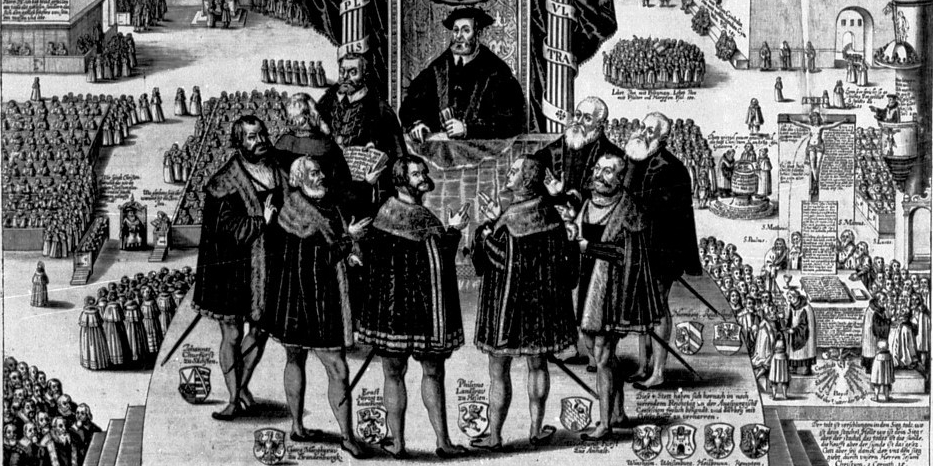
The Presentation of the Augsburg Confession – Pr. Faugstad homily
Text: Psalm 119:46
493 years ago on June 25, 1530, the Lutheran princes of Germany stood before Emperor Charles V and publicly read their confession of faith to all who were gathered there. They stated that they would rather die than compromise the truth of God’s Word.
+ + +
In Christ Jesus, who in His testimony before Pontius Pilate made the good confession (1Ti. 6:13), and who calls us to do the same when we are asked for a reason for the hope that is in us (1Pe. 3:15), dear fellow redeemed:
The men who read the words of the Augsburg Confession before Emperor Charles V were not pastors or theological professors. They were laymen. And they understood and believed every word they spoke. They were powerful men in Germany—dukes, princes, and wealthy landowners—, which meant that they had a lot to lose. They were willing to risk it all because of the Gospel message of salvation they had heard and believed.
By speaking the truth of God’s Word, you also could face the possible loss of your job, your standing in the community, or your favor with friends. Telling God’s truth is the most courageous thing you can do, and it is also the most difficult. The world does not welcome the truth. It actively opposes it and wants the clear teaching of God to be silenced.
But while the unbelieving world may succeed in intimidating us and winning some battles against us, it cannot conquer the Church of God in Christ. He assures us, “In the world you will have tribulation. But take heart; I have overcome the world” (Joh. 16:33). He also reminds us how important our confession of the truth is. Not only is it a matter of eternal life or death for us, it is also a matter of eternal life or death for those we associate with. Jesus says, “So everyone who acknowledges me before men, I also will acknowledge before my Father who is in heaven, but whoever denies me before men, I also will deny before my Father who is in heaven” (Mat. 10:32-33).
The laymen at Augsburg confessed the pure Gospel of Jesus in the presence of some of the most powerful people of their day. We still stand on this confession. We believe what they believed. We teach what they taught. By the grace of God, we have the received His treasures of forgiveness, righteousness, and peace through the preaching of His Word. We have been made members of the body of Christ through faith in Him who died for all our sins and rose from the dead in victory. There is no hope apart from Him, and every confidence in Him.
But we have not always been confident, and we have not always been hopeful. At various times in our lives, we have lost sight of this most important thing. We have listened to the promises of the world. We have sometimes chosen sin over salvation, friendships over faithfulness, peace and security in the world instead of the peace that surpasses all understanding. We think back on these things, and we feel ashamed.
Shame is always waiting for those who walk the way of the world and not the way of God’s Word. You and I find plenty to be ashamed of when we look at our own hearts and minds. But we find nothing to be ashamed of when we look to Jesus. He also stood before powerful authorities. Though they attacked Him and told lies about Him, He did not give in, and He did not retaliate. They sentenced Him unjustly to death by crucifixion, and He endured this suffering willingly.
He did all of it for you, so that His blood would cleanse you of all your sins of weakness and unfaithfulness, and so that His holy life would cover you like a royal robe. You do not face the threats of the world alone. You stand in Him, who has overcome the world, the devil, and death for you. Whether you speak His testimony before kings or before your boss or co-workers or anyone else around you, you have nothing to be ashamed of, because Jesus Christ is “the way, and the truth, and the life” (Joh. 14:6).
The Word of God has not changed and will not change. Every power and influence in this world will pass away, but the Word of our God will endure forever. The men at Augsburg spoke timeless truths, which is why we still speak them today. The Lutheran Church which confesses this truth is not a new church or even a 500-year-old church. It is the continuation of the one holy Christian and Apostolic Church from its New Testament origin to the present day.
We pray that God keeps us faithful to this saving truth, and that He gives us the courage to speak His truth to all who need to hear it.
Glory be to the Father and to the Son and to the Holy Ghost; as it was in the beginning, is now, and ever shall be, forevermore. Amen.
+ + +
(picture of Emperor Charles V receiving the Augsburg Confession)

The Fifth Sunday of Easter – Pr. Faugstad sermon
Text: St. John 16:5-15
In Christ Jesus, whose Father willed your salvation from eternity, who won your salvation by His death and resurrection, and whose saving work is brought to you today by the power of the Holy Spirit, dear fellow redeemed:
When Jesus spoke the words of today’s reading, everything was so clouded for His disciples, so unclear. Even though Jesus had plainly told them what was coming, they did not understand. They were filled with sorrow, preoccupied with their own thoughts which were not God’s thoughts. But later, after Jesus died, rose again, and ascended into heaven, they did understand. They were guided into “all the truth” by “the Spirit of truth.” But how did they know the Spirit was speaking to them? How did they know what was true? And how can we be sure today that we have the truth?
We know very well that the world in which we live does not support the idea of objective truth. Many people consider truth to be relative: “You have your truth, and I have my truth, and everyone’s truth is equally valid.” That all sounds very nice until one person’s truth is totally opposed to another person’s truth. Then both truths cannot be equal. Both truths cannot be valid.
We would think that at least among Christians, we could agree about what is true. But sadly, that is not the case. Even basic questions like, “Is the Bible the Word of God?” or “Did Jesus really rise from the dead?” are not answered the same way by all Christians, and not even by all Lutherans. Some of them believe that the Holy Spirit is working not so much through the Bible, but that He is working directly in our minds and hearts and through our culture to lead us to new truths and new teachings.
What does Jesus have to say about all this? We’ll start at the end of today’s reading, where Jesus says, “All that the Father has is Mine.” That is a bold statement! The disciples of Jesus still did not grasp His eternal connection to the Father as His only Son. Earlier in the evening, Philip blurted out, “Lord, show us the Father, and it is enough for us” (Joh. 14:8). And Jesus replied, “Have I been with you so long, and you still do not know me, Philip? Whoever has seen me has seen the Father. How can you say, ‘Show us the Father’? Do you not believe that I am in the Father and the Father is in me?” (vv. 9-10).
Jesus was teaching them and us that He is one God with the Father. Everything that God the Father has, the Son has. Jesus listed some of these things as He prayed to His Father that same evening. He said that His Father had given Him “authority over all flesh” (Joh. 17:2). He had given Him His words (v. 8), His name (v. 11), His glory (v. 22), and His love (v. 26). These are the gifts that God the Father gave God the Son.
But those gifts did not remain with the Son. They were shared with sinners, including you and me. This happens by the work of the third Person of the Holy Trinity, God the Holy Spirit. But before the Holy Spirit imparts the gifts of God, He must prepare us to receive them. That work of preparation is hard on us, because the Holy Spirit reveals our need for salvation by pointing out our sins, imperfections, and misplaced priorities.
Jesus says that the Holy Spirit comes to “convict the world concerning sin and righteousness and judgment.” The Holy Spirit through the holy Law condemns the world for its rejection of Jesus, for trusting its own ideas about righteousness which are nothing but filthy rags (Isa. 64:6), and for following the desires of the devil who wants us to focus only on ourselves and only on this life.
The Holy Spirit must perform major surgery on us to break our dependence on the pleasures and promises of the world and to cut out the sin embedded deep in our hearts. Most surgery is painful, but its purpose is to bring about healing and strength. A patient can’t get better if the root problem is not addressed, if the infection is not eliminated, if the cancer is not removed.
The Holy Spirit shows us through the holy Law how deeply sin has infected us and how dire our situation is. But we don’t like to think we are really that bad off. Whatever spiritual weaknesses and problems we have, we think we can fix them. We can avoid the temptations that caused us to fall in the past. We can do better. It’s like trying to run on a broken leg.
So we fall into the same old sins, and we fall for new ones too. We are not capable of healing ourselves. If we were doing so well, God the Father would not have sent His Son to take on our flesh, keep the Law for us, and die on the cross to atone for sin. And God the Holy Spirit would not have come first of all to “convict the world concerning sin and righteousness and judgment.”
This is why we confess every week at the beginning of the divine service “that we are by nature sinful and unclean, and that we have sinned against [God] by thought, word and deed” (Rite 1, p. 41), that each one of us is “a poor, miserable sinner” (Rite 2, p. 61). That is not very flattering language! And it is completely accurate.
But the Holy Spirit’s work is not only to convict us, not only to reveal our sins. In fact, that is not even His primary work. His main work is to comfort us. Now He does not comfort us by telling us things like, “Everything’s going to work out just the way you want,” or “God loves you just the way you are.” He comforts us by planting the perfect promises of God right in our sinful hearts.
Jesus said, “He will not speak on His own authority, but whatever He hears He will speak, and He will declare to you the things that are to come.” “The things that are to come” means all that Jesus would accomplish by His death and resurrection. The disciples did not know that by morning, their great Teacher and Lord would be beaten beyond recognition and nailed to a cross. They did not know that this was necessary for the salvation of sinners. And they did not know that on the third day He would rise from the dead in victory.
His saving work is why Jesus said, “it is to your advantage that I go away.” His “going away” meant that the work was finished. His work to save you was complete. Because He gave Himself as the sacrificial Lamb on the cross, your sins are all washed away. And because He rose from the dead in triumph, death can no longer overpower you.
You know this and you believe it, because the Holy Spirit has declared it to you through the holy Word of God. Jesus said, “He will glorify Me, for He will take what is Mine and declare it to you.” Here we can see the perfect unity of the Holy Trinity. The Father has given all things to the Son, and the Son has given all things to the Holy Spirit to give to you. The Father’s authority, the Father’s words, the Father’s name, the Father’s glory, the Father’s love—all of it comes to you through the Son by the power of the Holy Spirit.
With the authority bestowed on Him at His resurrection, Jesus commissioned the apostles to go and make disciples of all nations by baptizing them and teaching them all that He had taught them (Mat. 28:18-20). That is how you became a disciple. You were baptized into God’s name by the power of His Word and were brought into His holy family. Everything Jesus did for you became yours. You were given a share of His glory and became a recipient of the divine love that the Father has for His Son, because the Holy Spirit made you a member of Jesus’ holy body.
The Holy Spirit continues to bring you the rich blessings of God. The Holy Spirit does all His work through the Word, and always through the Word. That is where He is active. If anyone claims to receive a message from the Spirit outside of the Bible, a message that contradicts the Bible, that message is not from God. You have the truth, because you have the pure Word of God.
By the Spirit’s work through the Word, you know that you deserve to be punished eternally in hell because of your sins, and you also know that your sins are all forgiven through the blood of God’s Son. You know that your best works cannot earn you any favor with God, and you know that by faith in His Son, you now stand perfectly righteous before Him. You know that you have let the devil lead the way far too often and have fallen for his lies again and again, and you know that Jesus has destroyed Satan’s evil plans and brought you into His own kingdom of light.
The Spirit of truth has taught you all these things by the Word. None of them are new, and they never go out of style. In three weeks, we will celebrate the outpouring of the Holy Spirit on Pentecost, the birthday of the Christian Church. We welcome His coming by continuing to hear the Word, read it, meditate on it, and hold it tight as the greatest treasure we have.
Glory be to the Father and to the Son and to the Holy Ghost; as it was in the beginning, is now, and ever shall be, forevermore. Amen.
+ + +
(picture from stained glass by Gian Lorenzo Bernini, c. 1660)

The Resurrection of Our Lord – Pr. Faugstad exordium & sermon
Festival exordium:
The miracle-worker died, but his followers refused to accept it. “He will rise again!” they said. So they waited. They waited one day. Then two. On the third day, nothing happened. Weeks passed, then months. Then more than a year and a half had gone by. Finally the funeral home obtained a court order and buried the man’s body.
This actually happened in South Africa. A pastor who claimed to be able to heal the sick, and who reportedly predicted his own resurrection, stayed dead. He did not have the power he thought he had or said he had.
There is only one Man who predicted His own resurrection and then did it. We are gathered here today to hear His Word and sing His praises. Even though He had done countless miracles and even raised several people from the dead, His closest disciples did not believe He would rise. The eleven disciples went into hiding after He was crucified and buried. The women made plans to return to His tomb after the Sabbath to anoint His dead body with more spices.
The only ones who seemed to take Jesus’ prediction seriously were the chief priests and Pharisees. They went to Pilate and said, “Sir, we remember how that impostor said, while he was still alive, ‘After three days I will rise.’” Therefore order the tomb to be made secure until the third day, lest his disciples go and steal him away” (Mat. 27:63-64). All this accomplished was putting witnesses at the tomb—the soldiers—who watched an angel descend from heaven and roll away the stone revealing an empty tomb. They reported what they saw to the chief priests, who, instead of hearing what they said, paid them to tell a lie (28:11-15).
But the resurrection of Jesus is no lie. It happened just as Jesus said it would, on the third day after His death. He did break the chains of death. He did emerge victorious. He did end the terrible reign of death brought into the world by Adam’s sin. He did it for the doubters, for the weak, for the faithless, for sinners—for you and me.
In thankfulness and joy, let us rise to sing hymn #348, “He Is Arisen! Glorious Word!”
He is arisen! Glorious Word!
Now reconciled is God, my Lord;
The gates of heaven are open.
My Jesus died triumphantly,
And Satan’s arrows broken lie,
Destroyed hell’s direst weapon.
O hear
What cheer!
Christ victorious
Riseth glorious,
Life He giveth—
He was dead, but see, He liveth!
+ + +
Sermon text: St. Mark 16:1-8
In Christ Jesus, who was not in the tomb on Easter morning, but who is here with us to bless us, dear fellow redeemed:
Many people claim to have seen angels. Some of them say angels appeared when they were in great distress or sorrow and brought them comfort. Others report messages spoken to them by the angels, special messages from God. The problem is, sometimes those messages do not agree with what the Bible says. So which is more reliable: a special visit from an angel or the Word of God?
If someone is given a message by a holy angel, it will not contradict the Word of God. The angels who serve God are without sin; they only tell the truth. So if an angel speaks a message that conflicts with the Word of God, it is not a holy angel. St. Paul writes that “even Satan disguises himself as an angel of light” (2Co. 11:14). Many prominent false teachers in history claim to have been visited by angels who gave them their new teachings. But these were not holy angels. They were the devil or demons coming in disguise.
So how can we know that the angel who spoke to the women at Jesus’ tomb was really sent by God? How can we be sure that it wasn’t just something they imagined in their state of emotional turmoil and sorrow? When the women went to Jesus’ tomb early Sunday morning, they went there expecting to find a dead man—if they could roll away the stone from the entrance to get to Him.
Instead, they looked up and saw that the stone had already been rolled away. That was strange. And when they cautiously peaked inside, they did not see the body of Jesus. They saw a young man wearing a long, white robe—an angel. Seeing their distress and alarm, the angel told them there was no need to fear. Why? There was no need to fear because Jesus had done everything He said He would do.
The angel didn’t tell them anything new. Jesus had told His disciples multiple times that He would go to Jerusalem to suffer, die, and on the third day rise again. And when they were in Jerusalem the night of His arrest, He told His disciples that they would all desert Him, but after He was raised up, He would go before them to Galilee (Mar. 14:27-28). Now the angel was saying the same thing: Jesus “was crucified. He is risen!… He is going before you into Galilee… as He said to you.”
That is the message the women took back to the disciples. The appearance of the angel was surprising, but the words he spoke should not have been surprising. He simply reminded them what they had already heard. That’s what the holy angels do. They proclaim the promises of God. Isn’t that what the angels did the night of Jesus’ birth? They proclaimed the fulfillment of God’s promise: “For unto you is born this day in the city of David a Savior, which is Christ the Lord” (Luk. 2:11).
You can be sure that if an angel appears to you and speaks a message that does not agree with the Bible’s teaching, it is not an angel of God. St. Paul said that there are some who “want to distort the gospel of Christ.” Then he adds, “But even if we or an angel from heaven should preach to you a gospel contrary to the one we preached to you, let him be accursed” (Gal. 1:7-8). But how can we know that the Gospel is true? Or how can we be sure we have the right Gospel?
That topic came up in a conversation I had with a Mormon man. Before I knew his religious background, he asked me a question that every Lutheran pastor loves to hear, “What is the Gospel?” But I could tell as I explained the Gospel to him that he wasn’t convinced. It was a “gotcha question.” He wanted to make the point that if all of the different denominations of Christians had different understandings of the Gospel, none of us could be certain we had the right one. That’s why we needed a modern-day prophet to give the correct interpretation—a prophet like Joseph Smith (who, incidentally, claimed to get his special revelations from an “angel”).
But we can know the Gospel from the Bible and be certain that we have the true Gospel. The angel sitting in that tomb couldn’t have said it more plainly: Jesus “was crucified. He is risen!” That is the good news. That is the Gospel. A dead man rose from the dead! But it wasn’t just any dead man. It was a dead man who claimed to be the Son of God. It was a dead man who predicted that everything would happen just as it happened. It was a dead man who said that His victory over death would be your victory, that His life would be your life.
Jesus’ resurrection verified everything He ever said. He could have said what He did, died on the cross, and never been seen or heard from again. That would have proven that He was nothing more than a big talker, or that He was delusional. But that is not what happened. He did rise from the dead. We believe it not just because an angel said it happened. We believe it because Jesus showed Himself alive to the women later that morning, to His disciples on numerous occasions, and at one time to more than five hundred of His followers (1Co. 15:6). He talked with them, ate with them, and definitively proved that He is who He said—the Son of God in the flesh.
The disciples wrote down what they saw and heard, so that everyone could learn about Jesus and what He had done. Jesus hadn’t just accomplished something for His time. He had done something for all time. His apostle John wrote near the end of His Gospel account: “these are written so that you may believe that Jesus is the Christ, the Son of God, and that by believing you may have life in his name” (Joh. 20:31).
Our faith in Jesus is not a special feeling we have about Him. It is not a decision we made when considering various faith systems. Our faith in Jesus is a confidence worked in us by God the Holy Spirit through the message of His Gospel. It is a confidence that because Jesus rose from the dead, we will rise. Because He lives forever, we will live forever. We know how ridiculous and impossible it sounds that a severely beaten and crucified man should rise from the dead a couple days later, alive and well, walking around and visiting with people all over the place.
But this was not just any man. This was God-in-the-flesh who won the victory for you. He went to the cross and crushed the devil’s head by paying for your sins. And He conquered death by coming alive on the very day He said He would. Sin, devil, and death could not stop Him. They met an Enemy who had them shaking in their boots.
This is the Lord and Savior who joined Himself to your flesh, so that He could do everything for you that you couldn’t do. And He has joined Himself to you in an even more personal way. He made you a member of His holy body through your Baptism into Him, cleansing you of your sins and covering you in His righteousness. And He feeds you and fills you with His life by giving you His immortal body and blood in His holy Supper. He graciously comes to you and me through His Word and Sacraments, so that even though outwardly we are wasting away, inwardly He renews us day by day (2Co. 4:16).
The Bible says that the angels are amazed by the gracious care God has for us. The gifts the Holy Spirit gives us through the Gospel are “things into which angels long to look” (1Pe. 1:12). So we do not need to wait for a special visit from an angel to know that God loves us. We do not need to seek comfort in our grief from strange coincidences, appearances of certain animals, or from other signs that seem to convey messages from those who are now dead.
We need the Gospel. We need to hear the message again and again that our sins are forgiven, that eternal life is ours through faith in Jesus, and that He will raise our bodies and the bodies of all our loved ones from the dead when He comes again in glory. That is the message God sent His holy angels to proclaim when His Son entered this world and when He rose in triumph out of the dark tomb.
And that is the message we still proclaim today and every day. We want our family, our friends, and even our enemies to hear the saving truth that Christ is risen! He is risen indeed! Alleluia!
Glory be to the Father and to the Son and to the Holy Ghost; as it was in the beginning, is now, and ever shall be, forevermore. Amen.
+ + +
(woodcut from “The Empty Tomb” by Julius Schnorr von Carolsfeld, 1794-1872)

The Third Sunday in Lent – Vicar Anderson sermon
Text: St. Luke 11:14-28
In Christ Jesus, who taught His prayer to us so that we call on God the Father to “lead us not into temptation, but deliver us from evil, dear fellow redeemed:
In the many different categories of history that I love, one of those categories is the battles of the Civil War. Now the Civil War is not a bright spot in our Nation’s history. The divisions had come to a point where the country was at open war. Brother against brother, family against family. There are many stories that are found when the men went to war against one another. This is contrary to what the Psalmist writes in Psalm 133, “Behold, how good and pleasant it is when brothers dwell in unity” (Psalm 133:1). Civil wars do not bring unity. That is what Jesus tells those who accuse him of being in league with the devil. Jesus fighting for Satan?! That doesn’t make any sense. Not only does Jesus refute this nonsense, but He explains what is happening. Jesus is not on the same side as the devil, but it is the finger of God that is going to war against Satan for us! As Satan looks to attack us with all his might, Jesus teaches us that we are delivered from the enemy!
The father of lies continues his attacks against Jesus, this time using Jesus’ enemies to do his bidding. Those who are against Jesus lie about what He is doing by saying He is using the power of the devil. Let’s look at what Jesus does. A man was suffering under the pain of being mute. Not able to talk to anyone. This demon had such a firm grip, it looks like it won’t let go. Jesus with one word sends the demon out, letting loose his grip. And all Jesus’ enemies can do is say that He is in league with Satan. Does this look like being in league with Satan? Jesus cured this man taking him out of Satan’s grasp.
They try to trick Jesus as they declare that He is in league with the devil. They ask for a sign from heaven that they know Jesus will not produce. Satan wants Jesus discredited. Jesus knowing what they are attempting to do, explains to them their accusations are not true. He points out that if Satan had a civil war on his hands, his kingdom could not stand. As He explains how their accusations are false, and that the devil would not go to war against himself, Jesus also gives a warning to those whom He has helped. Satan doesn’t rest. He sees how people’s lives are put back together and he comes back with an even stronger force.
As Jesus’ enemies accuse Him of working for Satan and Jesus refutes them, we see how serious it is that Satan is working from a unified front. He begins to come after us by making an alliance, an unholy trinity of the devil, world, and our own sinful flesh. They make attacks against us every day. The flesh works on us to succumb to its wants and desires. Sexual pleasures, laziness, drunkenness, and the like. He uses the world to get us to be upset and angry. Violence, injustice, cursing, slander, and lying are ways that the world gets us to turn on one another. Satan attacks spiritual matters viciously. His work is to destroy God’s will on earth. Jesus warns us about these attacks.
Satan attacks us right here at church. He uses our sinful flesh and the world to come after us. Our sinful flesh commits sins that we can have a hard time confessing here at church. We can feel embarrassed or think that God can’t forgive them. We might also not want to give them up. He sends the world after us to call us bigots and hypocrites. The world is nonstop trying to get rid of the church. With these attacks then Satan comes in with more foes, stronger than ever as he works on us spiritually. He tempts us with terrible sins, and he wants us to doubt God to the point that we leave the church entirely. This is what Satan wants, to disturb and destroy God’s kingdom.
As the devil is fighting from a unified front against us, it is the finger of God that casts out the devil and his minions. God is much stronger, and the devil is outmatched. Jesus explains to His enemies that they cannot beat him. The Pharisees’ sons could cast out demons. This was not on their doing; it was because of God’s doing. We also see the power of the Gospel. Jesus’ enemies want to believe that Jesus is on the same side as the devil, except we see how He is the One who has come to destroy the devil’s work. Jesus died on the cross, destroying sin, death, and the devil. We see what Jesus Words bring, forgiveness of sins, life, and salvation to those who hear and learn it.
Jesus then explains how the strong man is defeated. Satan is a strong man that fights hard, but Jesus is the stronger man. Satan had our number from the beginning. He tempted Adam and Eve to sin. He tempts us and gets us to fall. We see how hard Satan fights against us using the world and our very own flesh. And as Satan points out our faults and tries to get us to despair, Jesus explains that this strong man has been defeated. Satan’s kingdom does not fall because it is at war with itself, it falls because of Christ’s death and resurrection. Satan can’t judge or condemn anyone because of what Christ has done, Christ takes the punishment that we deserved. He redeemed us not with gold or silver, but with His innocent suffering and death.
Jesus tells us how Satan is sent away. “But if it is by the finger of God that I cast out demons, then the kingdom of God has come upon you.” This is an important connection. The finger of God is not just anything, but here we see the power of the Word on display. With God’s Word, Jesus uses it against the devil. With one word He sends demons packing. We see the power of the finger of God. God’s Word comforts and defends us. It’s there for us when we need it most.
Christ warns us that Satan will come back and continue to fight us. He specifically warns those who have had demons driven away. “When the unclean spirit has gone out of a person, it passes through waterless places seeking rest, and finding none it says, ‘I will return to my house from which I came.’ And when it comes, it finds the house swept and put in order. Then it goes and brings seven other spirits more evil than itself, and they enter and dwell there. And the last state of that person is worse than the first.” His warning is that those who persist in their sins, the devil will come back.
What are we to do when the strong man comes back? There is nothing that you can do to stop him. It is what your Savior does for you. He comes to wage battle for you through the means of grace. We see the power of His Word. It is sharper than a double-edged sword. In your baptism you are baptized into Christ’s death and resurrection, the ways in which He destroyed Satan’s kingdom. His body and blood brings you the comfort of all that Christ has done for you. He takes away your sins. Your Savior also taught you, His prayer. You are taught to pray for God’s will on earth and for your daily bread. He provides you with strength and comfort in this life. He forgives you your sins as you forgive others, He leads you not into temptation and delivers you from the evil one. The evil one who thinks he has your number. The stronger man delivers you from the hands of the strong man. Jesus Christ delivers you from the devil.
In their zest to discredit Jesus, His enemies do point out a scary truth. There is no civil war happening within Satan’s ranks. He is bound and determined to come and attack Christians with all sorts of strife and temptations. His goal is to get us to doubt God’s Word and to bring us away from Christ entirely. Jesus is the stronger man, who overpowers the strong man. Through His death and resurrection, He has taken the strong man and thrown him out. We have been delivered from the enemy with Christ’s redemption. But Satan is not content with laying idle. He comes back to fight against us and get us to sin. As Satan continues to badger us, we know where we find our comfort and strength. We pray to God, “lead us not into temptation, but deliver us from evil.” We put our faith in Christ. He delivers us from our enemies, pointing us to the truth. It is what He has done that we are saved. The truth of Christ is found in His Word. He points it out when he says, “Blessed rather are those who hear the word of God and keep it!” Amen.
Glory be to the Father and to the Son and to the Holy Ghost; as it was in the beginning, is now, and ever shall be, forevermore. Amen.
+ + +
(picture from “Exorcism” woodcut by Julius Schnorr von Carolsfeld, 1794-1872)