

The Festival of the Holy Trinity – Pr. Faugstad sermon
Text: Romans 11:33-36
In Christ Jesus, who has revealed the Father’s love for us by becoming one with us and who has now sent us the Holy Spirit to guide us into all truth, dear fellow redeemed:
In the spring of 1955, a pathologist performed a regular autopsy on a man who had recently died. But then he did something that crossed an ethical boundary. Though there had been no injury to the man’s brain or any cause to believe that something had gone wrong with it, the pathologist removed it from his skull! He was motivated by the fact that this wasn’t just another person on his table. This was Albert Einstein, a man regarded as one of the great thinkers of the 20th century.
His brain was dissected and put into slides for purposes of research and study. The hope was that some secrets of Einstein’s genius might be uncovered and used to increase human capacity for knowledge and mental capability. More recently, scientists have been experimenting with putting digital chips in the brain that could enhance memory retention or even be used to download information into the brain.
We would all like to be smarter and stronger, getting better and better. But even if we could, even if we made major strides forward from a human perspective, we would still be “know-nothings” compared to God. The apostle Paul speaks of “the depth of the riches and wisdom and knowledge of God! How unsearchable are His judgments,” he says, “and how inscrutable—how incomprehensible—His ways!”
The only reason we are able to know anything significant about God is because of what He has revealed to us about Himself. For example, human thinking could never figure out and cannot comprehend that God is Triune—one God in three Persons. Non-Christians such as the Muslims accuse us of having three gods. But that is not the case. We worship “one God in Trinity and Trinity in Unity,” as we just confessed in the Athanasian Creed.
The Triune God is all-powerful, all-knowing, and present everywhere, which we remember with the three omni words: omnipotent, omniscient, and omnipresent. God is eternal, holy, wise, and loving. He created all things that exist—the world and everything in it with all its beauty and complexity and the world’s place in the vast and ordered universe.
The evidence of creation alone is enough to show us the unfathomable depth of God. Specialists can spend their entire lives focusing on one tiny part of God’s creation and still learn or understand only a little fraction of it. In the whole scheme and scope of the universe, you and I are just small specks, temporary placeholders on a timeline that stretches behind us for thousands of years and will stretch beyond us for an unknown amount of time.
And yet, though we are certainly little more than fragments of dust in the history of the world, we are known and loved by our Creator God. We know this because He has told us so. This is how He described His approach to the human race, that He is “the LORD, a God merciful and gracious, slow to anger, and abounding in steadfast love and faithfulness, keeping steadfast love for thousands, forgiving iniquity and transgression and sin” (Exo. 34:6-7a).
The crown of His creation—mankind—rebelled against Him and did the one thing He commanded them not to do. But instead of pouring out His anger on them and wiping them off the face of His perfect earth, He made them a promise. He would send a Savior to free them from the grip of sin, death, and devil. That promise was kept when God the Father sent His Son to become one with mankind.
In the incarnate Son of God, we clearly see the mercy and grace of God. God could have condemned us. He could make us pay for our sins. But instead, He chose in His love to redeem us. The Son perfectly obeyed the will of His Father and suffered and died in our place for all our sins. This also is beyond our comprehension. How could sins be paid for that hadn’t even been committed yet, like our sins? And how could the Son die, but not the Father or the Holy Spirit, since these three Persons are one God?
We don’t need to make logical sense out of all this before we accept it as true. Just because something may not jive with our reason doesn’t mean it can’t be true. In fact, accepting only the things that fit our thinking makes us closed-minded, not open-minded. God wants to expand our understanding to include truths that are over and above anything the world can know. We were reminded last Sunday how He did this.
On Pentecost, God the Holy Spirit was poured out on the disciples, so that their message of Christ crucified would reach the ears and hearts of sinners “in Jerusalem and in all Judea and Samaria, and to the end of the earth” (Act. 1:8). In his First Letter to the Corinthians, Paul wrote, “Now we have received not the spirit of the world, but the Spirit who is from God, that we might understand the things freely given us by God. And we impart this in words not taught by human wisdom but taught by the Spirit” (1Co. 2:12-13a).
The Holy Spirit continues to work through the inspired Word of the Bible, so that sinners are brought to faith and grow in the wisdom and knowledge of God. But even we believers have plenty more to learn. It is easy to forget this. After all, we are baptized, and we have been confirmed. We regularly attend church, and we know way more about the Bible than most of our Christian friends. Our faith is strong! But it doesn’t take much for us to question God.
Where is He, we wonder, when we need help and are hurting? Isn’t He all-powerful and able to change our situation? Or when we were unknowingly heading toward trouble, why didn’t He redirect our steps? Isn’t He all-knowing? Or when we were worried and had doubts, why didn’t He make His presence more obviously known, so we could be certain He is in control? Isn’t He present everywhere?
Paul writes, “For who has known the mind of the Lord, or who has been His counselor?” Are we on God’s level? Can we see things like He does? When you have been around someone who acted like he or she knew everything, you know how irritating that is. It might be the brand new employee who on the first day of the job points out all the things the long-time employees should be doing better. Or the person who has hardly watched a sport, let alone played it, yet who thinks he knows more than the professionals.
Pretty annoying. Pretty laughable. It’s like us trying to tell God what He should be doing better. What do we know about upholding the universe and everything in it? We can’t even keep our own life and behavior under control most of the time! The Lord invites us to cry out to Him and even complain. But we have no right to criticize Him. He is never wrong. He is never unjust. Everything He does is good and right and true, even if we can’t perceive the good.
Another error we make is thinking God owes us something. Paul quoted this from the book of Job: “Or who has given a gift to Him that he might be repaid?” Many people think they deserve payment from God because of what they have done for Him. “I have made sacrifices for you, God. I have served you my whole life. I have always tried to do what was right.” But how good is a work that is done for a reward?
This is the way the apostle Peter was thinking when he said to Jesus, “See, we have left everything and followed you. What then will we have?” (Mat. 19:27). At another point, the mother of James and John led her sons to Jesus and said, “Say that these two sons of mine are to sit, one at your right hand and one at your left, in your kingdom” (Mat. 20:21). Jesus’ response in these cases was, “many who are first will be last, and the last first” (19:30), and “whoever would be great among you must be your servant, and whoever would be first among you must be your slave” (20:26-27).
Then He added, “even as the Son of Man came not to be served but to serve, and to give his life as a ransom for many” (v. 28). If we think God owes us anything, we should recall what He has already freely given us. He has given us our very existence, including the body we have, the air we breathe, and the food and possessions we enjoy. He has also redeemed our soul, so that we will spend eternity with Him in heaven and not with the damned in hell.
He has had mercy on us when we did not deserve it. Jesus willingly took our place and shed His holy blood to wash away our sins. He paid for our sins of pride, our thinking that we are pretty good, that we have a better plan, or that we can see more clearly than He can. Our wisdom and knowledge are so small compared to His. Paul writes, “For from Him and through Him and to Him are all things.”
“From Him” tells us that God is the Source of all things. Through Him” says that God is the Giver of all that is good. “To Him” means that God is the Goal, the blessed Focus of all that we are and have and do. We can dissect the brains of geniuses and try to enhance our thinking with microchips, but we will never come close to the understanding that the Holy Spirit imparts to us through His Word.
Through the Word, we humbly learn how God Is Merciful to the Know-Nothings like us, and how He leads us more and more, deeper and deeper, into His “riches and wisdom and knowledge.” “And the peace of God, which surpasses all understanding, will guard your hearts and your minds in Christ Jesus” (Phi. 4:7).
To Him be glory forever. Amen.
+ + +
(picture from “Jesus Traveling” by James Tissot, 1836-1902)

The Festival of Pentecost – Pr. Faugstad exordium & sermon
Festival exordium:
When children are counting the days to their birthday, the days leading up to it go so slow. The anticipation builds and builds until finally… the day is here!
Just before His ascension, Jesus told the disciples, “you will be baptized with the Holy Spirit not many days from now” (Act. 1:5). What would that baptism be like? Jesus said it was not like the baptism that John administered with water. John had said of Jesus that He would baptize “with the Holy Spirit and with fire” (Luk. 3:16).
The disciples’ anticipation grew with each passing day. Now it had been one day since the Lord’s ascension, then two, three, four, five. What did the disciples do while they waited? Filled with joy at Jesus’ promise, they together devoted themselves to prayer in Jerusalem (Act. 1:14). They also frequently worshipped in the temple, blessing God (Luk. 24:53).
Day six passed, then seven and eight and nine. Finally on day ten—a Sunday—the baptism promised by Jesus happened. They were baptized with the Holy Spirit and with fire. If the candles on a birthday cake cause excitement, this fire was infinitely more exciting. Tongues of fire rested on the disciples, but we are not told where. Artists often depict it above their heads, but it may well have flashed from their mouths.
That’s where the power was—it was in the Word, God’s Word, the glad tidings spoken by the disciples. That’s where the power still is. We don’t see the fire, but the Holy Spirit still shines the light of salvation through the Word of God, which He has recorded for us in the Bible. This light flashes forth to enlighten our minds and gladden our hearts—even more gladness than little children feel on their birthday.
In celebration of Pentecost, the birthday of the Christian Church, let us rise to sing our festival hymn, #399:
O Light of God’s most wondrous love,
Who dost our darkness brighten,
Shed on Thy Church from heav’n above,
Our eye of faith enlighten!
As in Thy light we gather here,
Show us that Christ’s own promise clear
Is Yea and Amen ever.
O risen and ascended Lord,
We wait fulfillment of Thy Word;
O bless us with Thy favor!
+ + +
Sermon text: Acts 2:1-13
In Christ Jesus, who sent out the Holy Spirit from the Father to bear witness about His saving work to the whole world (Joh. 15:26), dear fellow redeemed:
It’s amazing how the same message can be heard in completely different ways depending on who the listener is. The disciples on Pentecost were speaking in other tongues, languages they had never known or spoken before. Some who heard them said, “we hear them telling in our own tongues the mighty works of God.” But others just heard gibberish. They mocked the disciples and said, “They are filled with new wine—they are just babbling incoherently!”
This statement showed their ignorance. They did not understand what was being spoken, so they immediately brushed it aside. These skeptics were the first ones Peter addressed, when he spoke just after today’s reading. “Men of Judea and all who dwell in Jerusalem,” he said, “let this be known to you, and give ear to my words. For these people are not drunk, as you suppose, since it is only the third hour of the day” (Act. 2:14-15)—9:00am!
They were not full of alcohol at this time of day. They were filled with God the Holy Spirit. He had been poured out upon them by God the Father and God the Son. Peter continued by quoting the words of the prophet Joel, “And in the last days it shall be, God declares, that I will pour out my Spirit on all flesh” (v. 17). The Holy Spirit had come just as Jesus promised. The Holy Spirit had come to distribute the gifts that Jesus won for all sinners.
The Holy Spirit still works among us today. He works today in the same way that He worked on Pentecost. No, not with the sound of a “mighty rushing wind” or with “divided tongues as of fire,” as awesome as that would be. He works among us through words. That is especially what got the people’s attention. They heard about “the mighty works of God” in their own language. Their hearing of this powerful Word is what led 3,000 people that day to believe and be baptized “in the name of the Father and of the Son and of the Holy Spirit” (Mat. 28:19).
You have also been baptized in this way, and the Holy Spirit was poured out on you through the powerful Word. It is interesting to note that the evil spirits, the demons, hate the water. Jesus said, “When the unclean spirit has gone out of a person, it passes through waterless places seeking rest, but finds none” (Mat. 12:43). But the Holy Spirit has been tied to water since the beginning. Genesis 1 says that “the Spirit of God was hovering over the face of the waters” (v. 2). And now the Spirit fills us—He is poured out on us—through the water and Word of Holy Baptism.
The apostle Paul encourages us to continue to “be filled with the Spirit” (Eph. 5:18). He wrote this in his inspired letter to the Ephesians, again highlighting the contrast between the consumption of alcohol and the pouring out of the Spirit. He writes, “Therefore do not be foolish, but understand what the will of the Lord is. And do not get drunk with wine, for that is debauchery, but be filled with the Spirit” (5:17-18).
“Debauchery” is a word that refers to wild parties, carousing, the excessive indulgence of ungodly appetites. That is the door that drunkenness opens. The over-consumption of alcohol impairs good sense, it dulls the conscience, it makes us more willing to do what we know we should not do. It puts ourselves and others at risk physically and especially spiritually. That is foolishness and not the will of the Lord.
The Lord’s will is that we are filled with the Spirit, and Paul outlines what this results in. He writes that those who are filled with the Spirit “[address] one another in psalms and hymns and spiritual songs.” This is why we sing in church, even if we don’t think we can sing very well. We’re not singing to win any competitions. We sing to encourage one another. We sing the message of salvation to each other. We Lutherans have the best hymns ever produced, because we believe, teach, confess, and sing the pure Gospel by the grace of God.
We who are filled with the Spirit also “[sing] and [make] melody to the Lord with [our] heart, giving thanks always and for everything to God the Father in the name of our Lord Jesus Christ” (vv. 19-20). This has to be the Spirit’s work, because our hearts are not always filled with a song of praise toward God the Father. We do not give thanks “for everything” to God. But we should.
We were created by God the Father and redeemed by God the Son to praise Him through our actions, words, and thoughts. This praise should never stop, no matter what pain or sadness or turmoil we are feeling, because there is no goodness and no mercy apart from our God.
But as willing as our sanctified spirit may be, our sinful flesh is weak (Mat. 26:41). We focus on the troubles more than the blessings. We see what is going badly instead of what is going well. This perspective leads many to look for help in the wrong places, to temporary fixes that create lasting problems, like the bottle. These temptations only leave us more parched and more desperate than we were before. Only the Spirit can quench our thirst for help and salvation.
Jesus once told a woman at a well, a woman who had filled up her life with sin, that everyone who drinks regular water will be thirsty again. But He had a different kind of water to give, living water (Joh. 4:10-14). On another occasion, Jesus cried out, “If anyone thirsts, let him come to me and drink. Whoever believes in me, as the Scripture has said, ‘Out of his heart will flow rivers of living water’” (Joh. 7:37-38). This “living water” is the Holy’s Spirit work to bring us the salvation of Jesus.
The Holy Spirit is poured into believers through the Word and Sacraments. This is where we drink deeply of the Spirit, where we are filled with the living water of Jesus that washes away our sin. We come thirsty, parched from our wandering in the world’s wilderness, desperate for forgiveness. We come with our ears wide open and eager to hear the truth. We come to hear in our own tongue “the mighty works of God.”
We want to hear again and again what Jesus has accomplished for us, how He saved us from our foolish behavior, from our desire for what harms us, from our addiction to sin. He died for all these sins, and He rose again to declare that none of them is counted against you or me anymore.
The Spirit fills you with the forgiveness and life of Jesus. He covers you in His righteousness. Jesus said, “When the Spirit of truth comes, he will guide you into all the truth…. He will glorify me, for he will take what is mine and declare it to you” (Joh. 16:13,14). This is what the Holy Spirit does for you. He refuels your faith. He refreshes your spirit. He brings you the fruits of Jesus’ perfect work, so that you are comforted and strengthened in this life and prepared for the eternal life to come.
Glory be to the Father and to the Son and to the Holy Ghost; as it was in the beginning, is now, and ever shall be, forevermore. Amen.
+ + +
(picture from stained glass at Saude Lutheran Church)

The First Sunday after Christmas – Pr. Faugstad sermon
Text: Galatians 4:1-7
In Christ Jesus, who paid the price of our redemption, so we might be set free from sin and death, dear fellow redeemed:
On September 22, 1862, Abraham Lincoln issued the Emancipation Proclamation, declaring that all slaves in the southern states were freed from slavery effective January 1 of the following year. But the Confederate army did not surrender until April 9, 1865, more than two years later. Even then, slavery persisted in several outlying areas in the south, especially in the state of Texas where the Union army did not have a strong presence.
The order of emancipation was not read and enforced in Texas until June 19, 1865. So even though the freedom of the slaves had been declared two and a half years earlier, the slaves did not gain their freedom until word was brought right to them. To mark the day of their freedom, some former slaves celebrated a “jubilee day” the following year on June 19, a day that is now known as “Juneteenth” and observed as a national holiday.
Long before all these events took place, St. Paul spoke about slavery on a much broader scale. In fact, he referred to all people as slaves. In today’s reading, he said that “when we were children, [we] were enslaved to the elementary principles of the world.” These “elementary principles” were the things that agreed with human thinking. For the Jews, this included their extra demands placed on top of God’s Law which were not about words and actions of love but about maintaining outward obedience. For the Gentiles, these “elementary principles” were their methods of operating in the world which often violated the moral Law of God.
Many of the people who heard Paul preach and teach probably laughed when he called them slaves. Many people still laugh at this idea. Unbelieving people in our community and around the world think that freedom consists in establishing their own set of rules, living by their own thoughts and plans, doing whatever they feel like doing. And sometimes believers are tricked by this. Believers may think of themselves as restricted, tied down, by the rules and regulations of “the church,” and they long to experience what it is like to live totally free—to live “totally for me.”
That, writes St. Paul, that is slavery. Because if you decide to follow your heart wherever it leads you—away from responsibility, away from family, away from the needs of your neighbor, away from the Word of God—you will not find the freedom you seek. You may find pleasure for a while like the prodigal son did. But people’s sin and guilt always have a way of catching up with them. So does their mortality. Do you think the rich and famous care much about the wild life they lived when the cold eyes of death are staring them right in the face?
True freedom, the emancipation of ourselves, cannot be found by “doing it my way.” Whatever we try to do, whether trying to live a strict life of discipline or living a reckless life of indulgence, cannot free us from our sin and death and the holy Law of God that condemns us. And since we cannot secure our own freedom, we either have no hope of freedom at all, or another has to secure it for us.
St. Paul has sweet words for us, something we might call “God’s Emancipation Proclamation”: “But when the fullness of time had come, God sent forth His Son, born of woman, born under the law, to redeem those who were under the law, so that we might receive adoption as sons.” Of course there is more to the Proclamation than this, more details that this passage doesn’t cover. But those details are at least summarized by the one word “redeem.”
To “redeem” means to “buy back,” and the one doing the redeeming is the eternal Son of God, whom the Father sent to be “born of woman, born under the law.” He had to be born under the law like we are, so He could redeem us by His perfect life and His innocent suffering and death. It is difficult to imagine a free person willingly taking the place of a slave subject to terrible abuse at the hands of his master. But that is exactly what Jesus did for us.
“[T]hough he was rich, yet for your sake he became poor, so that you by his poverty might become rich” (2Co. 8:9). He became poor by “taking the form of a servant, being born in the likeness of men. And being found in human form, he humbled himself by becoming obedient to the point of death, even death on a cross” (Phi. 2:7-8). He let Himself be attacked again and again by “the father of lies” (Joh. 8:44), who tried to tempt Him to give up His mission of salvation. He let Himself be falsely accused, repeatedly struck, spit on, whipped, and crowned with thorns by the hands of both the Jews and the Gentiles.
Then nails were pounded through Jesus’ hands and feet, and He was put on display on the cross for all to mock and laugh at Him. This is what the Father sent His Son to do. This is what the Son faithfully did to redeem you. As Paul wrote earlier in Galatians, “Christ redeemed us from the curse of the law by becoming a curse for us—for it is written, ‘Cursed is everyone who is hanged on a tree.’” Jesus redeemed you—He bought you back—from your sin and death, by shedding His precious blood for you and dying in your place (1Pe. 1:18-19).
That is how your freedom was gained. He won it for you. He entered your slavery, so you would have His freedom. He became poor, so you would be rich. This is true of every single person who is a slave to sin and death. Jesus did not suffer and die only for some. He did it for everyone. John the Baptizer stated it clearly at the beginning of Jesus’ public work: “Behold, the Lamb of God, who takes away the sin of the world!” (Joh. 1:29).
But what if you don’t feel like your sin is taken away? What if you continue to be plagued by the guilt of sinful things you have done? Or what if you are terrified of death, or you carry a heavy burden of sorrow because someone you dearly loved has died, and it feels like you will never see them again?
The slaves in Texas were legally free for a long time, but they didn’t know it. And when word finally reached them of their emancipation, I’m sure there were many who doubted it could be true. All they had known was slavery. They were slaves, as their fathers were before them, and as their fathers were before them.
The same is true in our case. We were born into Adam’s slavery of sin and death, and it seems too good to be true that we could actually be free of it. We keep on sinning, and each day is a day closer to our death. So many wonderful, faithful people have died. Are we really free? How can we be sure? Today’s reading says that the Son of God redeemed us, “so that we might receive adoption as sons.” He purchased us from our slavery, so that we “might be His own” and “live under Him in His kingdom” (Luther’s Explanation to the Second Article).
That purchase agreement was sealed with your name on it when the Holy Spirit worked faith in your heart at your Baptism. Your Baptism is when God officially adopted you as His own. He washed you clean of your sin by water and the Word and transferred you from a state of death to His inheritance of life. When He brought you to faith through the Word, He put you in the position of His Son, because all who believe in Jesus are members of His holy body.
Since you are adopted as God’s son, you stand to inherit everything Jesus obtained in perfect obedience to His Father’s will. God the Father put His stamp of approval on everything Jesus did “by raising him from the dead” (Act. 17:31). That means the holy life Jesus lived perfectly fulfilled God’s Law and cancels out your sinful life. And the payment He made by His death on the cross satisfies the debt you have with God.
So even though you may not feel like you are forgiven and you struggle with guilt, by faith in Jesus you are no longer a slave to sin. He set you free by the price of His blood. And even though you may fear death or grieve the death of a loved one, Jesus assures you, “I am the resurrection and the life…. Because I live, you also will live” (Joh. 11:25, 14:19).
These are promises that we need to hear again and again, just as I’m sure the slaves in Texas wanted to hear the Juneteenth proclamation over and over again. The Word and Sacraments are God’s proclamation of grace toward us sinners. They are the means by which He calms our consciences, comforts our hearts, and strengthens our faith. Through these means, God sends “the Spirit of His Son into our hearts, crying, ‘Abba! Father!’”
The Spirit’s powerful work in us through the Word is the reason we came to church all through this past year, and the reason we will keep coming in the year ahead. It is no surprise that the Simeon and Anna in today’s Gospel account were led by the Holy Spirit to Jesus in the temple—in church (Luk. 2:25-38).
Here, the Holy Spirit brings us Jesus with all His saving gifts. Here, the Holy Spirit prepares us to share the sweet message of freedom with others who have been freed from their slavery but haven’t heard the good news yet. Here, the Holy Spirit says to each one of us personally, no matter how difficult or stained our past might be: “You Are No Longer a Slave, but a Son.” And since you are a son of God, all that is His is yours.
Glory be to the Father and to the Son and to the Holy Ghost; as it was in the beginning, is now, and ever shall be, forevermore. Amen.
+ + +
(picture from “Presentation of Jesus in the Temple” by Rembrandt, 1631)
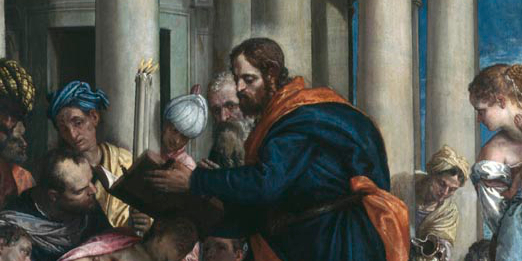
St. Barnabas, Apostle – Pr. Faugstad sermon
Text: Acts 11:19-30, 13:1-3
In Christ Jesus, whose name is above every name, who shares His saving name with us, and who guides and protects us as members of His holy family, dear fellow redeemed:
On Pentecost Sunday, three thousand Jews heard the preaching of the apostles and were baptized. As the apostles continued boldly to proclaim the truth about Jesus, that number grew to five thousand souls. It was a time of beautiful peace and unity. These new Christians shared what they had with one another. Some of them even sold their land and brought the proceeds to the apostles to distribute to the needy.
One of them in particular is mentioned in the fourth chapter of Acts, a man named Joseph. We are told that he “sold a field that belonged to him and brought the money and laid it at the apostles’ feet” (Act. 4:37). This man was a Levite descended from the line of priests, and he was a native of the island of Cyprus in the eastern part of the Mediterranean Sea. He was known for more than his generosity. We learn this by the name the apostles gave him, the name “Barnabas (which means son of encouragement)” (v. 36).
Barnabas was an encourager, a consoler. He was a tremendous supporter of the apostles and a dedicated worker in the church. In today’s reading, he is described in glowing terms as “a good man, full of the Holy Spirit and of faith.” Barnabas was the one who brought Saul to meet the apostles after Saul was converted. Everyone was afraid of Saul, since he had severely persecuted the church. But Barnabas encouraged them to welcome him, and testified to them about Saul’s conversion on the road to Damascus, and how ‘he had preached boldly in the name of Jesus” (9:27).
We can see how highly Barnabas was regarded by the fact that the apostles sent him to Antioch after the Gospel had taken root there. When Barnabas “came and saw the grace of God, he was glad, and he exhorted them all—encouraged them all—to remain faithful to the Lord with steadfast purpose.” The people liked Barnabas. They respected him. Maybe you have a relative like that—someone who was always supportive, or a teacher who motivated you to work harder, or a coach who inspired you to give your best.
You especially appreciate the people who gave you good encouragement along the way. But not all encouragement is good encouragement. The people who encourage you to put yourself first, who encourage you to ignore your conscience, who encourage you to join them in doing what is wrong—these people are giving bad encouragement, bad guidance.
But it isn’t always easy to recognize what encouragement is good and what is bad. Bad encouragement conflicts with the Word of God, but it agrees with our sinful inclinations, our sinful nature. We like hearing the encouragement to do whatever our passions and desires lead us to do. We like hearing the encouragement to follow our own heart, focus on our own plans, and determine our own future.
The encouragement to follow God’s Word, focus on His plan for us, and trust Him to guide us into the future—even if it isn’t the plan and future we wanted—this encouragement is not always welcome. I know as a pastor, I have often thought how much easier it would be if I just encouraged the people I serve to do whatever seems best to them. I wouldn’t have to challenge anyone to change the way they are thinking or to repent of the wrongs they have done. I could just “go with the flow,” and say, “I’m just here to support you being you!”
That would be easier. You know how much easier it is to be the parent or grandparent who says “yes” all the time, instead of being the parent or grandparent who says “no.” But what would the world be like without any “no”?
Barnabas was not just an encourager. He was an encourager of what is good. He encouraged the Christians in Antioch “to remain faithful to the Lord with steadfast purpose,” to love the Lord their God with all their heart, soul, strength, and mind (Luk. 10:27) and to cling to His saving Word of grace. He encouraged them in this way because “he was a good man, full of the Holy Spirit and of faith.”
This good encouragement to remain with the Lord in faith comes from the Holy Spirit. It is the encouragement you receive whenever you hear the Word of God. Those who stop listening to the Word of God open their ears to other things. That’s when bad encouragement starts to sound reasonable, and right is exchanged for wrong. Then ears will no longer hear the good encouragement, and God’s truth sounds strange and even offensive.
The very things that God warns us away from because they cause injury and pain, are the things the world tells us to celebrate and take pride in. And if we challenge those things out of love for our neighbor’s soul, we are accused of being hateful and bigoted. That is discouraging. It is easy to feel discouraged when you know that what you believe and confess is right, but so many around you say it is wrong.
That’s why you and I need the continued encouragement of the Holy Spirit. The name “Barnabas” means “son of encouragement,” and the Greek word for “encouragement” sounds like para’klesis. Jesus used a very similar word to describe the work of the Holy Spirit. He called the Holy Spirit the para’kletos, which means the Helper/ Counselor/ Encourager (Joh. 15:26). The Holy Spirit encourages you by taking what belongs to Jesus Christ and declaring it to you (Joh. 16:14-15).
Today’s reading tells us something very interesting about the disciples in Antioch. It says that because of the teaching of Barnabas and Saul, “the disciples were first called Christians.” What were they called before? When Saul went on his rampage against the Church, he was looking to arrest anyone who belonged to “the Way” (Act. 9:2). That was how believers identified themselves, probably based on Jesus words, “I am the way, and the truth, and the life” (Joh. 14:6).
Now they became known as “Christians”—followers of Christ, those who were baptized into His death and resurrection, who listened to His Word of truth, who partook of the holy food and drink of His body and blood. By the powerful work of the Holy Spirit through the Word, you also are one of those Christians.
You are baptized into Christ, clothed in His righteousness. You are cleansed of all your sins by His holy blood. You are an heir of eternal life by faith in Him. You are a holy one, a saint, one who is set apart by the grace of God. There is nothing more encouraging than to know that your Savior smiles upon you. He forgives you all your sins. He is present through His Word and Sacraments to strengthen you and guide you. He fights for you against the powers of darkness and the temptations of this fallen world. He calls you by His name, which means your future is tied to His future. What an honor to be called a Christian!
But it is not an honor in the world, and it is getting more and more unpopular to be called by the name of Christ. When Barnabas and Saul went on their missionary journey, preaching the good news of Jesus’ saving work, they faced constant opposition and persecution. They wanted to share the greatest, most encouraging message there is, and many did not want to hear anything about it.
Jesus had warned His disciples, “If anyone would come after me, let him deny himself and take up his cross and follow me” (Mat. 16:24). He told them that they would have to suffer for His name. He did not say this to discourage them, but to prepare them. He was encouraging them to stay the course and keep their eyes on the finish line. Again He said, “If the world hates you, know that it has hated me before it hated you…. But all these things they will do to you on account of my name, because they do not know him who sent me” (Joh. 15:18,21).
We Need Good Encouragement, the encouragement of God’s Word of grace. We need to be reminded that all the things of this world will pass away, but the everlasting treasures stored up for us by God will never pass away. Kingdoms rise and fall, rulers come and go. Christian congregations in various locations flourish and diminish, pastors and church leaders come and go, “but the word of our God will stand forever” (Isa. 40:8).
The Holy Spirit called Barnabas to preach and toil and suffer in the name of Christ and then called him to his eternal rest. Tradition indicates that he died a martyr’s death by being stoned in his home country of Cyprus. But through his work, many were encouraged by him, and we still find encouragement from his life of faithfulness. He did not trust in his own work, his own abilities. He trusted in his Savior Jesus. He found his encouragement and strength through the unchanging promises of Christ.
This encouragement he shared with others is the encouragement we share with one another, the encouragement “to remain faithful to the Lord with steadfast purpose.” We do not face the challenges, temptations, and persecutions of the world alone. We face them together in the body of Christ, over which He reigns as our Head.
These persecutions can also be a source of encouragement, because they show we are not of the world; we are of Christ. The apostle Peter writes, “If you are insulted for the name of Christ, you are blessed, because the Spirit of glory and of God rests upon you,” and “if anyone suffers as a Christian, let him not be ashamed, but let him glorify God in that name” (1Pe. 4:14,16).
Glory be to the Father and to the Son and to the Holy Ghost; as it was in the beginning, is now, and ever shall be, forevermore. Amen.
+ + +
(picture of “Barnabas curing the sick” by Paolo Veronese, c. 1566)

The Festival of the Holy Trinity – Vicar Anderson farewell sermon
Text: St. John 3:1-15
In Christ Jesus, who with God the Father and the Holy Spirit are one God, one Lord, who in the confession of the only true God, we worship the Trinity in person and the Unity in substance, of majesty co-equal, dear fellow redeemed:
In the last ten years, I have mostly moved once a year. First it was to college. After nine months, I packed everything up and brought it home. Then I moved for Seminary, then to Iowa, and later this month, to my first call to serve as pastor in Klamath Falls, Oregon. Packing and unpacking, packing, and unpacking. My wife and I are working to make sure everything is secured in boxes. Our text for today is teaching how some have tried to pack up God. The world and maybe we have wondered, how can we have a triune God who is also one true God? Is that even possible? Should packing God into a box even be done? The answer is that we do not want to try and pack God into a box. It is not possible. Yet how do we reason with God being triune? Our God is holy, perfect, and righteous. Jesus in our text explains how God is triune. The trinity is active in your life for your good. Jesus teaches you and Nicodemus how this is possible.
Nicodemus points out how they believe that Jesus was sent from God. “Rabbi, we know that you are a teacher come from God, for no one can do these signs that you do unless God is with him.” The Pharisees reveal that there is a God. They understand that God does exist. As they believe that God exists, they refuse to believe that Jesus came down from heaven to die for them. They don’t believe that Jesus is God in the flesh. They pack God into a box with their lack of understanding of the Scriptures.
As Nicodemus reveals that Jesus is a prophet, he doesn’t understand what Jesus is telling him. ‘Nicodemus said to him, “How can a man be born when he is old? Can he enter a second time into his mother’s womb and be born?” Jesus answered, “Truly, truly, I say to you, unless one is born of water and the Spirit, he cannot enter the kingdom of God.’ It is easy to understand why after hearing this, Nicodemus needs clarification. Jesus gives Nicodemus an explanation that His teaching is about heavenly things, but Nicodemus should know this as He is the teacher of Israel.
The reason that Nicodemus is having a hard time with this is because He has the wrong understanding about God’s Law. The Pharisees believed they were saved by their works. They had created their own laws, so it looked as though they were following God’s Law. This belief skewed their judgement, causing them to be upset about Jesus and His work as the Son of Man.
This concept of the Trinity, a Son of Man, how do we understand it? How do we explain that God is one God in three persons? By us believing that God is God the Father, God the Son, and God the Holy Spirit, we have alienated ourselves from the rest of the world and their beliefs. We are told that if we just believe in “a god”, we will easily fit in with everyone else. Why can’t we just have “a god”? If we have “a god”, or we try to remove the Trinity from the one true God then this is what we have, “for he comes to judge the earth. He will judge the world in righteousness, and the peoples in his faithfulness” (Psalm 96:13). This is God boxed up into our glorious, most holy judge. He will come and judge the world in righteousness and faithfulness.
Our righteousness and faithfulness do not compare to what God wants. Jesus tells us, “You therefore must be perfect, as your heavenly Father is perfect” (Matthew 5:48). We cannot appease God and be perfect for Him. And since we can’t be perfect, we deserve His holy wrath and punishment. Like the Pharisees and the world, we can strive as much as we can and change God’s laws to be born again on our own, but it never works out. Jesus then tells Nicodemus that the prophets have been ignored.
“Truly, truly, I say to you, we speak of what we know, and bear witness to what we have seen, but you do not receive our testimony. If I have told you earthly things and you do not believe, how can you believe if I tell you heavenly things?” Here Jesus is telling Nicodemus that what Jesus and the prophets have spoken in Scripture will happen even if the world won’t receive it. He has tried to explain it in an earthly way, but Nicodemus still lacked understanding. As this cuts us to the heart, Jesus tells Nicodemus, He tells us what their testimony is all about.
The prophets prophesied that a Savior would come. That Savior cannot be just anyone. “No one has ascended into heaven except he who descended from heaven, the Son of Man.” Jesus confirms to Nicodemus that what the Pharisees think is true. Jesus has come from God. He is true God and the Son of Man. Our text ends with Jesus saying, “And as Moses lifted up the serpent in the wilderness, so must the Son of Man be lifted up, that whoever believes in him may have eternal life.”
Jesus teaches that this can only happen with the work of the triune God, and this is how He is active. God the Father has mercy on all of mankind. He sends the Son of Man to suffer and die for all people. How is Nicodemus born again? It is not based on his works. He is born again by the work of the Holy Spirit who brings the work of the Son of Man to him as “The wind blows where it wishes, and you hear its sound, but you do not know where it comes from or where it goes. So, it is with everyone who is born of the Spirit.” It’s not Nicodemus work, it’s not our work. It is the Trinity active in your life.
God is righteous and merciful. He is so merciful that He did the unthinkable for you. Like Nicodemus, we can’t fathom that God would be so merciful that He would send His one and only Son. Jesus points out that the Father is looking out for you. He blesses you beyond all measure. He provides for your earthly needs, and He does the unthinkable by providing for your spiritual needs. He sent His Son to earth and born of flesh and blood. The Son of Man, felt your pains, sufferings, and temptations. He suffered this earthly life perfectly for you. He loved you so much, that He put your sins on His back that the Father’s perfect righteousness and holy judgement came down on Him that He was judged guilty of death even though He was innocent.
Jesus like that serpent, was raised up on the cross, becoming a curse for you. So that He would not have to judge you guilty of what you deserved. Jesus died and rose from the dead for your future. Your eternal future is eternal life in heaven not because of anything that you could do, but because of the death of your Savior.
To have eternal life, God can’t be packed into a box as just “a god”. We wouldn’t be able to be in His presence. Our triune God, not only rules over you, but He takes care of and comes directly to you in the Word and Sacraments. He comes to you in the Word as the Word is Christ. He speaks directly to you, He knows that you have sinned and because of your repentance, He forgives your sins. In baptism, you were baptized with the name of the triune God into the death of Christ. You were marked with the sign of the cross the mark of your Savior. The water and the Word washes away sins and drowned your old Adam. In Holy Communion Christ commands, you to come often to receive His holy body and blood for the forgiveness of your sins. Physical comfort of your Savior with you. These gifts that the Father has mercifully given you because of the life of His perfect Son come to you through these means by the work of the Holy Spirit.
Your baptism, going to communion, and hearing the Word of God preached to you strengthens your faith. You can be certain of your new life in Christ because this is not you’re doing. The work of the Holy Spirit brings you faith in Christ. Every good work that you do is because of the Holy Spirit. This is your new life, and the Trinity is constantly at work for your good. And when the problems of this life get you to again question like Nicodemus, “How can these things be?” The Holy Spirit works faith, you confess your sins, and He once again brings you comfort and assurance that you have been forgiven by Christ, giving you the blessing of eternal life.
This text is not quite the same as packing up belongings and moving them across the country. We see the opposite, that God cannot be contained. If God was contained into a supreme being, there would be no benefit for us. We would see how we cannot achieve what He wants from us. The Holy Trinity is active in our lives. God the Father blesses us, God the Son redeems us, and we receive all of this through the work of God the Holy Spirit. Three distinct persons, one true God. We will never be able to unpack this information because like Nicodemus, we are sinners. But as we confess our sins, the Holy Spirit works faith in our hearts giving us new life, and like Nicodemus we hear forgiveness in the Son of Man being raised up like that serpent on a pole. The next verse brings us comfort until the end of time. “For God so loved the world, that he gave his only Son, that whoever believes in him should not perish but have eternal life” (John 3:16). Amen.
Glory be to the Father and to the Son and to the Holy Ghost; as it was in the beginning, is now, and ever shall be, forevermore. Amen.
+ + +
(picture from “Christ and Nicodemus” by Fritz von Uhde, c. 1886)
The Festival of Pentecost – Pr. Faugstad exordium & sermon
Festival exordium:
Wings. Water. Wind.
The first time we hear about God the Holy Spirit in the Bible is at the beginning of Genesis 1: “In the beginning, God created the heavens and the earth. The earth was without form and void, and darkness was over the face of the deep. And the Spirit of God was hovering over the face of the waters” (vv. 1-2). “The Spirit of God was hovering.” That makes us think of the way a bird hovers in the sky. Fly forward.
After Jesus was baptized, “the heavens were opened to him, and he saw the Spirit of God descending like a dove and coming to rest on him” (Mat. 3:16). Once again, the Spirit was hovering over the waters. Fly forward.
Jesus spoke with a man named Nicodemus and said to him, “unless one is born of water and the Spirit, he cannot enter the kingdom of God” (Joh. 3:5). He spoke about the wind blowing where it wishes, flying wherever it flies, and declared, “So it is with everyone who is born of the Spirit” (v. 8). Fly forward.
Ten days after Jesus’ ascension, His disciples heard a sound from heaven “like a mighty rushing wind, and it filled the entire house where they were sitting” (Act. 2:2). The Holy Spirit did not appear in the form of a dove, but He revealed His presence by the tongues of fire resting on each disciple. They began boldly to preach God’s truth in Jerusalem, and by the end of the day, three thousand souls believed the truth and were baptized. Fly forward.
When you were brought to the baptismal font, the Spirit of God was hovering over those waters. No one could see Him, but He was there with power. “[B]y the washing of regeneration and renewal” (Ti. 3:5), He caused you to be born again. He made you alive in Christ.
He still comes through the powerful Word and Sacraments, not bound by the laws of nature, not confined to space and time. He flies to you with the grace, forgiveness, and peace that are yours through the death and resurrection of Jesus. And He flies forward on His soul-saving, life-changing mission, adding more members to the church of God.
In praise of His magnificent work, we sing our festival hymn—hymn #399, “O Light of God’s Most Wondrous Love”:
O Light of God’s most wondrous love,
Who dost our darkness brighten,
Shed on Thy Church from heav’n above,
Our eye of faith enlighten!
As in Thy light we gather here,
Show us that Christ’s own promise clear
Is Yea and Amen ever.
O risen and ascended Lord,
We wait fulfillment of Thy Word;
O bless us with Thy favor!
+ + +
Sermon text: St. John 14:23-31
In Christ Jesus, whose ascension was the crowning moment of His saving work on earth, and who then sent out the Holy Spirit to distribute this salvation to sinners until the end of time, dear fellow redeemed:
It is very clear to all of you here why you needed God the Son to take on human flesh. You know that you are a sinner, and that you could not satisfy your debt to God. You needed Jesus to take your place, keep the holy Law for you, and die on the cross for your sins. But why was it so crucial that Jesus return to His Father? And why did the Father and the Son need to send out the Holy Spirit?
Jesus said to His disciples, “If you loved Me, you would rejoice because I said ‘I am going to the Father.’” That does not seem like cause for rejoicing. Why would they rejoice when their great Teacher left them? He left them to suffer and die on the cross to make atonement for all sin. He had to go alone, because no one but Him could endure the wrath of God against sin. No one but Him could make peace between God and mankind.
When that work on the cross was complete, Jesus cried out, “Father, into your hands I commit my spirit!” (Luk. 23:46). And the Father received the spirit of His Son. He accepted His Son’s sacrifice. We know He accepted it, because He raised Jesus from the dead on the third day. Jesus’ state of humiliation and suffering had ended. Now all authority in heaven and on earth were given to Him (Mat. 28:18), and He ascended to the right hand of His Father in the flesh.
Since salvation had been won, it was time for these glad tidings to be distributed. Ten days after His ascension, Jesus made good on His promise to send the Holy Spirit. Suddenly the disciples, common men from Galilee, could speak in languages they had never known before. They now stood up and spoke, not to draw attention to themselves, but to draw attention to Jesus and what He had done for all sinners.
And the Holy Spirit did more than give the disciples the gift of multiple languages. Through the Word they preached, the Holy Spirit was also giving the gift of faith to those who listened. We are told that the people “were cut to the heart” when they heard what was said. They did not realize that Jesus was more than a prophet. Now they knew they had crucified the Son of God, and that death could not keep Him in the grave. After what they had done to Him, how could they expect Him to be merciful toward them? “Brothers, what shall we do?” they cried.
And Peter said, “Repent and be baptized every one of you in the name of Jesus Christ for the forgiveness of your sins, and you will receive the gift of the Holy Spirit.” That sounds simple. All they had to do was say they were sorry for their sins and claim to have faith in Jesus, and the gift of the Holy Spirit would be theirs. But that’s not really what happened. It was not a cause and effect. It was not, “They do their part, and God does His part.” God did it all.
I guarantee that none of the people who were baptized on Pentecost Sunday woke up that day thinking, “It’s about time I admitted that I was wrong about Jesus. I should just believe that He is the eternal Son of the Father who died and rose again, and I should be baptized in the name of the Triune God.” It was the Holy Spirit who led them to repentance and faith and who prompted them to be baptized. All of it was gift; none of it was earned.
The same is true for you. You did not choose to be a believer in Jesus. Your parents or others brought you to the baptismal font and to church where the Holy Spirit worked faith in you. God had to do this work for you, because you were dead in your sins. An unholy person cannot make himself holy. Martin Luther put it this way, “If you yourself were holy, then you would not need the Holy Spirit at all; but since we are sinful and unclean in ourselves, the Holy Spirit must perform His work in us” (Luther’s Works, Vol. 24, p. 169).
That’s why Jesus said, “Peace I leave with you; My peace I give you; not as the world gives do I give to you.” The world says the kind of peace you want to aim for is peace among nations and communities or an inner peace and calmness. But these kinds of peace are not permanent. The peace that Jesus left with us is the peace of His atoning death which reconciled us with our perfect heavenly Father. This is the peace the Holy Spirit imparts to us through the Word and Sacraments—the peace of sins forgiven, of eternal life secured, of a temporary rest in the grave before the resurrection of the body on the last day.
The Holy Spirit brings you what you cannot get anywhere else. He brings you the gifts of God. But He doesn’t send these gifts directly from heaven to your heart like a bolt of lightning, or through a feeling you have that He is near. He brings you the gifts of God through the Word of God. Jesus says, “If anyone loves Me, he will keep My word; and My Father will love him, and We will come to him and make Our home with him.” That is why we come to church and have devotions at home, because it is through the Word that God comes to dwell with us.
And it is through the Word that God teaches us the truth and comforts us. Jesus said that the Holy Spirit “will teach you all things and bring to your remembrance all things that I said to you.” Unless you have learned “all things” that God has to teach you, you still need to be a student in the school of the Holy Spirit. Unless you are perfectly holy, you still need the Holy Spirit to sanctify you through the Word.
And the Holy Spirit is glad to do this work. He is glad to take the forgiveness and life won for you by God the Son and apply it to you. He is glad to bring you comfort in your distress. He is glad to strengthen your faith in trials. He is glad to guide you on the path of righteousness. He is glad to prepare you for eternal life in heaven.
You can see how important the work of the Holy Spirit is. Without His work, we would have no faith. We would be without hope and without God in the world (Eph. 2:12). We would live for a short time and die and be dead forever. God the Father and God the Son sent out God the Holy Spirit at Pentecost, so that everything Jesus accomplished according to the gracious will of His Father would be applied to sinners.
You and I are some of those sinners, sinners who deserve God’s wrath for our sins, who deserve eternal punishment in hell. But what we have received instead is the cleansing blood of Jesus that washed away all our sins. We have received His righteousness that makes us acceptable to the Father. We have received His mercy and peace and goodwill. By the power of the Holy Spirit through the Word, we have received all the fullness of Christ’s redemptive work, grace upon grace (Joh. 1:16).
This is why we rejoice today. This is why Pentecost is such a pivotal day for the church. This is the day that all the gifts Jesus won for sinners came pouring out of heaven like stores of grain for the hungry, like waterfalls for the thirsty, like rain on parched earth. “Come, Holy Spirit, and fill the hearts of Your faithful people, and kindle in them the fire of Your love.”
Glory be to the Father and to the Son and to the Holy Ghost; as it was in the beginning, is now, and ever shall be, forevermore. Amen.
+ + +
(picture from Saude Lutheran Church stained glass)

The Sunday after the Ascension & Saude Confirmation – Pr. Faugstad sermon
Text: St. John 15:26-16:4
In Christ Jesus, who is constantly interceding for us at the right hand of God and pouring out His blessings on the Church, dear fellow redeemed:
This past Thursday marks the day of our Lord’s ascension, forty days after He rose from the dead on Easter Sunday. St. Paul writes in Ephesians 4 that “When he ascended on high he led a host of captives, and he gave gifts to men” (v. 8). Everybody likes to receive gifts, so what gifts come to us from Jesus’ ascension?
Some people teach that the gifts we receive from Jesus are all about our life in this world. “If you give your life to Jesus,” they say, “you will receive great blessings. You will be more successful at your job and become more secure financially. Your family life will improve. You will have a more positive outlook, and your life will be happier.” Those are all wonderful things, but Jesus never promised to give them. Many people have been misled and frustrated by these false promises.
The gifts that Jesus did promise to give are tied directly to the work of God the Holy Spirit. Just before He ascended, Jesus said to His disciples, “you will receive power when the Holy Spirit has come upon you” (Act. 1:8). And what would they do with this power? Jesus told them, “you will be my witnesses in Jerusalem and in all Judea and Samaria, and to the end of the earth” (v. 8). The Holy Spirit would be poured out on them, and they would boldly proclaim the truth about what Jesus had done for all sinners.
In today’s reading, Jesus called the Holy Spirit the “Paraclete,” which is often translated as “Helper” or “Comforter.” The Holy Spirit would come to guide them along the way and give them strength to do what they never could on their own. He would teach them the truth which He received from God the Son and God the Father. He would bear witness about who Jesus was and what He had accomplished. It is obvious that the disciples of Jesus received these gifts, because they went from huddling together in locked rooms to openly preaching about Jesus in Jerusalem from the day of Pentecost onward. Their attitude changed from fear and doubt to confidently and eagerly speaking the truth.
And what reward did they receive for their faithful work? They were put out of the synagogues—excommunicated from the church. They were often beaten for preaching the truth. And of the apostles who were sent out to preach the Gospel after Jesus’ ascension, church tradition indicates that all but one of them were martyred for what they taught.
That seems like a questionable bargain. If I were to start a club, and I told people that membership in the club would not benefit them in any obvious external way, how many would want to be part of it? It would not bring them more respect in the community. It would not make them more likely to be chosen for important positions. It would not make them more popular, and in fact, it would probably bring them trouble and hardship. That wouldn’t be a very popular club. But this is something like membership in the Christian Church.
Now you could find a church that would not compromise your standing in society at all, because many churches have changed their teachings to fit the trends in society. The biblical and historic teaching of the Church, for example, is that no one should receive Holy Communion unless he has been properly examined, but many churches open Communion to everyone regardless of what they understand and believe. The biblical and historic teaching of the Church is that only qualified men should be pastors, but many churches allow unqualified men and women to preach and administer the Sacraments. The biblical and historic teaching of the Church is that all sex outside of traditional marriage is sinful, but many churches say that God supports whatever personal choices anyone makes about when and with whom to have sex.
If you do hold to the biblical and historic teaching of the Church, you will find that society and a significant part of the church in the world is not very friendly toward you. You may have heard disparaging comments from people in the community or even from your own friends about how the church you attend is too judgmental, too strict, or too old-fashioned. “That’s why your church is so small,” they say. “Why don’t you just attend one of the larger churches around?”
It all comes back to what we are expecting to receive from the ascended Lord Jesus. We can’t expect to receive approval both from Him and from the world, because Jesus said that the world hated Him and persecuted Him (Joh. 15:18,20). Ultimately Jesus was nailed to a cross, even though He had committed no crime and had healed and helped many who were sick and hurting. The people who crucified Him thought they were doing it in service to God, and Jesus said this same belief would also motivate those who would persecute and kill His followers.
So why would any of us want to follow Jesus if we know it will cause us pain and trouble in the world? We follow Jesus, because He has the words of eternal life (Joh. 6:68). The world cannot give eternal life. All the world can offer is temporary wealth, temporary fame, temporary pleasure, temporary peace. But as soon as we die, everything we built up, everything we enjoyed in this life, goes away. It would be one thing if we just ceased to exist when we die. If that were the case, then why not live it up now? But God says that all who die in unbelief, rejecting the salvation Jesus won for them, are consigned to eternal punishment in hell.
That is not the case for believers. You and I will not be punished eternally, because we are justified in Christ. To be justified does not mean that all the things we have done and said are reasonable and right—far from it. We have sinned just as greatly as everyone else in the world and deserve damnation just like they do. But by faith in Jesus, we are declared right with God, innocent of any wrongdoing. That’s what justification means. It means that through Jesus’ atoning death and victorious resurrection, we are counted righteous before God, forgiven of all our sins, heirs of eternal life.
Because Jesus gave Himself for you, you can expect to receive tremendous spiritual gifts through the means He has established. Through Holy Baptism, you were washed clean of all your sins and made a child of God. Your life and your future were tied to Jesus, who “is seated at the right hand of God the Father Almighty.” Because He lives, you live. Because He reigns, you reign. And He promises to come back again in glory to take you and all believers with Him to His heavenly kingdom.
Jesus has also promised to bring you His gifts through the preaching of His Word and the administration of His Holy Supper. Even though He visibly departed from this world, He is very much present in all His power and glory. After Jesus ascended, the evangelist Mark wrote that the apostles “went out and preached everywhere, while the Lord worked with them and confirmed the message by accompanying signs” (16:20). Jesus is still at work among us. He imparts His righteousness, forgiveness, and life as we listen to His Word, and as we eat His body and drink His blood with the bread and wine of Holy Communion.
Here we are, so often weak, faithless, stubborn, and lacking in love toward one another, and Jesus comes to us with mercy and grace. “Peace be with you,” He says. “I forgive you all your sins. I am not angry with you. All that is Mine is still yours.” And the Holy Spirit works through these powerful promises to comfort us and strengthen our faith.
The Holy Spirit convinces us that what Jesus has won for us and what He has stored up for us are greater treasures than we could find anywhere else. No one else has atoned for sin. No one else has conquered death. We proclaim what Jesus has done, not to cause trouble in the world, but to save the world. Our merciful God wants “all people to be saved and to come to the knowledge of the truth” (1Ti. 2:4), and so do we. That won’t happen if we water down God’s truth and compromise our teachings with the times.
But we know that boldly speaking the truth will cause friction, just as Jesus and His disciples met opposition and persecution. We can expect to have trouble in the world, because we are not of the world. Jesus chose us out of the world (Joh. 15:19). He wanted to give us so much more than the world ever could.
As we follow Jesus by faith, we know exactly what to expect. He has told us clearly about the gifts that are coming our way. He gave the gift of the Holy Spirit to guide us into all truth and to comfort us through His saving work. He also warned us to expect hostility and trials in the world. These things do not come to us as punishment from God, but as signs of His faithfulness.
We are not meant to stay in this world any more than Jesus was. After completing His work to save us, He ascended to the throne of His Father, where He rules over all things and continuously blesses His Church. With Him as our Lord and King, we cannot lose, even if everything we have in this life is taken from us. With the psalmist we say, “The LORD is on my side; I will not fear. What can man do to me?” (Psa. 118:6). Soon the sufferings of this present time will come to an end, and we will join our Savior in the glories of heaven.
Glory be to the Father and to the Son and to the Holy Ghost; as it was in the beginning, is now, and ever shall be, forevermore. Amen.
+ + +
(picture from painting by John Singleton Copley, 1775)

The Fifth Sunday of Easter – Pr. Faugstad sermon
Text: St. John 16:5-15
In Christ Jesus, whose Father willed your salvation from eternity, who won your salvation by His death and resurrection, and whose saving work is brought to you today by the power of the Holy Spirit, dear fellow redeemed:
When Jesus spoke the words of today’s reading, everything was so clouded for His disciples, so unclear. Even though Jesus had plainly told them what was coming, they did not understand. They were filled with sorrow, preoccupied with their own thoughts which were not God’s thoughts. But later, after Jesus died, rose again, and ascended into heaven, they did understand. They were guided into “all the truth” by “the Spirit of truth.” But how did they know the Spirit was speaking to them? How did they know what was true? And how can we be sure today that we have the truth?
We know very well that the world in which we live does not support the idea of objective truth. Many people consider truth to be relative: “You have your truth, and I have my truth, and everyone’s truth is equally valid.” That all sounds very nice until one person’s truth is totally opposed to another person’s truth. Then both truths cannot be equal. Both truths cannot be valid.
We would think that at least among Christians, we could agree about what is true. But sadly, that is not the case. Even basic questions like, “Is the Bible the Word of God?” or “Did Jesus really rise from the dead?” are not answered the same way by all Christians, and not even by all Lutherans. Some of them believe that the Holy Spirit is working not so much through the Bible, but that He is working directly in our minds and hearts and through our culture to lead us to new truths and new teachings.
What does Jesus have to say about all this? We’ll start at the end of today’s reading, where Jesus says, “All that the Father has is Mine.” That is a bold statement! The disciples of Jesus still did not grasp His eternal connection to the Father as His only Son. Earlier in the evening, Philip blurted out, “Lord, show us the Father, and it is enough for us” (Joh. 14:8). And Jesus replied, “Have I been with you so long, and you still do not know me, Philip? Whoever has seen me has seen the Father. How can you say, ‘Show us the Father’? Do you not believe that I am in the Father and the Father is in me?” (vv. 9-10).
Jesus was teaching them and us that He is one God with the Father. Everything that God the Father has, the Son has. Jesus listed some of these things as He prayed to His Father that same evening. He said that His Father had given Him “authority over all flesh” (Joh. 17:2). He had given Him His words (v. 8), His name (v. 11), His glory (v. 22), and His love (v. 26). These are the gifts that God the Father gave God the Son.
But those gifts did not remain with the Son. They were shared with sinners, including you and me. This happens by the work of the third Person of the Holy Trinity, God the Holy Spirit. But before the Holy Spirit imparts the gifts of God, He must prepare us to receive them. That work of preparation is hard on us, because the Holy Spirit reveals our need for salvation by pointing out our sins, imperfections, and misplaced priorities.
Jesus says that the Holy Spirit comes to “convict the world concerning sin and righteousness and judgment.” The Holy Spirit through the holy Law condemns the world for its rejection of Jesus, for trusting its own ideas about righteousness which are nothing but filthy rags (Isa. 64:6), and for following the desires of the devil who wants us to focus only on ourselves and only on this life.
The Holy Spirit must perform major surgery on us to break our dependence on the pleasures and promises of the world and to cut out the sin embedded deep in our hearts. Most surgery is painful, but its purpose is to bring about healing and strength. A patient can’t get better if the root problem is not addressed, if the infection is not eliminated, if the cancer is not removed.
The Holy Spirit shows us through the holy Law how deeply sin has infected us and how dire our situation is. But we don’t like to think we are really that bad off. Whatever spiritual weaknesses and problems we have, we think we can fix them. We can avoid the temptations that caused us to fall in the past. We can do better. It’s like trying to run on a broken leg.
So we fall into the same old sins, and we fall for new ones too. We are not capable of healing ourselves. If we were doing so well, God the Father would not have sent His Son to take on our flesh, keep the Law for us, and die on the cross to atone for sin. And God the Holy Spirit would not have come first of all to “convict the world concerning sin and righteousness and judgment.”
This is why we confess every week at the beginning of the divine service “that we are by nature sinful and unclean, and that we have sinned against [God] by thought, word and deed” (Rite 1, p. 41), that each one of us is “a poor, miserable sinner” (Rite 2, p. 61). That is not very flattering language! And it is completely accurate.
But the Holy Spirit’s work is not only to convict us, not only to reveal our sins. In fact, that is not even His primary work. His main work is to comfort us. Now He does not comfort us by telling us things like, “Everything’s going to work out just the way you want,” or “God loves you just the way you are.” He comforts us by planting the perfect promises of God right in our sinful hearts.
Jesus said, “He will not speak on His own authority, but whatever He hears He will speak, and He will declare to you the things that are to come.” “The things that are to come” means all that Jesus would accomplish by His death and resurrection. The disciples did not know that by morning, their great Teacher and Lord would be beaten beyond recognition and nailed to a cross. They did not know that this was necessary for the salvation of sinners. And they did not know that on the third day He would rise from the dead in victory.
His saving work is why Jesus said, “it is to your advantage that I go away.” His “going away” meant that the work was finished. His work to save you was complete. Because He gave Himself as the sacrificial Lamb on the cross, your sins are all washed away. And because He rose from the dead in triumph, death can no longer overpower you.
You know this and you believe it, because the Holy Spirit has declared it to you through the holy Word of God. Jesus said, “He will glorify Me, for He will take what is Mine and declare it to you.” Here we can see the perfect unity of the Holy Trinity. The Father has given all things to the Son, and the Son has given all things to the Holy Spirit to give to you. The Father’s authority, the Father’s words, the Father’s name, the Father’s glory, the Father’s love—all of it comes to you through the Son by the power of the Holy Spirit.
With the authority bestowed on Him at His resurrection, Jesus commissioned the apostles to go and make disciples of all nations by baptizing them and teaching them all that He had taught them (Mat. 28:18-20). That is how you became a disciple. You were baptized into God’s name by the power of His Word and were brought into His holy family. Everything Jesus did for you became yours. You were given a share of His glory and became a recipient of the divine love that the Father has for His Son, because the Holy Spirit made you a member of Jesus’ holy body.
The Holy Spirit continues to bring you the rich blessings of God. The Holy Spirit does all His work through the Word, and always through the Word. That is where He is active. If anyone claims to receive a message from the Spirit outside of the Bible, a message that contradicts the Bible, that message is not from God. You have the truth, because you have the pure Word of God.
By the Spirit’s work through the Word, you know that you deserve to be punished eternally in hell because of your sins, and you also know that your sins are all forgiven through the blood of God’s Son. You know that your best works cannot earn you any favor with God, and you know that by faith in His Son, you now stand perfectly righteous before Him. You know that you have let the devil lead the way far too often and have fallen for his lies again and again, and you know that Jesus has destroyed Satan’s evil plans and brought you into His own kingdom of light.
The Spirit of truth has taught you all these things by the Word. None of them are new, and they never go out of style. In three weeks, we will celebrate the outpouring of the Holy Spirit on Pentecost, the birthday of the Christian Church. We welcome His coming by continuing to hear the Word, read it, meditate on it, and hold it tight as the greatest treasure we have.
Glory be to the Father and to the Son and to the Holy Ghost; as it was in the beginning, is now, and ever shall be, forevermore. Amen.
+ + +
(picture from stained glass by Gian Lorenzo Bernini, c. 1660)