
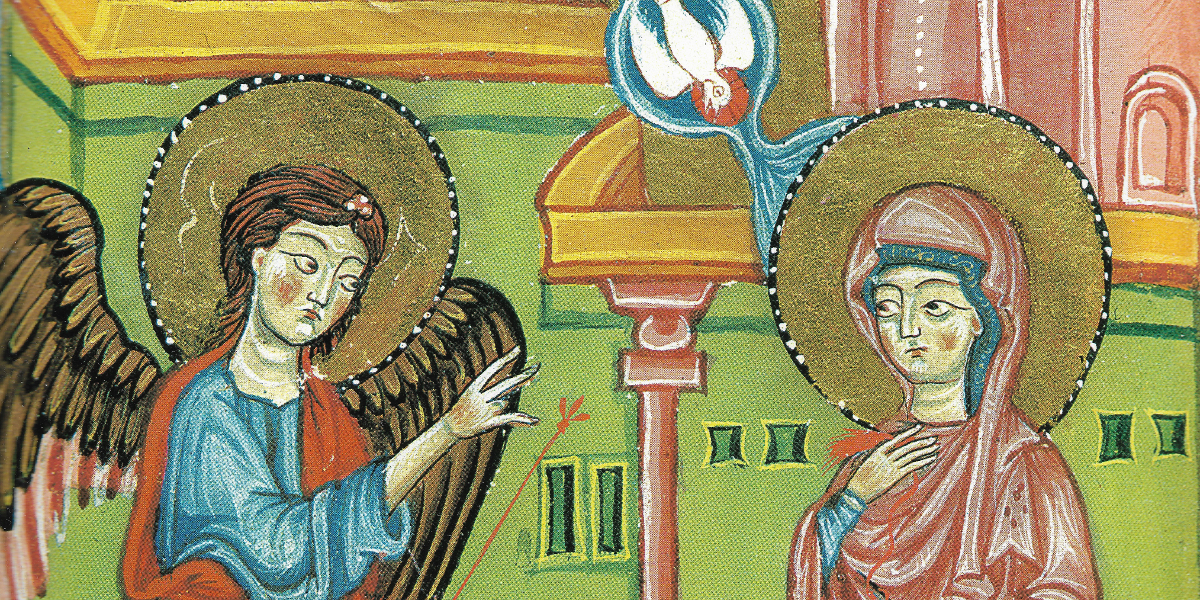
The Annunciation of Our Lord – Pr. Faugstad homily
Text: St. Luke 1:26-38
In Christ Jesus, who is true God, begotten of the Father from eternity, and also true Man, born of the Virgin Mary—our Savior and our Lord, dear fellow redeemed:
Like all faithful Jews, Mary looked forward to the coming of the Messiah promised so long before by the LORD God. She may have even wondered what sort of woman it would be who would bear that Seed, the One who would crush Satan’s head (Gen. 3:15). But she would never have imagined it would be her. Who was she? Nothing but a poor woman betrothed to a poor man from a poor town.
But God does not see as man sees. 1 Corinthians 1 says, “God chose what is low and despised in the world, even things that are not, to bring to nothing things that are, so that no human being might boast in the presence of God” (vv. 28-29). He sent His holy angel Gabriel with a history-altering message for lowly Mary. She was chosen to be the mother of the Christ-Child.
The angel’s appearance and greeting frightened and troubled Mary. He told her that she was highly favored, and that the Lord was with her. As she tried to process the angel’s words, he addressed her personally: “Do not be afraid, Mary, for you have found favor with God.” Not only did the angel speak words of blessing, but he even knew her name! There was nothing about Mary that God did not know.
In His plan to send His Son to redeem the world, He had chosen Mary to give birth to the Christ. Just as He prepared John the Baptizer to be the forerunner of Jesus, He chose Mary to be Jesus’ mother. He did not choose Mary because she was perfect. Some say that Mary was conceived without sin—an “immaculate conception”—that she lived a life without sin, and that is how her Son Jesus was without sin. But the angel clearly stated how her Child would be holy: “The Holy Spirit will come upon you, and the power of the Most High will overshadow you; therefore the Child to be born will be called holy—the Son of God.”
Mary was not chosen because she was better than everyone else. She was chosen because God is gracious. She agreed. In her song, called the Magnificat, she sang, “For He has regarded the lowly state of His maidservant; For behold, henceforth all generations will call me blessed. For He who is mighty has done great things for me, And holy is His name” (Luk. 1:48-49, NKJV).
Mary must have felt unqualified for the task God had given her, but she trusted that if He chose her to do it, then He would give her the strength for it: “Behold, I am the servant of the Lord,” she said to the angel; “let it be to me according to your word.” This is the very day that the Christ was conceived in Mary’s womb. The Holy Spirit worked through the message of the angel both to give Mary the faith she needed and to conceive the Child within her.
Traditionally the date of the angel’s announcement to Mary and the incarnation of Jesus is March 25. This day was selected in the early church because the early Christians thought it coincided with the date of Jesus’ death. Back in 2016 just after I got here, Good Friday fell on this day—March 25—so we heard at that time about both His incarnation and His death.
It is fitting that the incarnation date for Jesus falls during the season of Lent. This is the season that shows us why God took on flesh, why the Christ was born of Mary. He came to offer up His holy life in payment for all our sin. That Child of Mary lived a perfectly holy life from womb to tomb by fully keeping and never deviating from the righteous commands of God. And He freely poured out His precious blood to cleanse us from every sin.
The name given to this Child indicated what He would do. The angel said, “you shall call His name Jesus.” The angel who appeared to Joseph said the same thing: “you shall call his name Jesus, for he will save his people from their sins” (Mat. 1:21). That’s what the name Jesus means: “the Lord is salvation,” or “the Lord saves.” God sent His only-begotten Son to save.
All of this is difficult to comprehend. There are many questions we might ask: Why this point in history? Why did the Savior have to be born; why couldn’t He just appear? Why Mary? What if Mary had said “no”? Perhaps the last question has never crossed your mind. Why wouldn’t Mary want the honor of bearing the Christ-Child? For one thing, maybe she wouldn’t want the awesome responsibility of being the mother of the world’s Savior. Or maybe she would hesitate because this didn’t fit her plan. This is not how she pictured her future.
There are probably a good number of things in your life that have not gone according to your plan. Perhaps you are not living the dream you had in your younger years about what you would do and where you would go. Does this cause you disappointment, frustration, regret? Maybe you remember wonderful opportunities that passed you by, and you can’t help but imagine how much better or more successful your life would be today.
A longing for the past or dreaming about the life you might have had are tools that the devil uses to distract you from the responsibilities and blessings of today. Mary might have dreamed about a quiet home in Nazareth with several kids and a simple life. Instead, God called her to do what neither she nor anyone else could be qualified for, but that He gave her the grace and strength to do. She didn’t always understand why Jesus had to do what He did, and she suffered terribly as she watched Him dying on the cross. But in the end, she learned what it was all for—her salvation and the salvation of the world.
God has in the same way called you to the good work you are currently doing: loving and serving those closest to you, working diligently and honestly, stewarding the gifts He has given you to manage. You can’t see the big picture of what lives are being impacted by your life, but you can trust that God’s will is being done as He works through you. Mary’s statement is a wonderful expression of faith that you can adopt as your own: “Behold, I am the servant of the Lord; let it be to me according to your word.”
God knows how to bless you. That’s what He was doing by sending His Son to be born of a virgin. The fact that He was conceived by the Holy Spirit and had no biological father meant that He could be your Savior. As true Man, He was required to keep God’s holy Law and was able to suffer pain and death. As true God, His perfect keeping of the Law and His sacrificial death counted for all sinners of all time. He now declares you right with Him because of what He did for you, no matter how much or how often you have failed in your responsibilities. All of those failures are forgiven, blotted out by His precious blood.
The day the angel visited Mary changed not just her and Joseph’s life, but all of our lives. That day was the day that light entered the darkness, heaven came to earth, and God became Man. On that day—this day—, God’s promise was fulfilled, His promise to send a Savior to redeem you and me and all sinners.
Joy to the world, the Lord is come!
Let earth receive her King;
Let ev’ry heart prepare Him room
And heav’n and nature sing. (Evangelical Lutheran Hymnary #138, v. 1)
Glory be to the Father and to the Son and to the Holy Ghost; as it was in the beginning, is now, and ever shall be, forevermore. Amen.
+ + +
(picture of The Annunciation by Toros Taronetsi, 1323)
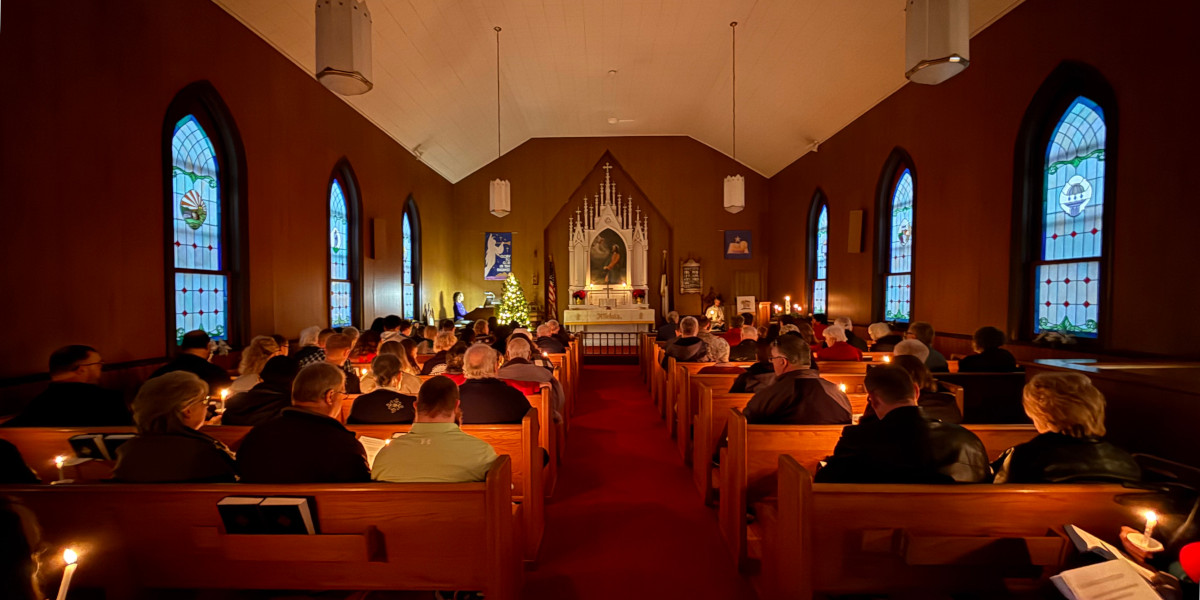
Christmas Eve – Pr. Faugstad homilies
Text: St. Luke 2:8-14
I. And there were in the same country shepherds abiding in the field, keeping watch over their flock by night.
It was a normal night as far as the shepherds were concerned. They were used to working under the stars. Their job was to keep the sheep safe from predators and thieves. They were totally unaware that something had just happened in the nearby town of Bethlehem that would change not just their lives but the whole course of human history. They were unaware of these workings of God, but He was not unaware of them.
Even more closely than they kept watch over their sheep, the LORD kept watch over these shepherds. He knew each one. He loved them. He had chosen them to be unwitting witnesses of the fulfillment of His greatest promise—the sending of His Son in human flesh to save the world of sinners. Whatever concerns occupied their minds—workplace tensions, money problems, relationship issues, personal struggles—these concerns were about to melt away like snow in springtime.
The LORD looks upon you with the same love and care as those Bethlehem shepherds. He knows the troubles you face in your life, the burdens that weigh you down. He knows you personally, and He loves you. For you, just as much as for the shepherds, God the Father sent His only-begotten Son. He sent His Son to bear your sin and conquer your death. In the fields outside the little town of Bethlehem, the shepherds’ entire outlook changed on the night of Jesus’ birth, just as it has for you. Life is no longer dullness and despair. It is hope and peace and joy through the incarnate Son of God.
Hymn #137.1-3 – “O Little Town of Bethlehem”
II. And, lo, the angel of the Lord came upon them, and the glory of the Lord shone round about them: and they were sore afraid.
Standing in the holy presence of the LORD made their un-holiness all the more obvious. They felt exposed. They wanted to hide. That was the condition of Adam and Eve after they disobeyed the command of God and fell into sin. When they heard the sound of the Lord walking in the Garden of Eden, “they hid themselves from the presence of the Lord God” (Gen. 3:8).
But they couldn’t really hide, not from God. Hebrews 4 says that “no creature is hidden from his sight, but all are naked and exposed to the eyes of him to whom we must give account” (v. 13). This is why the shepherds were “sore afraid,” literally, why “they were afraid with a great fear.” They could not see God, but they were surrounded by His glory, and that was enough to get their knees shaking. They knew in that moment what St. Paul later wrote about all mankind, “all have sinned and fall short of the glory of God” (Rom. 3:23).
We have all inherited Adam’s sin, and we have heaped up piles and piles of our own sins. If the glory of the Lord surrounded us right now, we would cower in fear too. But the fear that the shepherds felt was soon removed by the comforting words of the angel. The glory of the Lord shone around them because God had come to earth not to destroy sinners but to save them.
Hymn #126.1-3 – “God Rest You Merry”
III. And the angel said unto them, “Fear not: for, behold, I bring you good tidings of great joy, which shall be to all people. For unto you is born this day in the city of David a Saviour, which is Christ the Lord.”
The angel did not tell the shepherds, “Fear not, for you are good men. God is pleased with your righteous lives.” He did not say, “Fear not, for God has seen your humble efforts to do what is good and kind, as opposed to the proud and the powerful who harm others.” If the angel had said that, I imagine the shepherds would have continued to be afraid because they knew their own sinful hearts.
The angel said “fear not” because he had good news to share with them, “good tidings of great joy.” And it wasn’t just good news for them; it was good news for all people: “For unto you—for you—is born this day in the city of David a Saviour, which is Christ the Lord.” The cowering shepherds were comforted by the message that God had kept His promise, the promise first delivered to Adam and Eve. The promise was that the Seed of the woman would crush Satan’s head and free all people from his kingdom of darkness and death.
The details shared by the angel were mind boggling. This Savior was the Christ, the anointed One prophesied throughout the Old Testament. He was the Lord—the true God—and yet the angel said He had been born! How could this be? How could the Lord be born a Baby? How could God take on flesh? The shepherds were about to find out because this amazing birth had taken place “in the city of David,” in Bethlehem, within sight of where they were. So now their fear turned to wonder as they—and we with them—ponder these “glad tidings of great joy.”
Hymn #123.1-5 – “From Heaven Above to Earth I Come”
IV. “And this shall be a sign unto you; Ye shall find the Babe wrapped in swaddling clothes, lying in a manger.”
The sign for the shepherds to find the Christ-Child was not to look for a Baby glowing with heavenly light or to look for a Child surrounded by the rich and famous. The sign was a Baby wrapped in swaddling clothes—not so uncommon for a newborn—and lying in a manger—now that was unique! They would not have to enter any gated communities or knock on any palace doors this night. They were sent to look for a little stable with a humble manger that held the greatest treasure the world had ever seen.
The Son of God entered the world as a lowly Baby instead of a powerful King, so He could redeem the entire human race from the moment of conception throughout childhood and into adulthood. He lived a perfect life at every stage to fulfill God’s Commandments for us. Then He was laid upon another rough piece of wood, so that His hands and feet could be nailed to the cross for His atoning death in our place.
Hebrews 2 explains why all this had to be: “Since therefore the children share in flesh and blood, he himself likewise partook of the same things, that through death he might destroy the one who has the power of death, that is, the devil, and deliver all those who through fear of death were subject to lifelong slavery” (vv. 14-15). In that Baby “wrapped in swaddling clothes, lying in a manger,” we find our salvation and our life.
Hymn #119 – “Away in a Manger”
V. And suddenly there was with the angel a multitude of the heavenly host praising God, and saying, “Glory to God in the highest, and on earth peace, good will toward men!”
The angel had delivered the message. He had shared the good news about God entering His creation to redeem mankind. Why would God show such compassion for these weak beings who sinned against Him? What made them worth it? These thoughts did not even cross the minds of the holy angels. They know that everything God does is good and right. They perfectly obey the will of the holy God and gladly serve Him.
And now, a great multitude of angels filled the night sky outside Bethlehem singing the praises of God and glorifying His name. “Glory to God in the highest,” they sang, “and on earth peace, good will toward men!” That summed it all up. In His mercy, God the Father did not want to destroy sinners; He wanted to save them. He sent His Son to make peace, to atone for all sin by shedding His holy blood.
We still sing this song of the angels. Each Sunday in the Divine Service, we sing these words after hearing the absolution announced by the pastor: “By the authority of God and of my holy office I forgive you all your sins, in the name of the Father and of the Son and of the Holy Spirit.” That is what Jesus came to do for us—forgive our sins and win for us eternal life. So hearing what God has accomplished for you and me, we join the angels in giving “Glory to God in the highest” for His gifts of goodness and peace.
Hymn #125.1-3 – “Hark! The Herald Angels Sing”
+ + +
(picture from the Candlelight Service at Redeemer Lutheran Church)

The Feast of the Holy Nativity of Our Lord – Pr. Faugstad exordium & sermon
Festival exordium:
What would your life be like without the church? Let’s say you woke up tomorrow believing everything you believe now, but the church building is gone and the congregation you were a part of no longer exists. No pastor. No worshiping together. No services on Christmas Eve or Christmas Day. No Saturday evening or Sunday morning opportunities to hear the Word, receive the Lord’s Supper, and enjoy fellowship together.
Because we have congregations and church buildings, we don’t have to think about these things. We expect they will be here for us, just as they were for our parents, our grandparents, and others before them. I pray that our congregations will continue for a long time. But we are also witnessing a decline in church attendance throughout our country, as people shift their time and attention to other pursuits, other priorities.
We can learn something from the Bethlehem shepherds today. As impressive as it was to see the heavenly hosts fill the sky and the Baby lying in a manger, they were more impressed by what they heard. After visiting the Christ-Child, “they made known abroad the saying which was told them concerning this child.” They told everyone what the angel told them: “Behold, I bring you good tidings of great joy, which shall be to all people. For unto you is born this day in the city of David a Saviour, which is Christ the Lord.”
“A Savior is born for you!” they shouted in the streets of Bethlehem. That message is as important today as it was 2,000 years ago. You and I need a Savior, our neighbors need a Savior, people all around the world need a Savior. If our churches suddenly disappeared, this message of salvation would bring us together. Once you hear the good news, you can’t un-hear it. Once you know what Jesus came to do for you, you can’t keep that news to yourself.
This is why we keep coming together. We come here to wonder at the glad tidings of salvation we have heard from God. We come to ponder and learn what Jesus has done. And we come to be strengthened and renewed through His Word and Sacraments, so we are ready to glorify and praise God in every station of our life, wherever we are and in everything we do.
A Savior is born—born for you—Christ the Lord! Let us rise and sing our festival hymn, #142:
Rejoice, rejoice this happy morn!
A Savior unto us is born,
The Christ, the Lord of glory.
His lowly birth in Bethlehem
The angels from on high proclaim
And sing redemption’s story.
My soul,
Extol
God’s great favor;
Bless Him ever
For salvation.
Give Him praise and adoration!
+ + +
Sermon text: St. Luke 2:8-14
In Christ Jesus, who hides His glory in humble means, so you can receive His forgiveness, His righteousness, and His life, dear fellow redeemed:
Just another day on the job, or rather another night. The shepherds were in the fields around Bethlehem protecting their sheep from predators that might be lurking about. It was an important job, but perhaps not one that everyone wanted to have. The night shift is a long one. It is difficult to stay awake and alert when the body wants to rest. But for the shepherds on this night, that weary feeling was about to go away.
Out of nowhere, an angel of the Lord appeared to them. I suppose they had never seen an angel before, but since he was accompanied by the glory of the Lord shining all around, they were able to put it together. This was an angel from heaven, a messenger from God! We get a sense of what “the glory of the Lord” was like that night from a few references in the Old Testament. When Moses went up Mount Sinai to receive the Law from God, the LORD’s glory was there in a thick cloud. To the people of Israel watching from a distance, “the appearance of the glory of the LORD was like a devouring fire on the top of the mountain” (Exo. 24:17).
Some time after this when Moses finished building the tabernacle, “the cloud covered the tent of meeting, and the glory of the LORD filled [it]” (Exo. 40:34). The same thing happened many years later when King Solomon built the temple in Jerusalem (1Ki. 8:11). On these two occasions fire came from the LORD’s presence to consume the sacrifices offered (Lev. 9:24, 2Ch. 7:1). So “the glory of the Lord” was hidden in a cloud and accompanied by fire. Anyone who witnessed these things trembled at the power of God and fell down before Him.
This is how the shepherds reacted—“they were sore afraid.” They were filled with a great fear as the glory of the Lord surrounded them. But there were still more surprises coming. The angel announced that he was bringing “good tidings of great joy,” a wonderful message intended not just for the shepherds but for all people of all time. “For unto you—FOR YOU—is born this day in the city of David a Saviour, which is Christ the Lord.”
“Christ” means “anointed one,” the same title in the Greek language as “Messiah” in the Hebrew language. The child born in Bethlehem was the anointed One, the One chosen by God to redeem the world of sinners. Here was the Offspring of the woman first promised to Adam and Eve (Gen. 3:15). Here was the son of Abraham, the son of David, the son of Mary. Here was the eternal Son of God wrapped in human flesh. Just a little baby, and yet the Lord of heaven and earth. Just a lowly manger and yet the King enthroned on high.
The angels could not contain their excitement. God parted the veil separating heaven from earth to let the shepherds hear their heavenly praises. The night sky filled with the angels of God’s army, as “a multitude of the heavenly host” appeared. They sang about what the coming of this Savior meant. It meant “Glory to God in the highest,” and it meant “on earth peace, good will toward men.” Jesus was born to give glory to God the Father by following His holy will throughout His earthly life, and to bring peace between God and man through the shedding of His blood.
So the shepherds had seen the glory of the Lord all around them, an angel had spoken to them, and then an entire host of angels appeared to sing God’s praises. But there was something still more amazing, still more wonderful, for them to see this night. They immediately set off to find “the babe wrapped in swaddling clothes, lying in a manger.” And they did find Him just as the angel said, with Mary and Joseph by His side.
It is a strange contrast—the glory of the Lord filling the night sky with the dimly lit stable, the angels arrayed in heavenly garments with a baby swaddled in strips of cloth, the heavenly host singing for joy with the quiet breathing of a baby asleep. The shepherds had never seen anything like it. No one had. For all the poverty of the surroundings, this little baby was more than met the eye. When the shepherds looked at Jesus’ face, they were looking at the face of God. When they heard His little cooing noises, they were hearing the voice of God.
Human reason says, “This can’t be! How can God be a baby? How can He require the care of a human mother and the protection of a mortal man? How can this poor, helpless baby do anything for us?” The shepherds might have thought the same thing if the angel hadn’t said, “[This] is Christ the Lord.” God calls us today to look through their eyes, to see what they saw. This was no ordinary baby lying in a manger; this was God incarnate.
He took on flesh for you. He was born for you. He humbled Himself to be Your servant, to take your place under God’s holy Law, to accept the punishment for your sin, to die your death. He came so that one day you could see the glory of the Lord with your own eyes and hear the angels singing the praises of God in heaven. He came to save you from this world of darkness, to shine the light of His grace into your heart and your home.
But it is natural to wonder if these things are really so. How can we be sure? How can we know that everything in the Bible happened just as we are told it did? If the angels appeared to the shepherds to bring them good news, why don’t they do the same for us? Why doesn’t God give us a glimpse of His glory? These things would go a long way, we think, toward addressing our doubts, calming our fears and anxieties, and giving us strength.
But what was the sign the shepherds were told to look for? Not a royal procession of the saints and angels marching before their King, and not the Son of God descending from heaven in a blaze of glory. The sign was this: “Ye shall find the babe wrapped in swaddling clothes, lying in a manger.” They found the Christ-child, with His glory hidden in baby skin, swaddling clothes, and straw.
And so it is true for us today. Jesus is not found in a great mansion or palace hanging out with the rich and famous, or even where religious institutions appear to be most impressive and successful. Jesus is found where He tells us He is, wrapped up in His Word, in Water, in Bread and Wine. He is present for us in His holy means of grace, the Gospel message in His Word and Sacraments.
Our sinful reason says that this cannot be! How can eternal life come to us through the preaching of a weak pastor? How can Jesus’ righteousness be placed on us at the baptismal font? How can the forgiveness of sins come to us by eating and drinking bread and wine? Here is the key: the means Jesus instituted to give us His grace offer no benefit to us if we just go through the motions, if we view them as nothing more than empty rituals or silly traditions.
My preaching does no good, the application of water has no benefit, eating and drinking at the Communion rail gives no blessing—without faith in the Word of Jesus, without believing that what He promises, He gives you. And that faith is not a choice you make or a work you do. Saving faith is a gift worked through the Word by God the Holy Spirit, who moves you to repent of your sins and to believe that these sins are forgiven by the One who took on flesh to save you.
The angel’s message was not just for the shepherds. It was for you and for every sinner. God wants you to know that you have a Savior. Christ was born for you. He came to atone for your sins. He came to rescue you from this world of darkness. He came to bring you to His kingdom of light, where His glory will surround you, and you will not be afraid forever and ever.
Glory be to the Father and to the Son and to the Holy Ghost; as it was in the beginning, is now, and ever shall be, forevermore. Amen.
+ + +
(picture from “Adoration of the Shepherds” by Gerard van Honthorst, 1592-1656)

The Resurrection of Our Lord – Pr. Faugstad exordium & sermon
Festival exordium:
The miracle-worker died, but his followers refused to accept it. “He will rise again!” they said. So they waited. They waited one day. Then two. On the third day, nothing happened. Weeks passed, then months. Then more than a year and a half had gone by. Finally the funeral home obtained a court order and buried the man’s body.
This actually happened in South Africa. A pastor who claimed to be able to heal the sick, and who reportedly predicted his own resurrection, stayed dead. He did not have the power he thought he had or said he had.
There is only one Man who predicted His own resurrection and then did it. We are gathered here today to hear His Word and sing His praises. Even though He had done countless miracles and even raised several people from the dead, His closest disciples did not believe He would rise. The eleven disciples went into hiding after He was crucified and buried. The women made plans to return to His tomb after the Sabbath to anoint His dead body with more spices.
The only ones who seemed to take Jesus’ prediction seriously were the chief priests and Pharisees. They went to Pilate and said, “Sir, we remember how that impostor said, while he was still alive, ‘After three days I will rise.’” Therefore order the tomb to be made secure until the third day, lest his disciples go and steal him away” (Mat. 27:63-64). All this accomplished was putting witnesses at the tomb—the soldiers—who watched an angel descend from heaven and roll away the stone revealing an empty tomb. They reported what they saw to the chief priests, who, instead of hearing what they said, paid them to tell a lie (28:11-15).
But the resurrection of Jesus is no lie. It happened just as Jesus said it would, on the third day after His death. He did break the chains of death. He did emerge victorious. He did end the terrible reign of death brought into the world by Adam’s sin. He did it for the doubters, for the weak, for the faithless, for sinners—for you and me.
In thankfulness and joy, let us rise to sing hymn #348, “He Is Arisen! Glorious Word!”
He is arisen! Glorious Word!
Now reconciled is God, my Lord;
The gates of heaven are open.
My Jesus died triumphantly,
And Satan’s arrows broken lie,
Destroyed hell’s direst weapon.
O hear
What cheer!
Christ victorious
Riseth glorious,
Life He giveth—
He was dead, but see, He liveth!
+ + +
Sermon text: St. Mark 16:1-8
In Christ Jesus, who was not in the tomb on Easter morning, but who is here with us to bless us, dear fellow redeemed:
Many people claim to have seen angels. Some of them say angels appeared when they were in great distress or sorrow and brought them comfort. Others report messages spoken to them by the angels, special messages from God. The problem is, sometimes those messages do not agree with what the Bible says. So which is more reliable: a special visit from an angel or the Word of God?
If someone is given a message by a holy angel, it will not contradict the Word of God. The angels who serve God are without sin; they only tell the truth. So if an angel speaks a message that conflicts with the Word of God, it is not a holy angel. St. Paul writes that “even Satan disguises himself as an angel of light” (2Co. 11:14). Many prominent false teachers in history claim to have been visited by angels who gave them their new teachings. But these were not holy angels. They were the devil or demons coming in disguise.
So how can we know that the angel who spoke to the women at Jesus’ tomb was really sent by God? How can we be sure that it wasn’t just something they imagined in their state of emotional turmoil and sorrow? When the women went to Jesus’ tomb early Sunday morning, they went there expecting to find a dead man—if they could roll away the stone from the entrance to get to Him.
Instead, they looked up and saw that the stone had already been rolled away. That was strange. And when they cautiously peaked inside, they did not see the body of Jesus. They saw a young man wearing a long, white robe—an angel. Seeing their distress and alarm, the angel told them there was no need to fear. Why? There was no need to fear because Jesus had done everything He said He would do.
The angel didn’t tell them anything new. Jesus had told His disciples multiple times that He would go to Jerusalem to suffer, die, and on the third day rise again. And when they were in Jerusalem the night of His arrest, He told His disciples that they would all desert Him, but after He was raised up, He would go before them to Galilee (Mar. 14:27-28). Now the angel was saying the same thing: Jesus “was crucified. He is risen!… He is going before you into Galilee… as He said to you.”
That is the message the women took back to the disciples. The appearance of the angel was surprising, but the words he spoke should not have been surprising. He simply reminded them what they had already heard. That’s what the holy angels do. They proclaim the promises of God. Isn’t that what the angels did the night of Jesus’ birth? They proclaimed the fulfillment of God’s promise: “For unto you is born this day in the city of David a Savior, which is Christ the Lord” (Luk. 2:11).
You can be sure that if an angel appears to you and speaks a message that does not agree with the Bible’s teaching, it is not an angel of God. St. Paul said that there are some who “want to distort the gospel of Christ.” Then he adds, “But even if we or an angel from heaven should preach to you a gospel contrary to the one we preached to you, let him be accursed” (Gal. 1:7-8). But how can we know that the Gospel is true? Or how can we be sure we have the right Gospel?
That topic came up in a conversation I had with a Mormon man. Before I knew his religious background, he asked me a question that every Lutheran pastor loves to hear, “What is the Gospel?” But I could tell as I explained the Gospel to him that he wasn’t convinced. It was a “gotcha question.” He wanted to make the point that if all of the different denominations of Christians had different understandings of the Gospel, none of us could be certain we had the right one. That’s why we needed a modern-day prophet to give the correct interpretation—a prophet like Joseph Smith (who, incidentally, claimed to get his special revelations from an “angel”).
But we can know the Gospel from the Bible and be certain that we have the true Gospel. The angel sitting in that tomb couldn’t have said it more plainly: Jesus “was crucified. He is risen!” That is the good news. That is the Gospel. A dead man rose from the dead! But it wasn’t just any dead man. It was a dead man who claimed to be the Son of God. It was a dead man who predicted that everything would happen just as it happened. It was a dead man who said that His victory over death would be your victory, that His life would be your life.
Jesus’ resurrection verified everything He ever said. He could have said what He did, died on the cross, and never been seen or heard from again. That would have proven that He was nothing more than a big talker, or that He was delusional. But that is not what happened. He did rise from the dead. We believe it not just because an angel said it happened. We believe it because Jesus showed Himself alive to the women later that morning, to His disciples on numerous occasions, and at one time to more than five hundred of His followers (1Co. 15:6). He talked with them, ate with them, and definitively proved that He is who He said—the Son of God in the flesh.
The disciples wrote down what they saw and heard, so that everyone could learn about Jesus and what He had done. Jesus hadn’t just accomplished something for His time. He had done something for all time. His apostle John wrote near the end of His Gospel account: “these are written so that you may believe that Jesus is the Christ, the Son of God, and that by believing you may have life in his name” (Joh. 20:31).
Our faith in Jesus is not a special feeling we have about Him. It is not a decision we made when considering various faith systems. Our faith in Jesus is a confidence worked in us by God the Holy Spirit through the message of His Gospel. It is a confidence that because Jesus rose from the dead, we will rise. Because He lives forever, we will live forever. We know how ridiculous and impossible it sounds that a severely beaten and crucified man should rise from the dead a couple days later, alive and well, walking around and visiting with people all over the place.
But this was not just any man. This was God-in-the-flesh who won the victory for you. He went to the cross and crushed the devil’s head by paying for your sins. And He conquered death by coming alive on the very day He said He would. Sin, devil, and death could not stop Him. They met an Enemy who had them shaking in their boots.
This is the Lord and Savior who joined Himself to your flesh, so that He could do everything for you that you couldn’t do. And He has joined Himself to you in an even more personal way. He made you a member of His holy body through your Baptism into Him, cleansing you of your sins and covering you in His righteousness. And He feeds you and fills you with His life by giving you His immortal body and blood in His holy Supper. He graciously comes to you and me through His Word and Sacraments, so that even though outwardly we are wasting away, inwardly He renews us day by day (2Co. 4:16).
The Bible says that the angels are amazed by the gracious care God has for us. The gifts the Holy Spirit gives us through the Gospel are “things into which angels long to look” (1Pe. 1:12). So we do not need to wait for a special visit from an angel to know that God loves us. We do not need to seek comfort in our grief from strange coincidences, appearances of certain animals, or from other signs that seem to convey messages from those who are now dead.
We need the Gospel. We need to hear the message again and again that our sins are forgiven, that eternal life is ours through faith in Jesus, and that He will raise our bodies and the bodies of all our loved ones from the dead when He comes again in glory. That is the message God sent His holy angels to proclaim when His Son entered this world and when He rose in triumph out of the dark tomb.
And that is the message we still proclaim today and every day. We want our family, our friends, and even our enemies to hear the saving truth that Christ is risen! He is risen indeed! Alleluia!
Glory be to the Father and to the Son and to the Holy Ghost; as it was in the beginning, is now, and ever shall be, forevermore. Amen.
+ + +
(woodcut from “The Empty Tomb” by Julius Schnorr von Carolsfeld, 1794-1872)
The Annunciation of Our Lord – Vicar Anderson sermon
Text: St. Luke 1:26-38
In Christ Jesus, where at the end of the season of Lent we get this taste of Christmas, an announcement of why your Savior was born for you, dear fellow redeemed:
There are many ways in which you can find information. Many surf social media. Some watch the news on the TV. What I have learned living in New Hampton is: You must read the newspaper. If you want to be in the know, you just read it. How else will you know what is happening with the county? Now the newspaper can be used for many different announcements. It can be used to announce weddings, funerals, anniversaries, and the like. How about using an angel? Now that would be a statement! And what kind of announcement comes from an angel? Well, it must be something special. When God wants to announce something important, He sends His messengers. Today we celebrate a special announcement. The time has come! God announces His promise for all, the promise of a Savior—true God and true Man.
This special announcement of the Christ’s coming is always celebrated on March 25th. There are a few reasons why that is. This is the day of Jesus’ conception in Mary’s womb. He was conceived at God’s command. A great miracle. Then do some simple math and add nine months to the date. Nine months from now we are celebrating the birth of our Savior. The date of Christmas came later, though, and this is not why the early Christians settled on March 25th. They were looking at the incarnation for a different reason. In Jewish tradition, it was thought that the great prophets died on the same calendar day that they had been conceived. The early Christian church identified the date of Jesus’ death as March 25th. That is one of the first things they celebrated and held as important. We see that important connection too. The reason that Jesus is born is so that He can die.
That reason was even tied up in His name. Mary is told the name she is supposed to give her son. She is to give Him the name Jesus. Jesus means God saves. The prophet Isaiah also prophesied the importance of today. “Therefore the Lord himself will give you a sign. Behold, the virgin shall conceive and bear a son, and shall call his name Immanuel” (Isaiah 7:14.) Immanuel means God with us, and today we see it so clearly. The closest God can be with us is when He comes in the flesh. Gabriel announces God’s plan, His promise to send His son down from heaven and it is happening. “But she [Mary] was greatly troubled at the saying, and tried to discern what sort of greeting this might be.”
Like Mary, we would be afraid to see the power of God. The Power of God means He sees and knows all our sins. The world depicts angels as gentle people or even tender babies. But Scripture describes them differently. When angels appear, people are often terrified. God is called the LORD of Armies. This angel is bringing a message directly from God. Would we want to hear that message? We would be troubled seeing their power as we are sinful creatures. They dwell in God’s presence.
But Gabriel told Mary not to be afraid, because she had found favor with God. Found with favor, yet she was still troubled. That is what we want to have, favor with God. The question is how do we find it? Do we look at God’s favor as something we earn, or something we are freely given? Our sinful nature likes to think that we can find favor with God by our efforts. Our pride works hard to earn His favor. Whether we are trying to move up the corporate ladder or be accepted by our friends, our ambitions might not be in the right place. As we look to serve ourselves, we forget that everything we do should be in service to God. We forget the very first commandment of what we are to do. We are to love God with all our heart, soul, and mind. Because we have failed to do this, there is no favor found here.
In our sins, it is impossible to find favor with God. We can’t have favor with the world and favor with God at the same time. We like to be of the world. We want to find favor in the world. Doing so causes us to sin in ways for us to find that favor. The world wants us to be more accepting. It wants us to accept everyone’s sins. When we give into that pressure, usually we do it because we might be engaged in those same sins. We might not realize it before it is too late. Do we give up our sins when they are brought out into the light? Do we double down to try and get our way? To find favor in the world, we find our own destruction.
When God sent Gabriel to Mary, He was announcing the keeping of His promise. This promise is THE promise made in the Garden of Eden. The promise was repeated to Abraham, Isaac and Jacob. The promise was prophesied about by the prophets. King David heard directly that, “your house and your kingdom shall be made sure forever before me. Your throne shall be established forever” (2 Samuel 7:16.) Years and years go by, building up to this important moment. It is time for God to keep His promise, which means the child that Mary had, that she conceived, His job was to grow up, suffer and die for you.
Jesus is the promised Savior. He is conceived at the speaking of God’s Word, and then He is born. This miracle shows that all things are possible with God. We never have to doubt God. This singular date brings together both holidays that the Christian church loves. We have the joy of Christmas knowing that the somberness of Good Friday is around the corner. Jesus’ birth is only one step of His humiliation. He must be born to die for you. His death on the cross cleanses you of your sins and with His rising from the grave, another miracle assures you that your sins are gone. Your favor is found in Christ death and resurrection.
Thankfully our favor with God is not up to us. There is only one person who can have perfect favor with God. That person not only is man, but He is also God. That is who Jesus is, true God and true man. He perfectly finds favor with His Heavenly Father. We hear the Father say how much favor Jesus has. He says, “This is my beloved Son, with whom I am well pleased” (Matthew 3:17.) Jesus does His Father’s will. He knew that this is why He was sent here. Only He can willingly obey the law in our place. Only He can willingly die in our place. Jesus’ death and resurrection saves everyone because when God the Father looks at us, He sees the life that Christ lived.
We now have favor with God because Jesus lived the life that we couldn’t. This announcement comes directly to you every day. As we fall flat on our faces and the world looks to convince us that we must find favor with it in order to live, this announcement comes to you with forgiveness because you hear the Son of God comes to save you.
God announces His promise for all to hear. First Mary hears it announced directly to her. That she was picked to be the bearer of the Christ child. You hold onto this announcement by faith in the Savior. Faith that is from the work of the Holy Spirit in you. This announcement comes to you through the hearing and reading of the Word. You hear the Words of God as He announces His coming Son to save all of mankind. He is born to die for the sins of the world. He is the Word made flesh. This is the joy that you have. God keeps his promises. He says nothing is impossible with Him. Since we were condemned because of our sins, God sent a Savior. Mary conceives Jesus by the Holy Spirit. Your Salvation came down from heaven.
The angel tells you what Jesus’ job is here on earth. “He will be great and will be called the Son of the Most High. And the Lord God will give to him the throne of his father David, and he will reign over the house of Jacob forever, and of his kingdom there will be no end.” He will reign forever, and you inherit His kingdom because of what He did for you. You couldn’t earn God’s favor but you have God’s favor because Christ earned it for you. God announces His promise for you.
An announcement for the ages. It wasn’t found online or in the newspaper. This announcement came from a special messenger directly from God. Mary heard the ultimate news. Her Savior was sent for her, and she would be the one to give birth to Him. We see abundantly clear that God keeps His promises. This was the ultimate promise. Eve was promised that her seed would crush Satan’s head. Jesus is the promised seed. His mission was simple. He lived a perfect life to die. Today we celebrate Jesus’ incarnation. In less than two weeks we remember His death. As one of our Christmas hymns says: “Nails, spear shall pierce Him through, The cross be borne for me, for you; Hail, hail the Word made flesh, The Babe, the Son of Mary!” (145:2 Evangelical Lutheran Hymnary). Amen.
Glory be to the Father and to the Son and to the Holy Ghost; as it was in the beginning, is now, and ever shall be, forevermore. Amen.
+ + +
(picture from “The Annunciation” by Toros Taronetsi, 1323)