

The Festival of the Holy Trinity – Pr. Faugstad sermon
In Christ Jesus, who lives and reigns with the Father and the Holy Spirit, one true God, now and forever, dear fellow redeemed:
The Apostles’ Creed
The word “creed” comes from the Latin word “credo,” which means “I believe.” That’s how the first two ecumenical creeds begin, with the words “I believe.” The creeds state what the Christian believes about God based on the teaching of the Bible.
While not all Christians today recite a creed when they gather for worship, the use of creeds dates back to the Old Testament era. Moses taught the people of Israel a basic creed about God which is recorded in Deuteronomy 6:4: “Hear, O Israel: The LORD our God, the LORD is one.” In the New Testament, the apostle Paul wrote creed-like details about the life of Christ in his First Letter to the Corinthians: “For I delivered to you as of first importance what I also received: that Christ died for our sins in accordance with the Scriptures, that he was buried, that he was raised on the third day in accordance with the Scriptures” (15:3-4).
The structure for the Apostles’ Creed comes from the great commission which Jesus gave to His disciples after His resurrection. He said, “Go therefore and make disciples of all nations, baptizing them in the name of the Father and of the Son and of the Holy Spirit” (Mat. 28:19). As the apostles went about this work, they naturally had to explain who this Father, Son, and Holy Spirit were.
While there is no historical evidence that the apostles themselves wrote the creed we have, an early version of the creed was in use as early as the year 150. The creed is clearly based on the inspired writings of the apostles, which is why it is known as the “Apostles’ Creed.” It is also known as the “Baptismal Creed” due to its connection to Jesus’ trinitarian words, and because in the early Christian Church it was recited by adult catechumens before they were baptized.
The first article describes God the Father as “Almighty, Maker of heaven and earth.” “Almighty” means there is no limit to His power. He made everything out of nothing by the power of His Word. The universe did not come about from a big bang and an evolutionary process taking millions of years. It came about because “In the beginning, God created the heavens and the earth” (Gen. 1:1).
The second article describes the work of God the Son. Though He was certainly active in the creation of all things, the creed especially focuses on His incarnation, His taking on of human flesh in the virgin Mary’s womb by the power of the Holy Spirit. The Son of God became Man so that He could be crucified and die in our place for our sins, descend into hell to proclaim His victory over the devil, and rise from the dead in triumph. He ascended into heaven to the right hand of His Father to serve the members of His Church until His coming on the last day to judge the living and the dead.
The third article of the Apostles’ Creed describes the work of God the Holy Spirit. Through the powerful Word and Sacraments of God, the Holy Spirit calls sinners to repentance and faith. That’s what He did for each of us, making us members of the holy Christian Church through Holy Baptism. This Church of believers, invisible to our eyes but known by God, is the communion of saints, the gathering of Christ’s people who are joined to His body by faith, and who eat and drink His body and blood for the remission of their sins. The Holy Spirit continuously brings us this forgiveness, so that we are prepared for our earthly end and look forward to the resurrection of the dead and the life everlasting.
Please turn to page 94. Let us confess our holy faith in the words of the Apostles’ Creed. [then hymn #37 – “We All Believe in One True God”]
The Nicene Creed
The Nicene Creed is an expanded version of the Apostles’ Creed. The first draft of this creed was written in the year 325 at the Council of Nicaea, and it was finalized in 381. This creed was needed to settle a doctrinal controversy that was troubling the church. A theologian named Arius was promoting the teaching that the Son of God is not equal to the Father in power and glory, but that He is actually a special being created by the Father. Arius came up with catchy songs to spread his false teaching that “there was a time when he was not” (Arius’ slogan).
The controversy became so heated that the Roman emperor Constantine called an ecumenical council, meaning a council for the entire church. Arius and his followers came, as did the theologians who opposed them. One of these was the pastor Nicholas of Myra, whose practice of charitable giving inspired the later legend of “jolly old St. Nicholas.” Another attendee was a young pastor named Athanasius. He became a leader in the dispute against Arius and argued convincingly from the Scriptures that the Father, the Son, and the Holy Spirit are one God from eternity. This is why we use the word “triune” to describe God. The three Persons are one God.
The first article about God the Father is nearly the same as in the Apostles’ Creed, except that it adds that He is the “Maker… of all things visible and invisible.” This wording comes from Colossians 1:16 which says, “For by him all things were created, in heaven and on earth, visible and invisible.” The invisible part of God’s creation includes the holy angels which serve God and His people.
The second article of the Nicene Creed is the longest one. It clearly describes the Son as being one God with the Father. It says He is “begotten” of the Father. This is a term that shows how God the Father and God the Son have been from eternity. God the Son is always and forever begotten of God the Father. He is “begotten of His Father before all worlds, God of God, Light of Light, very God of very God, begotten, not made, being of one substance with the Father, by whom all things were made” (see Joh. 1:1-3, Heb. 1:2).
The Nicene Creed has traditionally been connected to and spoken at a service with Holy Communion, so that everyone clearly understands that the Son who gives His body and blood in the Sacrament of the Altar is true God.
The third article about God the Holy Spirit is also expanded in the Nicene Creed. The Holy Spirit is described as the “Lord”—true God. His relation to the other Persons in the Godhead is not as one who is begotten, but one who “proceeds from the Father and the Son.” His work is to speak what He hears from the Father and the Son, to take what is theirs and give it to us (Joh. 16:13-15). He inspired the prophets to write the words of the Old Testament and the evangelists and apostles to write the words of the New Testament. He continues to work powerfully through the inspired Word to convert hearts to faith in Jesus.
The primary means that He uses to bring people into the “one holy Christian and Apostolic Church” is Holy Baptism. Baptism is not a commitment we make to God or something that needs to be done multiple times like many Christians today teach. Along with the early Christian Church, we acknowledge in the Nicene Creed “one Baptism for the remission of sins.”
Please turn to page 95. Let us confess our holy faith in the words of the Nicene Creed. [then hymn #38 – “We All Believe in One True God” (Luther)]
The Athanasian Creed
The earliest evidence of the Athanasian Creed dates to the mid-400s. Since Athanasius died in the year 373, it is likely that this creed was named in honor of his work to defend the faith and was not written by Athanasius himself. It is significantly longer than the other two ecumenical creeds because it gives great detail about what can and cannot be said about the Triune God on the basis of the Bible. We only use it in church twice a year, but it is a wonderful instructional tool for study at home and for conversation with other Christians who may not be clear on this teaching.
At the very beginning of the creed, it might surprise us to see a reference to the “catholic faith.” The word “catholic” means “universal.” It does not mean the “Roman Catholic faith,” though the Roman Church also confesses the three ecumenical creeds as we do. The universal faith, “the true Christian faith is this, that we worship one God in Trinity and Trinity in Unity, neither confusing the Persons nor dividing the substance.”
The end of the Athanasian Creed gives familiar language like the other two creeds about the Son of God. But then it says that at Christ’s coming, “all will rise again with their bodies and will give an account of their own works.” That wording comes from Hebrews 4:13 which says that “no creature is hidden from his sight… to whom we must give account.” But we do not need to fear the Day of Judgment since Jesus paid for all our sins and has filled our account with His righteous words and works.
Then the creed says, “And they that have done good will enter into life everlasting; and they that have done evil into everlasting fire.” This is another reference from the Bible where Jesus says, “an hour is coming when all who are in the tombs will hear his voice and come out, those who have done good to the resurrection of life, and those who have done evil to the resurrection of judgment” (Joh. 5:28-29). Jesus is not teaching us to trust our own good works to get to heaven. He is making a distinction between believers and unbelievers. Believers do good by the faith the Holy Spirit has worked in them, while unbelievers do evil because they rejected God’s grace. Believers are saved by faith in what Jesus has done; unbelievers are condemned by their own unbelief.
Please turn to page 29. Let us confess our holy faith in the words of the Athanasian Creed. [then hymn #43, vv. 1-4 – “Holy God, We Praise Thy Name”]
Glory be to the Father and to the Son and to the Holy Ghost; as it was in the beginning, is now, and ever shall be, forevermore. Amen.
+ + +
(picture depicts Emperor Constantine and the bishops from the Council of Nicaea)

The Festival of Our Lord’s Ascension – Pr. Faugstad exordium & sermon
Festival exordium:
When I was younger, it was common for athletes who had just won a championship to be asked what they were going to do next. And the answer they gave was almost always the same: “I’m going to Disneyland!”
What about Jesus when He won the victory over sin, death, and the devil? Where would He go? His disciples might have wished He would say, “I am going to go appear to the Jewish Council that condemned Me,” or “visit Pontius Pilate’s headquarters,” or even “march to the palace of the Roman Emperor.” Who could stand against Jesus or deny His power now that He had conquered death itself?
But Jesus had already told them where He was going. Just before His crucifixion, He said multiple times, “I am going to the Father” (Joh. 14:28, 16:5). On the day of His resurrection, He told Mary Magdalene to tell the disciples, “I am ascending to my Father and your Father, to my God and your God” (Joh. 20:17).
But what good would going to the Father do? Why leave the earth at His hour of victory? Jesus ascended to the right hand of His Father because the work the Father had sent Him to do was complete.
God the Father sent His Son to fulfill the law for us sinners—check!
He sent His Son to make atonement for all sin by offering His perfect life on the cross—finished!
He sent His Son to defeat death by rising in victory over death and the grave—done!
Everything necessary to win our salvation was accomplished by Jesus. So now He ascended to His Father.
He ascended to prepare a place for us in His Father’s house (Joh. 14:2).
He ascended so that His enemies would become His footstool (Psa. 110:1, Heb. 10:13), and He would become Head over all things to His body the Church (Eph. 1:22-23).
He ascended so that the Holy Spirit would be sent out to convert hearts and strengthen faith through the Gospel until the end of time (Joh. 16:7).
Jesus had many good reasons for returning to His Father. This was all part of the plan. Jesus’ ascension, His removal of His visible presence, was not a sad day. It was not a day of loss. The disciples “returned to Jerusalem with great joy” (Luk. 24:52), and we join them in rejoicing.
Let us rise to sing the hymn printed in the service folder, “O Wondrous Conqueror and Great”:
O wondrous Conqueror and great,
Scorned by the world You did create,
Your work is all completed!
Your toilsome course is at an end;
You to the Father do ascend,
In royal glory seated.
Lowly,
Holy,
Now victorious,
High and glorious:
Earth and heaven
To Your rule, O Christ, are given.
+ + +
Sermon text: St. Mark 16:14-20
In Christ Jesus, the King who reigns over all things and gives us the gifts of His grace, dear fellow redeemed:
The beginning and the end of today’s Gospel reading portrays the disciples in very different ways. Jesus first appeared to His disciples on Easter evening when they were huddled together in a tightly secured room. They were afraid of both the Jewish and the Roman authorities. If the authorities could do what they did to Jesus, wouldn’t Jesus’ followers be next?
Had they taken seriously Jesus’ words leading up to His crucifixion, they should have been excited about that Sunday. He told them multiple times that He would suffer many things in Jerusalem and would be killed, but on the third day He would rise. Sunday was the third day. Everything else Jesus said had happened. But in the disciples’ estimation, the thought of Jesus rising from the dead was a bridge too far. They might have thought to themselves: if He had the power to rise from the dead, why would He let Himself be arrested and killed in the first place?
The first message Jesus spoke to His disciples on that Sunday was, “Peace be with you” (Joh. 20:19). He wanted them to know they were still His disciples. He had not rejected them. But He did take them to task for denying His resurrection. St. Mark writes that “He rebuked them for their unbelief and hardness of heart, because they had not believed those who saw Him after He had risen.”
Everything hinged on His resurrection. It verified that Jesus was who He said—the eternal Son of God. It gave meaning to His suffering and death—these were done to make atonement for sin. And it gave a clear message and direction for what the disciples of Jesus would do going forward. They would tell everyone about the death and resurrection of the Lord Jesus, that He died and rose to save the world of sinners.
This is still the mission and message of the church. Jesus said, “Go into all the world and proclaim the gospel to the whole creation.” He doesn’t restrict the proclamation of the Gospel to certain groups of people or certain places. He wants the message of salvation to be broadcast everywhere. He wants everyone to know that He “was delivered up for our trespasses and raised for our justification” (Rom. 4:25).
People are converted and become members of His holy body by Baptism, and they remain in that baptismal grace by continuing to hear His Word (Mat. 28:19-20). Baptism alone does not guarantee that someone will go to heaven, because the faith worked through the water and Word of Baptism can be lost. Jesus says, “Whoever believes and is baptized will be saved, but whoever does not believe—whether or not they have been baptized—will be condemned.”
The key is to cling to Jesus’ saving Word. That is why Jesus had to rebuke His disciples. They weren’t listening to and trusting His Word. They were going by what seemed right to them. They were following their own reason. We are tempted to do the same today. We are tempted to go along with what the culture around us promotes, even when it is contrary to the Word of God. We do this because we don’t want to be singled out and targeted. We don’t want to be rejected by others when our beliefs don’t match up with the prevailing opinions around us.
But Jesus does not call us to fit in with the world. He calls us to be set apart. He says, “If anyone would come after me, let him deny himself and take up his cross and follow me…. For what will it profit a man if he gains the whole world and forfeits his soul?” (Mat. 16:24,26). Jesus gives us more than the world. The world is small and insignificant compared with what He has won for us.
If you sold your soul for everything desirable in the world, you would only have it for a short time, and whatever you had would be lost. Jesus gives you eternal treasures that will never be taken from you. Through His death to pay for your sins and His resurrection to overcome your death, He has restored the image of God to you that Adam and Eve lost in the fall. You are covered in His righteousness and credited with His perfection. You have the victory over sin, death, and devil. You have eternal life.
These are the gifts of the King. He has the authority to give them to whomever He wants. He chooses to give them to you, and He wants to give them to many others besides. After Jesus’ ascension, this became clear to His disciples. They understood that they would not be with Jesus like they were before, speaking with Him face to face and physically going wherever He went. But He promised that He would be with them “always, to the end of the age” (Mat. 28:20).
Jesus’ ascension did not mean He had deserted His chosen disciples or any who would come after them. It meant that His work that the Father sent Him to do was complete. His ascension also did not mean that He was going into retirement. Today’s reading makes that clear. He promised to work signs through those who spread the message of salvation, such as casting out demons, making them immune to deadly poison, and giving them the ability to heal. When His disciples went out preaching the message of salvation, we are told that “the Lord worked with them and confirmed the message by accompanying signs.
Those signs were given for the initial spread of the Gospel. You can read in the Book of Acts about the miraculous abilities He gave the apostles. But once the early churches were established, those special gifts of the Spirit diminished. Jesus does not teach us to focus on having unique spiritual gifts, which is all that some modern Christian churches want to talk about. Jesus instead teaches us to hold fast to the Gospel.
The mission of His Church is to speak His Word. We are simply messengers of the King. We don’t come up with our own message, something new to excite the people in our community. We faithfully speak what we have been taught. We give what we have been given. We comfort as we have been comforted.
It may seem to us at times that we need something more. We hear the message of Jesus’ death and resurrection so often that it might seem to lose its power. If it is powerful, why don’t we see more growth in our churches? But what the King does with His Word is not the business of His subjects. The authority behind the Word is not ours; it is His. By the same token, the pressure to get results is not on us. When the King sends out His messengers, when Jesus sends out believers, our duty is to proclaim what He has done, and He will see to it that the Gospel message accomplishes what He pleases (Isa. 55:11)
Just as the Lord was still at work with His disciples after His ascension, so He is still working among us. From His position at the right hand of His Father, He fills all things, particularly working for the good of His Church (Eph. 1:22-23). It is His absolution that you hear from my mouth. It is His Word that sounds forth from the pulpit. It is His holy body and blood you receive in the Sacrament of the Altar.
His grace given to you and the Holy Spirit working in you is what gives you the motivation and the strength to take part in “proclaim[ing] the gospel to the whole creation.” Just as Jesus’ resurrection turned His disciples from fear to faith and cowardice to courage, so it does the same for you. You are a messenger of the crucified and risen King, Jesus Christ, at whose name “every knee should bow, in heaven and on earth and under the earth, and every tongue confess that Jesus Christ is Lord, to the glory of God the Father” (Phi. 2:10-11).
Glory be to the Father and to the Son and to the Holy Ghost; as it was in the beginning, is now, and ever shall be, forevermore. Amen.
+ + +
(picture from painting by John Singleton Copley, 1775)

Good Friday – Pr. Faugstad homily
Text: St. Mark 15:37-39
Throughout the season of Lent, we have heard about several witnesses of Christ’s Passion whose lives were dramatically altered by their interactions with Jesus, people like the Roman governor Pontius Pilate, Simon of Cyrene who carried Jesus’ cross, and the thief who received grace. We could add others whose lives were changed, such as the servant Malchus who had his severed ear healed by Jesus, and the murderer Barabbas who was chosen for release instead of Jesus.
The centurion overseeing Jesus’ crucifixion also belongs on this list. We expect that he started his day on that Friday like any other day. But when he reported for his military duty, he quickly became aware of a recently arrested Jewish man named Jesus. What crimes Jesus had committed were unclear to him, and perhaps he did not even care. Whatever Governor Pilate ordered, he would carry out.
Was the centurion part of the battalion at the governor’s headquarters that stripped Jesus, put a scarlet robe on Him, drove a crown of thorns into His head, and mocked Him as the “King of the Jews”? Or if he did not actively take part, did the centurion laugh as they made a mockery of Jesus, spit on Him, and struck Him on the head? Did he enjoy seeing the Man suffer, particularly a Jewish man?
But the centurion would have noticed something different about Jesus. The apostle Peter describes this difference: “When he was reviled, he did not revile in return; when he suffered, he did not threaten, but continued entrusting himself to him who judges justly” (1Pe. 2:23). The centurion could not help but notice that the first words out of Jesus’ mouth when He was nailed to the cross were not curses. His first words were, “Father, forgive them, for they know not what they do” (Luk. 23:34).
Then there was the care He showed for His heartbroken mother and the promise He made to the penitent thief (Joh. 19:26-27; Luk. 23:43). Jesus did not speak or act like any other criminal he had ever known. After this, around noon, the sky became strangely dark. The intensity of Jesus’ suffering was noticeable as He cried out, “My God, my God, why have you forsaken me?” (Mar. 15:34), and soon after this, “I thirst” (Joh. 19:28). The darkness lingered for three hours, until Jesus said, “It is finished” (Joh. 19:30). Then He cried out with a loud voice, “Father, into your hands I commit my spirit!” (Luk. 23:46).
With every word, the centurion became more and more captivated by this Man. Why did He speak like this? Who was this Father He kept calling out to? How could He say nothing in response to those who mocked and ridiculed Him? When Jesus breathed His last, the evangelists report that the curtain of the temple was torn in two, from top to bottom. Along with that, the earth shook, and the rocks were split.
The centurion, hearing Jesus’ words and seeing the earthquake, was filled with awe. Something very unexpected had come over him. He could not explain what he had heard and seen. He had been trained to handle challenging situations while keeping his cool. He was a serious professional. And suddenly from his mouth came words of praise, “Certainly this man was innocent!” (Luk. 23:47). “Truly this Man was the Son of God!”
We do not know if this centurion came to understand and believe that Jesus was hanging on the cross that day for him. We don’t know if he joined the early Christians in devoting himself “to the apostles’ teaching and the fellowship, to the breaking of bread and the prayers” (Act. 2:42). The Bible does not say. We do learn that Pilate summoned the centurion to verify that Jesus had died on the cross (Mar. 15:44-45). Did the centurion report the details of all that he had heard and seen? Did he share his conclusion with Pilate about who Jesus must have been? If he had, would Pilate have listened?
By the grace of God, we hear the centurion’s words today. Through the eyewitness accounts of the evangelists, we stand in awe like the centurion of the sacrifice made by this innocent Man, the Son of God incarnate. Jesus was not on the cross paying for any sins of His own. He was on the cross paying for my sin and your sin. We shudder at the way Jesus was treated by the Roman soldiers. But it was our sins that put Him in the hands of these tormentors, our sins that got Him nailed to the cross.
Jesus endured this agony and suffering willingly for you. He was willing to suffer the eternal fires of hell and be forsaken by God for you. He was willing to die for you. What pride can there be in our hearts when we see how Jesus humbly offered Himself for us? What works can we boast about when the eternal Son of God gave up His holy life in our place?
The cross of Jesus removes all class distinctions, social status, nationality, worldly honor and glory. None of that matters in view of the Lamb of God sacrificed for the whole world’s sin, for the sins of Pontius Pilate, Barabbas, the thief, the centurion, you and me. “[N]ow in Christ Jesus you who once were far off have been brought near by the blood of Christ. For he himself is our peace” (Eph. 2:13-14).
+ + +
(picture from the altarpiece in Weimar by Lucas Cranach the Younger, 1555)

Maundy Thursday – Pr. Faugstad homily
Text: St. John 13:1-15
In Christ Jesus, who produces the fruit of humble service through us by serving us through His powerful Word and Sacraments, dear fellow redeemed:
“Greatness” is often defined as being better than everyone else at something. Athletes are said to achieve greatness when they break long-standing records or win the world championship. Professional singers achieve greatness when they reach the top of the music charts or get inducted into the hall of fame. Business people achieve greatness when they hit a record-breaking level of sales or become CEO.
Jesus defines greatness in a very different way. He says, “whoever would be great among you must be your servant, and whoever would be first among you must be slave of all” (Mar. 10:43-44). In today’s reading from the Gospel of St. John, Jesus taught this greatness first with actions and then with words.
Jesus had arranged to eat the Passover meal with His disciples in Jerusalem. They did not know how quickly His death would come, but He did. John tells us that He knew that His death was near, and that He would soon return to His heavenly Father. In these last hours before His death, Jesus did something that surprised His disciples. He set aside His outer garments, tied a towel around His waist, and proceeded to wash their dirty feet.
When He got to Peter, Peter would not have it. Without knowing why Jesus was doing this or being willing to learn why, he blurted out, “You shall never wash my feet.” It was like Peter’s statement some weeks before this when Jesus predicted His suffering, death, and resurrection. “Far be it from you, Lord!” he said. “This shall never happen to you” (Mat. 16:22). Peter was so sure of himself, so certain that he saw and understood things clearly.
Peter was proud. Who was he to tell Jesus, the Son of God, what He should and should not be doing? And yet, we fall into the same sin when we criticize God for not fixing the problems in society, or when we question why He doesn’t give us more in this life or make things better for us. We act like we are in charge, like Peter did. First, Peter wanted to tell Jesus what to do: “Do not wash my feet.” Then when Jesus warned him about rejecting His service, Peter wanted to tell Jesus how to serve him: “Lord, not my feet only but also my hands and my head!”
Jesus had to teach Peter to receive humbly the gifts He was giving. He knew what Peter needed, just as He knows what we need. When Peter asked for a whole body washing, Jesus replied, “The one who has bathed does not need to wash, except for his feet, but is completely clean.” Then He added, “And you are clean, but not every one of you.” The one who was not clean was Judas Iscariot who was about to betray Jesus for money. Judas had fallen from faith. He was no longer under God’s grace.
But the other disciples, despite their pride and their confusion about Jesus’ work, were clean in God’s sight. They believed that Jesus was the Messiah sent by the Father for the world’s salvation. You are clean like they were because you also believe that Jesus is your Savior. You believe that He gave His body to be crucified in your place and shed His blood to wash away your sins.
This cleansing was applied to you in Holy Baptism when you became a member of the holy body of Christ. Baptism brought you the forgiveness of sins, but that doesn’t mean your sinning stopped at your Baptism. This is why you need continuous cleansing through Jesus’ Word and Sacraments. Jesus demonstrated this by washing the disciples’ feet. He was showing them and us that we need His ongoing, sanctifying work in order to remain clean.
This is why He instituted the Sacrament of the Altar on this holy day. He took the unleavened bread from the Passover meal and said, “This is My body.” Then He took the cup of wine and said, “This is My blood.” He also told them what it was for: “for the remission of sins” (Mat. 26:28). We continue to partake of His body and blood because we continue to sin. Jesus humbly meets us in this Supper with His grace, stooping down to remove the dirt of sin that has become stuck inside us.
But it is possible to reject this work that Jesus comes to do among us. Like Peter, we could misunderstand what Jesus is doing and act like Holy Communion is a service we render to God instead of a gift He gives to us. Or like Judas, we could watch Jesus stooping down to serve us but despise Him in our hearts. Isn’t it shocking: Jesus knew that Judas was going to betray Him, and He still knelt before him to wash his feet. In the same way, Jesus gives His body and blood to all who partake of the Supper, but it only benefits those who believe His words.
Those who receive His body and blood without faith, take the Supper to their spiritual harm. 1 Corinthians 11:27 says, “Whoever, therefore, eats the bread or drinks the cup of the Lord in an unworthy manner will be guilty concerning the body and blood of the Lord.” This is why we insist on meeting with visitors who attend our services before they take Communion. We have the same concern for our members who have fallen into public sin. We want to ensure that they are repentant of their sin and recognize what Jesus is giving in the Supper before we invite them to commune.
That same examination must happen with all of us before we come forward to receive Christ’s body and blood. 1 Corinthians 11:28 says, “Let a person examine himself, then, and so eat of the bread and drink of the cup.” We examine ourselves by acknowledging that “our feet are dirty,” so to speak. We admit the sins we have committed in our thoughts, our words, and our actions. We also confess our trust in Jesus’ atoning sacrifice, that He shed His blood to pay for our sins. We acknowledge that He is present to give us His holy body and blood. And we express our intention to stop our sinning and do better.
That last point is difficult. We might think to ourselves: Do I really want to stop the sins I keep falling into? Do I want to stop hating my enemy? Do I want to stop listening to and watching what I know I shouldn’t? Do I want to stop drinking too much, eating too much, lying, gossiping, prioritizing my pleasure and my plans above everything else? These are all sins of selfishness.
Jesus calls us to set aside these sins, leave them behind, and receive His body and blood to wash our guilt away. No sin is too great that He cannot forgive it. Jesus died on the cross to pay for all sins, every single one. As we come forward for Holy Communion, burdened by our sins, we remember why Jesus instituted this Supper. It is for our forgiveness.
As we leave the Communion rail cleansed and return to our homes and our work, Jesus also directs us to the needs of our neighbors. He says, “If I then, your Lord and Teacher, have washed your feet, you also ought to wash one another’s feet. For I have given you an example, that you also should do just as I have done to you.”
This is where true greatness is found: first in Jesus’ humble service to us, and then in the humble service toward one another that He moves us to do. This sort of greatness might not impress the world, but it is the sort of greatness that changes the world, that changes hearts, just as the sacrificial work of Jesus has changed ours. “For the Son of Man came not to be served but to serve, and to give his life as a ransom for many” (Mar. 10:45).
Thanks be to God. Amen.
+ + +
(picture from painting by Giotto di Bondone, c. 1267-1337)
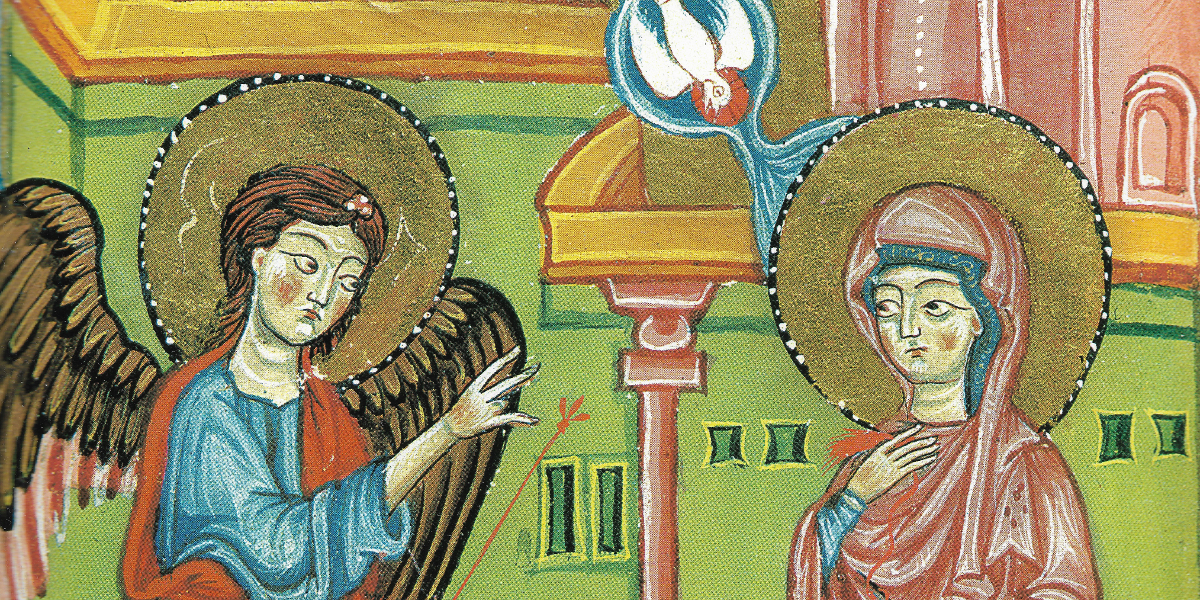
The Annunciation of Our Lord – Pr. Faugstad homily
Text: St. Luke 1:26-38
In Christ Jesus, who is true God, begotten of the Father from eternity, and also true Man, born of the Virgin Mary—our Savior and our Lord, dear fellow redeemed:
Like all faithful Jews, Mary looked forward to the coming of the Messiah promised so long before by the LORD God. She may have even wondered what sort of woman it would be who would bear that Seed, the One who would crush Satan’s head (Gen. 3:15). But she would never have imagined it would be her. Who was she? Nothing but a poor woman betrothed to a poor man from a poor town.
But God does not see as man sees. 1 Corinthians 1 says, “God chose what is low and despised in the world, even things that are not, to bring to nothing things that are, so that no human being might boast in the presence of God” (vv. 28-29). He sent His holy angel Gabriel with a history-altering message for lowly Mary. She was chosen to be the mother of the Christ-Child.
The angel’s appearance and greeting frightened and troubled Mary. He told her that she was highly favored, and that the Lord was with her. As she tried to process the angel’s words, he addressed her personally: “Do not be afraid, Mary, for you have found favor with God.” Not only did the angel speak words of blessing, but he even knew her name! There was nothing about Mary that God did not know.
In His plan to send His Son to redeem the world, He had chosen Mary to give birth to the Christ. Just as He prepared John the Baptizer to be the forerunner of Jesus, He chose Mary to be Jesus’ mother. He did not choose Mary because she was perfect. Some say that Mary was conceived without sin—an “immaculate conception”—that she lived a life without sin, and that is how her Son Jesus was without sin. But the angel clearly stated how her Child would be holy: “The Holy Spirit will come upon you, and the power of the Most High will overshadow you; therefore the Child to be born will be called holy—the Son of God.”
Mary was not chosen because she was better than everyone else. She was chosen because God is gracious. She agreed. In her song, called the Magnificat, she sang, “For He has regarded the lowly state of His maidservant; For behold, henceforth all generations will call me blessed. For He who is mighty has done great things for me, And holy is His name” (Luk. 1:48-49, NKJV).
Mary must have felt unqualified for the task God had given her, but she trusted that if He chose her to do it, then He would give her the strength for it: “Behold, I am the servant of the Lord,” she said to the angel; “let it be to me according to your word.” This is the very day that the Christ was conceived in Mary’s womb. The Holy Spirit worked through the message of the angel both to give Mary the faith she needed and to conceive the Child within her.
Traditionally the date of the angel’s announcement to Mary and the incarnation of Jesus is March 25. This day was selected in the early church because the early Christians thought it coincided with the date of Jesus’ death. Back in 2016 just after I got here, Good Friday fell on this day—March 25—so we heard at that time about both His incarnation and His death.
It is fitting that the incarnation date for Jesus falls during the season of Lent. This is the season that shows us why God took on flesh, why the Christ was born of Mary. He came to offer up His holy life in payment for all our sin. That Child of Mary lived a perfectly holy life from womb to tomb by fully keeping and never deviating from the righteous commands of God. And He freely poured out His precious blood to cleanse us from every sin.
The name given to this Child indicated what He would do. The angel said, “you shall call His name Jesus.” The angel who appeared to Joseph said the same thing: “you shall call his name Jesus, for he will save his people from their sins” (Mat. 1:21). That’s what the name Jesus means: “the Lord is salvation,” or “the Lord saves.” God sent His only-begotten Son to save.
All of this is difficult to comprehend. There are many questions we might ask: Why this point in history? Why did the Savior have to be born; why couldn’t He just appear? Why Mary? What if Mary had said “no”? Perhaps the last question has never crossed your mind. Why wouldn’t Mary want the honor of bearing the Christ-Child? For one thing, maybe she wouldn’t want the awesome responsibility of being the mother of the world’s Savior. Or maybe she would hesitate because this didn’t fit her plan. This is not how she pictured her future.
There are probably a good number of things in your life that have not gone according to your plan. Perhaps you are not living the dream you had in your younger years about what you would do and where you would go. Does this cause you disappointment, frustration, regret? Maybe you remember wonderful opportunities that passed you by, and you can’t help but imagine how much better or more successful your life would be today.
A longing for the past or dreaming about the life you might have had are tools that the devil uses to distract you from the responsibilities and blessings of today. Mary might have dreamed about a quiet home in Nazareth with several kids and a simple life. Instead, God called her to do what neither she nor anyone else could be qualified for, but that He gave her the grace and strength to do. She didn’t always understand why Jesus had to do what He did, and she suffered terribly as she watched Him dying on the cross. But in the end, she learned what it was all for—her salvation and the salvation of the world.
God has in the same way called you to the good work you are currently doing: loving and serving those closest to you, working diligently and honestly, stewarding the gifts He has given you to manage. You can’t see the big picture of what lives are being impacted by your life, but you can trust that God’s will is being done as He works through you. Mary’s statement is a wonderful expression of faith that you can adopt as your own: “Behold, I am the servant of the Lord; let it be to me according to your word.”
God knows how to bless you. That’s what He was doing by sending His Son to be born of a virgin. The fact that He was conceived by the Holy Spirit and had no biological father meant that He could be your Savior. As true Man, He was required to keep God’s holy Law and was able to suffer pain and death. As true God, His perfect keeping of the Law and His sacrificial death counted for all sinners of all time. He now declares you right with Him because of what He did for you, no matter how much or how often you have failed in your responsibilities. All of those failures are forgiven, blotted out by His precious blood.
The day the angel visited Mary changed not just her and Joseph’s life, but all of our lives. That day was the day that light entered the darkness, heaven came to earth, and God became Man. On that day—this day—, God’s promise was fulfilled, His promise to send a Savior to redeem you and me and all sinners.
Joy to the world, the Lord is come!
Let earth receive her King;
Let ev’ry heart prepare Him room
And heav’n and nature sing. (Evangelical Lutheran Hymnary #138, v. 1)
Glory be to the Father and to the Son and to the Holy Ghost; as it was in the beginning, is now, and ever shall be, forevermore. Amen.
+ + +
(picture of The Annunciation by Toros Taronetsi, 1323)

The Fourth Sunday in Advent/St. Thomas, Apostle – Pr. Faugstad sermon
Text: St. John 20:24-29
In Christ Jesus, the Son of God, who contrary to all reason was born in a Bethlehem stable, and who gave up His life on the cross in payment for sin before rising from the dead on the third day, dear fellow redeemed:
“Every football team is the same–whether in Iowa or Minnesota or Wisconsin or Illinois–so any one is just as good as another.” “It doesn’t matter which politician you vote for, as long as you vote for someone.” “Whether you work hard to buy what you have, or whether you beg, borrow, or steal to get it, we’re all just trying to get to the same place.” I don’t think you would accept any of these statements as true. In fact, they are ridiculous. Of course not all football teams are the same. Not all politicians will get our vote. And it certainly does matter how we acquire our money.
But as ridiculous as these statements are, they are the way that people commonly talk about religion. “Every religion is the same; they all lead to the same god–one is just as good as another.” “It doesn’t matter what church you go to, as long as you go to church.” “No matter what you believe, we are all trying to get to the same place. What’s important is that you just believe in something.”
Let’s apply this thinking to today’s reading. Jesus appeared alive to the disciples while Thomas was away on the third day after His death. He showed them the marks in His hands and side. He asked them to give Him something to eat. He breathed on them and blessed them. There was no doubt about it–Jesus had risen bodily from the dead just as He promised He would. Then Thomas came along. What did the disciples say? “Thomas, Jesus appeared to us in the flesh. But it doesn’t really matter if you believe it or not, as long as you hold Him in your heart. We’re not here to force our beliefs on you; you can decide for yourself, and that’s all right with God.”
Not quite. No matter how much Thomas denied what they were saying, either from pride or from hurt feelings, they did not stop proclaiming the resurrection. Jesus’ resurrection was a fact, even if Thomas or anyone else rejected it. Whether it agreed with their natural sensibilities or not, Jesus had risen. This proved that He was no regular man. He was the Son of God in the flesh, which means He is our Savior and the Savior of the whole world.
It matters what we believe about Jesus. One belief about Him is not just as good as another. The ten disciples believed that Jesus had risen; Thomas did not. That meant that Thomas actually followed a different Jesus. He followed a Jesus who taught many things and performed many miracles, but who unfortunately met an untimely death and was buried. That was Jesus for Thomas–no Jesus who could actually save.
But then Jesus appeared again to the disciples and called Thomas back from his unbelief. Jesus proved He had heard every word that Thomas had spoken by presenting His hands and side for Thomas to see and touch. He then spoke some pointed words to Thomas: “Do not disbelieve, but believe.” Thomas had a wrong idea about faith. He thought that faith depended on his demands being met by God, on his being personally convinced by his own standards. Jesus showed him that faith means trusting what God says, whether or not there is any physical or tangible proof.
It is common to hear people say, “Seeing is believing.” But Jesus says the opposite. He says, “Blessed are those who have not seen and yet have believed.” If you can see something, you don’t need to “take it on faith.” It is when you cannot see something, when you have not witnessed or experienced it for yourself, that faith is required. This is how Hebrews 11 defines faith: “Now faith is the assurance of things hoped for, the conviction of things not seen” (v. 1).
This does not mean that faith has nothing to go by. Faith stands on the inspired, powerful Word of God. We trust what He tells us. We trust what He tells us about ourselves, and what He tells us about Himself. He tells us that He created us to be perfect masters of His creation, but that Adam and Eve gave up their perfection by doing what He commanded them not to do. This plunged the whole world into sin, sin that is passed down from generation to generation. If God did not tell us how far we had fallen short of His glory, we would think we were not far from Him. He tells us that apart from Him, we are dead in our sins.
But He also tells us that He loves us and desires our salvation. God the Father sent His only-begotten Son to take on our flesh and redeem us from our sins. God could not just overlook sin. Sin required payment, and Jesus offered up His holy life on our behalf as that payment. On the third day, He rose from the dead to prove that His work to redeem sinners was complete. He tells us that “whoever believes in him should not perish but have everlasting life” (Joh. 3:16).
But where did this faith that brings you forgiveness and eternal life come from? How did you get it? Your faith is not a reflection of a better heart. It is not a decision you made to let Jesus into your life. Your faith is a gift from God by the power of the Holy Spirit. As the inspired Apostle writes, “So faith comes from hearing, and hearing through the word of Christ” (Rom. 10:17), and, “this is not your own doing; it is the gift of God” (Eph. 2:8).
God gave this same gracious gift to doubting Thomas, and Thomas responded with the humble and clear confession: “My Lord and my God!” He acknowledged that Jesus is who He said He is and who the other disciples testified that He is–the eternal Son of God who had won the victory over sin, death, and the devil. Once Thomas believed, he spoke. If tradition is accurate, he took the Gospel message of Jesus’ atoning death and glorious resurrection as a missionary to India, and was later martyred for preaching Christ, receiving the crown of life given to all who are faithful unto death (Rev. 2:10).
Faith is not something for us to keep hidden. It is not a secret we have that we keep between us and God. Faith is active in what we say and how we live. John the Baptizer is a great example of this. He had the opportunity to get glory for himself. People crowded around him asking if he was the great prophet Elijah or even the Christ Himself. The evangelist John recorded his answer: “He confessed, and did not deny, but confessed, ‘I am not the Christ.’… [B]ut among you stands One you do not know, even He who comes after me, the strap of whose sandal I am not worthy to untie” (Joh. 1:20, 26-27).
This is what faith does: it grabs hold of the Lord’s promises and points to Him and wants to live for Him. We Christians show our faith by telling the whole world the hope we have. We tell others that “God sent His Son to save me and you! He died to pay for our sins. He rose in victory over death. He still comes through His Word to give us His blessings. And He is coming back in glory to take us to be with Him forever.” No religion has such a hopeful, joyful message as Christianity. But even within Christianity, not every church points to Jesus alone for salvation.
It does matter what church you go to. It matters what your church teaches. Do we teach that the Bible is a mixture of human and divine thoughts, and that we have to determine what is true and what isn’t? Or do we teach that the Bible is the Word of God, totally trustworthy, accurate in every detail, which has authority over every aspect of our lives? This is why we are compelled to speak. It is our duty like John to confess, and not deny, but confess the truth of God.
This matters! We don’t have permission from God to keep our mouths shut when the truth is being challenged or attacked. It is certainly intimidating when this happens. It is very hard to stand against the crowd. It is hard to open our mouths when we expect that people won’t want to hear it. But if we stop opening our mouths and sharing what God has done for us, who will ever believe? “Faith comes from hearing… the word of Christ.”
The best way to be prepared to speak, to confess the saving name of Jesus in every circumstance, is to keep hearing, learning, and studying the Word of God. The Holy Spirit works through the Word, strengthening us, comforting us, and giving us the conviction and courage to tell others what God has done for sinners. You can probably think, as I can, of opportunities to confess the truth that you missed, that you wish you could have back. You feel guilty that you stayed silent when you should have spoken.
Jesus forgives you that sin–your doubts, your weaknesses, and your fears. He died on the cross for you, and gave His holy blood to wash away every one of your sins. Your failures in the past do not disqualify you from the needs of the present. He gives you grace for today, grace to believe in Him, and grace to speak the glad tidings of salvation to the people around you who need to hear it. Believing and speaking go together like breathing in and breathing out. We breathe in the rich blessings of God through His Word, and we breathe out these blessings to others.
It is not our job to convert anyone; we can’t make someone believe. The disciples did not succeed in convincing Thomas of the truth in the seven days between Jesus’ appearances. Converting hearts is the work of the Holy Spirit. That takes the pressure off us. Our calling is faithfully to confess what God has done for us and all people. As He has freely given to us, we freely give to others. We Believe, and so We Speak.
Glory be to the Father and to the Son and to the Holy Ghost; as it was in the beginning, is now, and ever shall be, forevermore. Amen.
+ + +
(woodcut from “Doubting Thomas” by Julius Schnorr von Carolsfeld, 1794-1872)

The First Sunday in Advent/St. Andrew, Apostle – Pr. Faugstad sermon
Text: St. Matthew 4:18-22
In Christ Jesus, our King who sits on His throne dispensing the gifts of His grace, dear fellow redeemed:
If someone placed an ad in the paper before local elections, and all that the ad contained was their name, their picture, and the message, “Vote for me!” it would be fair to ask the question “Why?” “Why should I vote for you? What are your qualifications? What are your goals? How will you represent me and work for me? What makes you a better candidate than the others?” Without this information, it’s hard to imagine saying, “Yes, I will vote for you. I will follow your lead.”
The same question can be asked of Jesus: “Why should I follow Him? Why should I trust Him?” The unbelievers of the world don’t see enough in Jesus to want to follow Him. Some of them believe He was a good person who unfortunately met an untimely end, which makes Him no different than any other significant figure in history. Some say He is just a legend, made up by people who wanted to gain influence. Others say that if Jesus is who He said He was, the Son of God, then why didn’t He do more to address injustice and suffering in the world?
They would be surprised to read the account before us today of Jesus calling Peter, Andrew, James, and John away from their fishing nets to follow Him. And immediately, without hesitation, they left their nets and boats—and in James and John’s case, their father—and followed Him. What convinced them that Jesus was worth following?
Well this wasn’t the first time that Peter and Andrew, James and John, had seen or heard of Jesus. John tells us in his Holy Gospel that Andrew was a disciple of John the Baptizer. He had been attracted to John the Baptizer’s preaching of repentance and must have been baptized by him. He believed John’s message, that the Savior was coming and was even now present. So when Andrew saw the Baptizer point to Jesus and say, “Behold, the Lamb of God!” (Joh. 1:36), he and another disciple followed Jesus and spent the day with Him. Then Andrew went and got his brother Peter, telling him, “We have found the Messiah!” (v. 41).
So the brothers Andrew and Peter had met Jesus and listened to Him before He walked along the sea and called them away from their nets to follow Him. They believed that He was the great Prophet, Priest, and King foretold in the Old Testament Scriptures. They believed that He was God in the flesh, the promised Savior from sin, death, and the devil. Or did they? Sometimes they were unsure. Jesus did not say and do what they expected. They expected Him to set up an earthly kingdom. They could not imagine how His death could accomplish anything good.
An earthly kingdom with earthly glory is probably what was on their minds when Jesus rode into Jerusalem on Palm Sunday. He was surrounded by adoring crowds who shouted, “Hosanna to the Son of David! Blessed is He who comes in the name of the Lord! Hosanna in the highest!” (Mat. 21:9). The people welcomed Him as their King. He would heal all their sicknesses! He would feed them! He could even keep them from dying or at least raise them from the dead—Lazarus from Bethany was proof of that! Who could stand against Jesus? His time to reign had come!
They were seeing what they wanted to see. But they were not looking at Jesus in the right way. Really they were thinking too small. He wanted them to see the big picture. Their most pressing problem was not sickness, food, or the rule of the Romans. Their most pressing problem was sin, death, and the rule of the devil. Jesus came to rescue them from these big things—and not just them, but the whole world, all people of all time.
You are not looking for Jesus to free you from the Romans. That kingdom collapsed long ago. But you might be looking for Him to work things so that the right leaders get elected who can fix all or most of the problems that trouble our society. You might be looking for Him to make your life more prosperous, your relationships more fulfilling, and your body more healthy. It is not wrong to want these things, but it is wrong to view these things as the most important things.
Jesus did not come especially to make your life better on earth. He does not promise that you will have a happy or carefree life, that everything you pray for will become yours, or that you will die with more wealth and honor than you were born with. Think of His closest disciples. After His resurrection, the chosen Twelve told the truth about what Jesus had done and said, that they themselves had witnessed. They took this message all over the known world. And for their hard labors, their preaching of salvation by grace, they suffered, were persecuted, and if tradition is accurate, they died violent, painful deaths, including Andrew who is said to have been crucified on an X-shaped cross.
Christ’s kingdom is not of this world (Joh. 18:36). We should not expect it to be established here. His kingdom is greater than this world. You are a member of it, a citizen in it, but you cannot see it yet. Now you “walk by faith, not by sight” (2Co. 5:7). “Walking by faith” means trusting that Jesus is who He says He is, and that He has done what He said He would. “Walking by faith” is what Andrew, Peter, James, and John did when they left behind the family business on the Sea of Galilee and followed Jesus.
When Jesus said, “Follow Me,” the word translated “follow” is literally, “Come! Come after Me!” He used the same word to call His disciples to rest with Him after He sent them out to preach His powerful Word. He said, “Come away by yourselves to a desolate place and rest a while” (Mar. 6:31). He called them to rest with Him again by the seashore following His resurrection, “Come and have breakfast” (Joh. 21:12).
He calls us to the same rest with Him using the same word, “Come to me, all who labor and are heavy laden, and I will give you rest” (Mat. 11:28). “Come away from your fruitless labor to get ahead in this world. Come away from the burden of trying to be the best, of trying to prove your worth, of always having to win. Come away from the sin and guilt that weigh you down. Come away from the devil and the darkness of this world. Come to Me and have rest.”
You come to Him when you open your ears to hear His Word, when you gladly hear and learn what He tells you. You come to Him when you repent of your sins and humbly listen to the absolution He speaks, “I forgive you all your sins.” You come to Him when you kneel at His table and receive His holy body and blood given and shed for you for the remission of your sins. You come to Him when you trust in Him, confidently pray to Him, and confess His saving name.
This is not so much an act of your will as it is an action of His grace. Yes, the disciples followed Him, but it was His Word that drew them away from their nets, “Come after Me!” So it is His call that brings you to Him. He takes the initiative. He says, “My sheep hear my voice, and I know them, and they follow me” (Joh. 10:27). And again, “You did not choose me, but I chose you and appointed you that you should go and bear fruit” (15:16).
His Word comforts us and compels us. His Word opens our eyes, so that we see Him. We see who He is, the eternal Son of God who took on flesh to save us. We see why He came, to keep God’s holy law for us and to suffer and die to save our souls. We see that He finished the work He set out to do in perfect obedience to the will of His Father. We see that He rose in victory over our sin, our death, and the devil.
Jesus asked His disciples, “Who do people say that the Son of Man is?” (Mat. 16:13). He is not, as the unbelievers say, just a good person who lived and died and stayed dead. He is not some made up legend concocted from people’s imagination to gain worldly influence. He is not some flawed deity who failed to do anything significant for the world. Andrew’s brother, Simon Peter, had learned the right answer, “You are the Christ, the Son of the living God” (v. 16).
That is who Jesus is, for the whole world and for you. He is the Christ, God in the flesh. He came to save you. He came to shed His blood to cleanse you from your sins. He came to share His heavenly inheritance with you. That is what He rode into Jerusalem to do, as the prophet had foretold, “Behold, your king is coming to you, humble, and mounted on a donkey” (Mat. 21:5).
This King, your King, still comes through His Word and Sacraments calling you to lay aside the sins that ensnare you and weigh you down, calling you to come and follow Him, calling you to find rest in Him. He never stops calling you to be and remain in His kingdom of grace.
And when He returns in glory on the last day, He will speak that word again, “Come.” He will say to you and all believers in Him, “Come, you who are blessed by my Father, inherit the kingdom prepared for you from the foundation of the world” (Mat. 25:34). Then like Andrew and Peter leaving their nets, immediately you will leave your labors and burdens here and will joyfully follow Him, singing with all the saints: “Hosanna to the Son of David! Blessed is he who comes in the name of the Lord! Hosanna in the highest!”
Glory be to the Father and to the Son and to the Holy Ghost; as it was in the beginning, is now, and ever shall be, forevermore. Amen.
+ + +
(picture from “Entry of Christ into Jerusalem” by Pietro Lorenzetti, 1320)

Thanksgiving – Pr. Faugstad homily
Text: Malachi 3:6-18
In Christ Jesus, in whose name we give thanks to God the Father Almighty who made us and still preserves us, dear fellow redeemed:
We are getting reminders from all over that this is a season of giving. And it certainly is. Stores have stocked their shelves with Christmas specials, suggesting at every aisle what we might want to give our family members and friends. Various charitable organizations are busy sending out reminders about “Giving Tuesday” next week. And the event that brings us here this evening has this message in its name: Thanks-giving.
But who is the object for this giving of thanks? To whom is this giving directed? When people focus only on what they are thankful for, they might miss the thankful to. They are thankful for their “food and clothing, home and family, property and goods, and all that [they] need to support this body and life” (Explanation to First Article). But they fail to acknowledge that these things are richly and daily provided for them by our Father in heaven.
It is He who deserves our thanks. It is He who should receive our thanksgiving. For all of His gracious gifts, we are “in duty bound to thank and praise, to serve and obey Him.” Every good thing we have comes from Him. He gives us our daily bread, all that we need for this body and life. There is nothing that we own that doesn’t actually belong to Him. We enjoy the riches, fruits, and blessings of His creation.
Since everything is His, and He freely provides what we need, why would God charge His people of robbing Him, like He does in today’s reading? “Will man rob God?” He asks. “Yet you are robbing Me. But you say, ‘How have we robbed You?’” And He gives the answer: “In your tithes and contributions.”
A tithe was a tenth of a family’s income. God required this of each of the tribes of Israel for the support of the priests and Levites, so they could give attention to the sacrifices and prayers in the temple. The Levites had no territory of their own but were to be provided for by the other tribes. The LORD said that this command was “a perpetual statute throughout your generations”—it was to go on indefinitely (Num. 18:23).
But the people were not giving the tithe as God had commanded them to do. This meant that the priests and Levites were not adequately supported, and the temple sacrifices were not being done as God commanded. Why were the people holding back? Why were they not giving what He required? The LORD exposed the thoughts and intentions of their hearts. He knew why. The people were saying, “It is vain to serve God. What is the profit of our keeping His charge or of walking as in mourning before the LORD of hosts?”
They were concerned about whether what they were commanded to give was really worth what they were getting. Were the imperfect priests and Levites really worth ten percent of their income? Was it really beneficial to keep the LORD’s laws and deny themselves and their desires? Nearly 2500 years have passed since these words were written, but nothing has really changed. We hear all around us (and sometimes think it ourselves) that what God requires of us is greater than what we receive from Him.
Do we really need a pastor and a church? We can read the Bible and pray to God on our own. Do we really need to follow God’s law so strictly? It should be enough to try to be nice to others and be a responsible citizen. But a life lived apart from God and against His will is no life of freedom and happiness. Galatians 6 says, “Do not be deceived: God is not mocked, for whatever one sows, that will he also reap. For the one who sows to his own flesh will from the flesh reap corruption, but the one who sows to the Spirit will from the Spirit reap eternal life” (vv. 7-8).
“Sowing to the flesh” means following our sinful desires and giving ourselves over to sin. “Sowing to the Spirit” means following the Word of God, living according to His will, trusting in Him for our life and salvation. When our primary concern is not desperately clinging to what we have on earth, hoarding our riches so we have enough for the future, but is rather relying on God, then we are ready to enjoy the abundant gifts that He gives.
He will provide for us. He has promised to do it. Jesus says, “Therefore do not be anxious, saying, ‘What shall we eat?’ or ‘What shall we drink?’ or ‘What shall we wear?’ For the Gentiles seek after all these things, and your heavenly Father knows that you need them all. But seek first the kingdom of God and his righteousness, and all these things will be added to you” (Mat. 6:31-33). The LORD will not forsake or forget about His dear children who trust in Him.
He sent His Son to redeem your soul through His suffering and death. He brought you to the waters of Baptism to claim You as His own. He sets the Food of Heaven on the altar at church for your spiritual nourishment and food on your table at home for your physical nourishment. He will never run out of good things to give you because all things are His, on earth and in heaven.
And if He will never run out of good things, neither will you. “Give freely and generously from the heart,” says the LORD, “And thereby put Me to the test… if I will not open the windows of heaven for you and pour down for you a blessing until there is no more need.” The gifts we give to God are not about amounts of money. A tithe is no longer required of God’s New Testament people. He wants our gifts to come from humble hearts that recognize and appreciate His gifts.
The highest thanks and praise we can give to God is believing what He promises, living according to His Commandments, and leaving all our needs in the present and the future in His hands. This is the thanksgiving that He desires from us, the thanksgiving that He loves to receive.
Glory be to the Father and to the Son and to the Holy Ghost; as it was in the beginning, is now, and ever shall be, forevermore. Amen.
+ + +
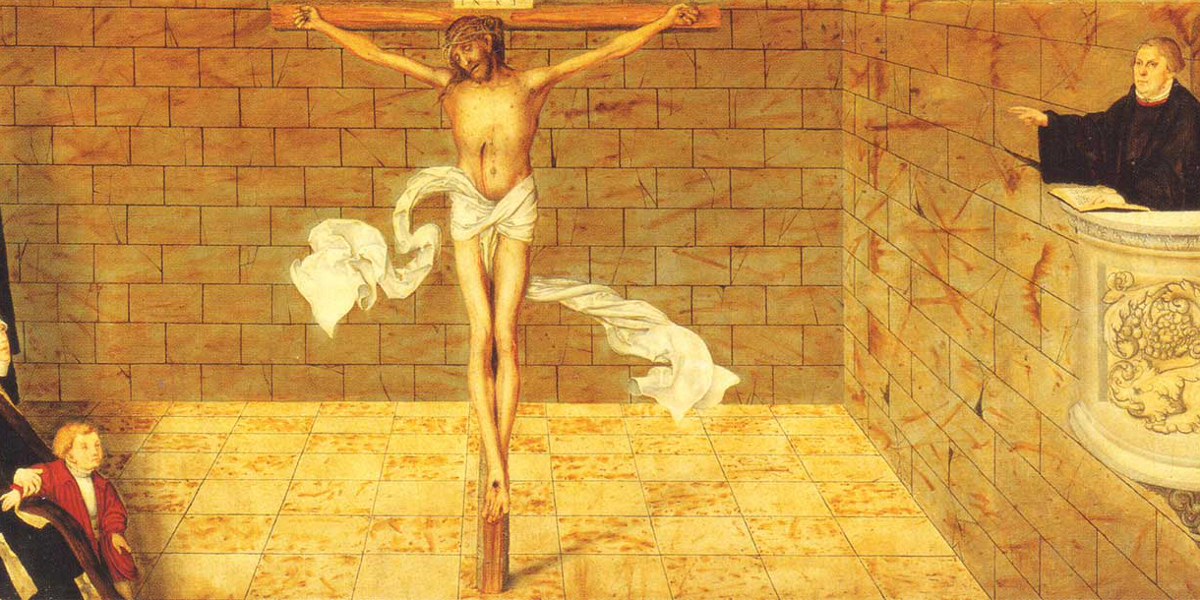
The Festival of the Reformation – Pr. Faugstad sermon
Text: 2 Chronicles 29:12-19
In Christ Jesus, who cleanses and consecrates His holy Church of all believers, so we are ready to carry out His work in His name to His glory, dear fellow redeemed:
Imagine if a church building was taken over by Satanists and defiled in every way, or it was turned into an establishment that catered to every vice that people were willing to pay for. What would need to be done to turn the building back into a Christian church? Every godless image and item would be need to thrown out. The interior would need to be scrubbed from top to bottom. None of the uncleanness that was there before could be left—not even a hint of it—if it was to serve as the place of God’s holy presence once again.
This is the task the Levites and priests faced when King Hezekiah opened up the temple doors that his wicked father had shut up. Hezekiah’s father had followed the pagan practices of the nations around Judah. He had built altars to false gods all over Jerusalem and in the high places surrounding it. He had sacrificed some of his sons as burnt offerings. He took the holy vessels from the temple of God and cut them in pieces. He put a stop to the daily sacrifices in the temple which God had commanded (2Chr. 28).
The first thing Hezekiah did when he began to reign was to call the priests and Levites together to cleanse the temple of the filth that had been brought into it. They started by consecrating themselves—preparing themselves for holy work—as the Law of God required. This is how every effort in the Church should begin, by a recognition of our own sinfulness. The priests and Levites acknowledged their past unfaithfulness, and they committed to doing what God had commanded.
Piece by piece, item by item, inch by inch, they cleansed the house of the LORD. They started with the innermost parts of the temple. The seven Levitical families worked seven days plus one until they reached the vestibule or porch of the temple. Then they worked another seven days plus one to finish the work of consecration.
The number seven is in view because that is the number for perfection or completeness. The use of seven indicates that the temple of the LORD was completely cleansed by the priests and Levites and prepared for His service. This is also why seven bulls, seven rams, seven lambs, and seven male goats were brought for a sin offering when the temple was ready. This was an offering for all the sins of all the Israelites (2Chr. 29:24).
But how could the people turn so quickly from their wicked ways? How could they so eagerly follow a bad king one day and a good king the next? The change was not exactly so immediate and all-inclusive. Some whose consciences had troubled them under the previous king were now ready to do what was right under King Hezekiah. Others might have preferred the former practices and pleasures that the worship of false gods offered.
But Hezekiah and the priests and Levites did not do their work arbitrarily. The religious system they sought to re-establish and follow was not a spirituality of their own making. They were doing what God had told His people to do in His Word, in the Holy Scriptures recorded by the prophets. This is what they would follow because this was the very voice of God which He had spoken and given for their life and salvation.
Martin Luther and the other reformers in the sixteenth century similarly had to deal with defilement in the house of God, in His holy Church. Over time, the Roman Catholic Church had adopted unbiblical teachings and practices that were leading the people away from the truth. The Roman Church taught that indulgences could be purchased to free souls from purgatory, that the human will is able to produce good works which make satisfaction for sin, that Mary and the saints could be invoked for spiritual help, and many other things that are not taught in the Bible.
Just as the priests and Levites threw some things out of the temple, but consecrated and kept others, so the Reformers did not throw out everything that “looked Catholic.” They kept everything that was faithful to the Word of God, such as the Baptism of infants, the real presence of Jesus in the Supper, the order of the historic liturgy, vestments, altars, pulpits, crucifixes, candles. This is why Roman Catholics often find that our buildings and services seem familiar, because we have retained these historic and beneficial Christian things.
The focus of the priests and Levites, just like the focus of the Lutheran Reformers, was to hold fast to the pure Word of God. Every teaching, every practice, every effort in the Church had to be examined in the light of God’s Word and to be cast out if it did not agree with God’s Word. They would humbly listen to His teaching, follow His guidance, and proclaim His truth.
This is still our focus today. We have been talking over the last couple weeks about how different we are than other Lutherans who do not believe the Bible is the inspired Word of God. Recently in the news we are hearing about a division in the Anglican Church between those who deny the clear Word of God and those who want to follow it. In fact, every major Christian church body has fractured over those who want to stand on the Scriptures as written and those who want to make accommodations for our culture and society.
The Christian Church on earth will always be tempted to water down its teachings in order to fit better with the world. We are personally tempted when we think to ourselves how many more people we could reach if we just loosened up on this teaching or that practice, such as the clear meaning of the Ten Commandments, the roles of men and women, and who can receive Holy Communion. But if we step off the foundation of the Bible, from what our Lord has taught us in His Word, we will find there is no firm ground to stand on.
Faithfulness here (in the church) has to start with faithfulness here (in the heart). If each of us individually cannot articulate and defend the faith we have, how can we make sure that the teachings of our church will stay pure? Like the priests and Levites working their way through the polluted temple starting with its inner parts, we need to closely examine our hearts to identify what is unclean and needs to be cast out.
So we could examine ourselves with questions like these: What lies have I been telling myself or others that need to be acknowledged? What sins have I committed with my eyes, my ears, or my mouth that need to be stopped? What anger, hatred, and bitterness have I let grow in my heart toward another person? What jealousy, judgment, or unkindness do I find when I think about certain people? What sins have I tried to bury or ignore that are eating me up? How have I failed to honor God in my daily pursuits and efforts?
The Levites carried the unclean items from the temple out to the brook Kidron. We bring all our sins to the waters of Holy Baptism. It was at Baptism that we were first cleansed of our sins and made members of Christ’s holy Church. We return to that Baptism and receive cleansing again when we confess our sins and receive forgiveness through Christ’s Word of absolution, like we do at the beginning of the divine service.
Every time you hear your Savior’s comforting words of forgiveness, He is telling you that He is not angry with you for your sins. He joined you to Him in Baptism, so that you would be covered in His righteousness and consecrated, or set apart, to do His holy work. No matter how the temple of your body has been defiled in the past from your sins, He prepares it for fruitful work now.
After listing all sorts of serious sins that the Christians in Corinth had committed, St. Paul wrote, “But you were washed, you were sanctified, you were justified in the name of the Lord Jesus Christ and by the Spirit of our God” (1Co. 6:11). He wrote to them again in his second letter, “Therefore, if anyone is in Christ, he is a new creation. The old has passed away; behold, the new has come” (2Co. 5:17).
You are washed in the waters of Holy Baptism—cleansed of your sins. In Christ, you are a new creation, which means your sinful past is history. But then why do we find it so challenging to do what is right? It is because the old Adam clings to us and wants to re-conquer our hearts. Our sin is the reason that the Church on earth is always struggling—in Hezekiah’s time, in Luther’s time, and in our time. We can’t take for granted that we will always be faithful, because we are no less sinful and weak than anyone else.
But you know where Christ’s power and strength for faithfulness is found. It is found in His pure Word and Sacraments. The preaching and studying of His Word and the administration of His Sacraments may seem like weak fortifications for the attacks of the devil, the world, and your own flesh. But nothing could be more effective against these attacks. Jesus says: “It is the Spirit who gives life; the flesh is no help at all. The words that I have spoken to you are spirit and life,” and, “If you abide in my word, you are truly my disciples, and you will know the truth, and the truth will set you free” (Joh. 6:33, 8:31-32).
Christ Cleanses the Church by His Pure Word. Through His Word, He reveals the uncleanness in our hearts and the errors of our ways. Through His Word, He declares the forgiveness and righteousness we have by faith in Him. Through His Word, He changes us, prepares us, and equips us for the good work He has given us to do as members of His holy Church. So we joyfully confess and sing the words of Luther’s hymn:
Stood we alone in our own might,
Our striving would be losing;
For us the one true Man doth fight,
The Man of God’s own choosing.
Who is this chosen One?
’Tis Jesus Christ, the Son,
The Lord of hosts, ’tis He
Who wins the victory
In ev’ry field of battle. (ELH #251, v. 2)
Glory be to the Father and to the Son and to the Holy Ghost; as it was in the beginning, is now, and ever shall be, forevermore. Amen.
+ + +
(picture from Wittenberg altarpiece painting by Lucas Cranach the Elder and Younger, 1547)

The Festival of Our Lord’s Ascension – Pr. Faugstad exordium & sermon
Festival exordium:
Beginning forty days before Easter, we recall the intense suffering our Lord Jesus endured for our salvation. Forty days after Easter, we celebrate His glorious ascension. This was His enthronement at the right hand of God the Father, not only as the Son of God but also as the Son of Man. He was welcomed by all the host of heaven as the victorious King, the Conqueror of sin, death, and devil, the Savior of the world.
Jesus ascended visibly into heaven, but He also continues to be with us and bless us here on earth. Just before His ascension, He said to His disciples, “All authority has been given to Me in heaven and on earth. Go therefore and make disciples of all the nations, baptizing them in the name of the Father and of the Son and of the Holy Spirit, teaching them to observe all things that I have commanded you” (Mat. 28:18-20, NKJV). He commissioned the Church to take His powerful Word and Sacraments to every nation, land, and people.
Then He added words that give us great comfort and courage, “And lo, I am with you always, even to the end of the age” (v. 20, NKJV). Jesus did not abandon us when He ascended into heaven. He has not left us to fend for ourselves. “I am with you always,” He says. As true God, He is present everywhere. And He is specially present when His message of salvation is proclaimed, when the Baptism He instituted is administered, and when His body and blood are distributed in His Holy Supper.
You know just where to find Jesus. He is seated at the right hand of God the Father Almighty right here and right now. God’s right hand touches this pulpit, this font, this altar. His right hand touches our homes, “where two or three are gathered in [Jesus’] name” (Mat. 18:20), hearing and learning His Word. Jesus, the victorious Son of God, is present and active here, just as He has promised He would be.
And on the last day, He will return visibly in glory to judge both the living and the dead. Then you and all trust in Him will also ascend. You will join Him in His heavenly kingdom. You will be gathered with all the host of heaven around the throne of God, where rejoicing and gladness never come to an end.
We now stand to sing our festival hymn printed in the service folder, “O Wondrous Conqueror and Great”:
O wondrous Conqueror and great,
Scorned by the world You did create,
Your work is all completed!
Your toilsome course is at an end;
You to the Father do ascend,
In royal glory seated.
Lowly,
Holy,
Now victorious,
High and glorious:
Earth and heaven
To Your rule, O Christ, are given.
+ + +
Sermon text: 1 Samuel 8:1-22
In Christ Jesus, whose kingdom of power, grace, and glory will never end, dear fellow redeemed:
Over the last couple of weeks, we heard how God sent judges to deliver the Israelites from their enemies, judges like Gideon and Samson. After Samson’s death, the LORD raised up one of the great leaders of the Israelites, a prophet named Samuel. He judged Israel all the days of his life and faithfully called the wayward Israelites back to the worship of the true God. But Samuel’s sons were not like him. He wanted them to continue after him and serve the LORD like he had. They were more interested in using their positions for personal gain.
So the elders of Israel came to Samuel and made a fateful request: “We want to have a king like all the other nations.” It was not wrong for them to want a strong leader. It was wrong for them to speak as though they had no king. The LORD God was their king. He had led them out of Egypt to the Promised Land and had given them victory over their enemies. Samuel was troubled by their request. But the LORD told him, “Obey the voice of the people in all that they say to you, for they have not rejected you, but they have rejected Me from being king over them.”
God would give the people what they asked for, but He warned them that having a king was not as great as they imagined. The people would not listen. They could only see the positives: our king will “judge us,” they said, “and go out before us and fight our battles.” It’s the sort of thinking that touches every generation. We are always looking for the next great leader who will fix all the problems in our society—and perhaps even the world—and make us more prosperous and happy than ever before. But as soon as we think we’ve found people like that, they inevitably disappoint us. They aren’t as perfect as we thought they were.
The people of Israel were dreaming about what their new king would give them. Samuel informed them about what their king would take from them: he would take their sons to fight for him, farm for him, and build for him; he would take their daughters to be perfumers, cooks, and bakers; he would take their fields, vineyards, and olive orchards; he would take their servants, their grain, and their livestock. They would be his slaves.
That does not sound like a good deal. Why would the Israelites want this? Samuel revealed later that they made this request because they were afraid of their enemies (1Sa. 12:12). They did not trust the LORD to protect them. For the next number of weeks, we will learn about the kings of Israel. Some of them served well for a time. But what God warned the people about through Samuel did come true. It wasn’t long before the kings required more than they delivered; they took more than they gave. Having a king wasn’t as great as the people expected.
We in the United States have no king of our country. The crown was offered to George Washington after the American colonies won the Revolutionary War, but in humility, Washington rejected it. He served as president for two terms and then peacefully stepped aside. We have no king of our country, but we do have a King in the church. This is not the pope. He may be the head of the Roman Church, but he has no divine authority in the holy Christian Church.
The King of our church is no mortal man whose reign is temporary. The King of our church is the crucified and risen Christ, who reigns over all things at the right hand of His Father in heaven. He left the glories of heaven to take on our human flesh and humbly suffer and die in our place. He hardly looked like a king, except to those who looked upon Him with faith. The thief hanging next to Jesus on the cross was one of these. When He looked at the anguished, bleeding Christ with a crown of thorns on His head, He saw a King who even had power over death. He said, “Jesus, remember me when you come into your kingdom” (Luk. 23:42).
Now, beginning with His victory march through hell and His resurrection from the dead, Jesus is exalted. Now He always and fully uses His divine power as God and Man. As our King, Jesus rules over a three-fold kingdom. He rules with power over the whole universe. He rules with grace in His holy Church. And He rules with glory in heaven. Ephesians 1 tells us that God the Father “raised [Christ] from the dead and seated him at his right hand in the heavenly places…. And he put all things under his feet and gave him as head over all things to the church, which is his body, the fullness of him who fills all in all” (vv. 20,22-23).
This passage describes our connection to Christ in the closest terms: He is our Head, and we are members of His body. We live in Him, move in Him, and have our being in Him (Act. 17:28). There is no life apart from Him. He gives us our spiritual health and strength. He makes us fruitful members that desire to do good to the glory of God. He also prepares us to follow Him to heaven, to go where He has gone. One of today’s hymns says, “For where the Head is, there full well / I know His members are to dwell / When Christ shall come and call them” (Evangelical Lutheran Hymnary #392, v. 1).
Our King does not use His power and authority to boss us around or take things from us. He was not like the Israelite kings that Samuel warned the people about. Jesus does the opposite. He uses His power and authority to bless us by His grace. Ephesians 4 says, “But grace was given to each one of us according to the measure of Christ’s gift. Therefore it says, ‘When he ascended on high he led a host of captives, and he gave gifts to men’” (vv. 7-8).
The “host of captives” includes you and me. We were captive to sin and death by nature. The devil, the prince of demons and darkness, ruled over us. But Jesus broke us out of this prison. The devil, the unbelieving world, and death tried to stop Him, but there was nothing they could do. Our King was too powerful for them. His victory was complete.
He shares this victory with all who trust in Him. “When he ascended on high he led a host of captives, and he gave gifts to men.” The gifts He gives to us are the gifts of eternal salvation. He forgives our sins; He covers us in His righteousness; He has prepared a place for us in His kingdom. We couldn’t have it better than we have it with our King.
But like the Israelites who wanted to be like the nations around them, we often look for more than what Jesus gives us. We want to have power and success and prosperity now. We want to enjoy the good things of here. These things seem real to us, unlike the invisible gifts from an invisible King, who promises us a place in a heavenly kingdom we have never seen. And yet we never get as much from the world as we hope we might. We find that despite its promises and seeming advantages, the world takes more from us than it gives.
Only the grace of God prevails. Only the grace of God gives us what cannot be taken away. Jesus’ ascension into heaven was the crowning moment of His saving work. It was the ultimate recognition that He had accomplished everything His Father sent Him to do. No sin was left unpaid for. No accusation of the devil left unaddressed. No chain of death left unbroken. Everything for salvation was carried out, completed, finished—for you and every sinner.
Our King now sits at the right hand of God the Father dispensing these gifts of His grace. Every day, He hands them out to you, to me, and to all His people all over the world. He never runs out. In fact, He always has grace for more, more who will join Him in His kingdom. This grace comes through the means or channels He has established for giving His gifts. He calls pastors to speak His Word, baptize, and administer His Supper. The pastor is not the King; he is just the courier or the messenger. He only passes on what Jesus has given to His Church.
The Church receives these gifts with joy. We know who our King is, we know what He has done for us, and we know He is preparing us for even greater things when He returns in glory.
Glory be to the Father and to the Son and to the Holy Ghost; as it was in the beginning, is now, and ever shall be, forevermore. Amen.
+ + +
(picture from painting by John Singleton Copley, 1775)